Elizabeth Yarnell Amazon icon Audible icon Autographed icon Bluesky icon Book Bub icon Buffer icon Booksprout icon Buy Me a Coffee icon URL Copied! Copy URL Email icon Facebook icon Goodreads icon Headphones icon Home icon Instagram icon LinkedIn icon Linktree icon Mastodon icon Patreon icon Periscope icon Pinterest icon Reddit icon RSS icon Search icon Share icon Snapchat icon Threads icon TikTok icon Tumblr icon Twitter icon Vine icon Youtube icon Join a free Q/A Call!

College Prep with Glorious One-Pot Meals

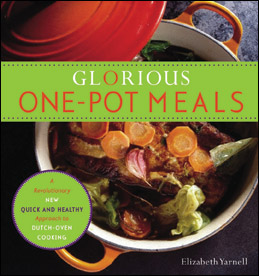
What is all that every college student needs in order to eat healthily and cheaply while in school? Why a copy of Glorious One-Pot Meals and a 1- or 2-quart sized cast iron Dutch oven, of course!

Join me with Anthony Uva of The Secrets of College Planning as we look at how to set students up for success with healthy eating in a dorm room (hint: a toaster oven can do wonders!) or off on their own.

Be sure to check out this info about Glorious One-Pot Meals as well as these video demonstrations of how easy it can be to pull together quick, easy, and healthy meals every night of the week… and on a student’s budget!

Nutrition and Diet Not Taught in Medical School

Doctors need to be learning more about diet and nutrition in medical school, says a study out of Griffith University in Australia and published in The Lancet Planetary Health journal.

Globally, 11 million deaths annually are attributable to poor diet, making it the leading risk factor for death across the world.

The 24 reviewed studies from the U.S., Europe, Middle East, Africa, and Australasia, consistently found that medical students wanted to receive nutrition education to develop their skills in nutrition care but perceived that their education did not equip them to do so.

Dr Lauren Ball authored the study and announced: “It is clear that despite the importance of nutrition for healthy lifestyles, graduating medical students are not supported with the required nutrition knowledge to be able to provide effective nutrition care to patients–a situation that has gone on for too long. Nutritional education for medical students must be improved and made a compulsory and meaningful part of the curriculum to support future doctors for the 21st century.”

Hear, hear! I couldn’t agree more!

But in the meantime, we need to look beyond our doctors to learn how to care for ourselves in order to avoid having to go to the doctor in the first place.

That’s why I began my nationwide dietary therapy clinic in 2010. I recognized that even if doctors want to make dietary recommendations, they don’t have the time to work with each person individually to tailor it to their needs.

In my clinic, we search for the root causes of your health issues so you can truly heal. We know that suppressing the immune system is not a long-term solution for lasting health, and our goal is to teach you how to help yourself feel better for the long haul.

Health is a lifetime journey. Feeling better can begin with a few simple steps. Contact me today to book a free Naturopathic Health Consult and see if you are a good candidate for what I offer.

I can’t wait to meet you and help you feel better!

Guest Appearance on James Miller’s Lifeology Podcast

What you eat affects how you feel.

That’s the crux of what I discussed on James Miller’s Lifeology podcast recently.

Listen in to hear the whole conversation and understand how I learned about the power of the Mediator Release Test and customized anti-inflammatory diets in helping my patients reclaim their health and live pain-free!

Back In the Office

P.S. I’m going to be posting more videos going forward. Let me know what you think!

How to Treat Dementia? Fix the Gut.

It may not seem logical to use dietary therapies to treat Parkinson’s Disease, but it should be our first course of action when a loved one begins to exhibit signs of dementia. The key is to realize that inflammation is behind most if not all symptoms.

New research into treatments for Alzheimer’s, Parkinson’s, and dementia are focused on addressing the immune system in a departure from the current theories of targeting amyloid plaque build-up. The immune system controls the amount of inflammation in our bodies.

Brain function is intrinsically connected to gut function. Heal the gut to heal the brain.

“The immune system is an important component of Alzheimer’s disease, as we’re beginning to appreciate,” says Philip L. De Jager, chief of neuroimmunology at Columbia University in New York. “We’re still very early in understanding it [in] this context.”

Researchers are finally acknowledging that every aspect of our health is rooted in our immune systems. Naturopaths like myself understand that the body is a holistic entity and disease symptoms are indications of deeper issues affecting the immune system. Therefore, it’s not the symptoms themselves that we should address, but instead we should look at how we can support and strengthen the immune system by removing inflammatory triggers and waste products while delivering nourishment to the cells.

How does this connect to the gut? At least 80% of our immune system is based in the gut and the vagus nerve transmits signals from the gut to the brain in a one-way stream. An overworked immune system is weakened from maintaining chronic inflammation, and that inflammation occurs everywhere the bloodstream runs. Inflammation in the brain impairs brain activities such as memory, logic, clarity, and cognition.

“What was clear from the human genetics is that insufficient activity of the immune system is allowing the disease (Alzheimer’s) to develop,”Arnon Rosenthal, a neuroscientist and co-founder and CEO of Alector says.

What Dr. Rosenthal terms “insufficient activity” I would call “overactivity”. The immune system is so distracted by addressing the constant/chronic inflammatory triggers that it doesn’t have the resources to be fully functional in normal ways.

What can distract the immune system in this way and cause chronic inflammatory conditions?

In my clinic we use sophisticated blood and urine testing to identify hidden triggers of inflammation and help people reduce the inflammation in their bodies naturally. John L. successfully implemented targeted dietary changes after receiving a diagnosis of Parkinson’s Disease and was able to regain the ability to write legibly and think clearly within weeks. Today, more than five years later, he has been so successful in avoiding inflammation that his doctors are questioning the validity of the initial diagnosis.

You can do it, too! Get started today with my free Anti-Inflammatory Kickstarter Course (coming soon)!  Contact me for a free initial phone consultation to see if you could improve your health and wellbeing from removing inflammation from your body.

While I’m excited to see that the mainstream scientific and medical community is beginning to look at the immune system as a target for treating dementia, they are still focused on pharmaceutical treatments designed to alter how the immune system expresses itself. Wouldn’t you rather heal naturally simply by reducing the inflammation in your body?

After all: no inflammation = no symptoms. If you didn’t have any symptoms, would you still be sick?