Elizabeth Yarnell Amazon icon Audible icon Autographed icon Bluesky icon Book Bub icon Buffer icon Booksprout icon Buy Me a Coffee icon URL Copied! Copy URL Email icon Facebook icon Goodreads icon Headphones icon Home icon Instagram icon LinkedIn icon Linktree icon Mastodon icon Patreon icon Periscope icon Pinterest icon Reddit icon RSS icon Search icon Share icon Snapchat icon Threads icon TikTok icon Tumblr icon Twitter icon Vine icon Youtube icon Join a free Q/A Call!

Coloring Easter Eggs with Natural Dyes

Make your Easter Eggs a little more artistic and a little less artificial this year by coloring the eggs with homemade natural dyes and patterns.

My friend, the ArtBizCoach, alerted me to this great idea posted by Nikki Wright for those who have a little bit of artistic talents and are looking to try something a little unusual for Easter this year. The eggs are truly gorgeous and I love that she used things like onion peels and beets to make the natural colors.

I have nostalgic memories of blowing out eggs and painting them as a child. I wonder if it’s too soon to try this with my 6- and 4-year olds? So far, we’ve always dipped hard-boiled eggs in the Paas dyes for our Easter celebration (yes, we celebrate all holidays at our house!), mostly because of the fragility factor with little hands. I envision painstakingly blowing out each egg, only to have it grasped by enthusiastic fingers a little too exuberently…

Come to think of it, this might be a better project for when they are 6 and 8! I might have more sanity left afterwards…

Passover Dessert: Light and Airy Coconut Macaroons

With Passover just a few days away, don’t forget the light and airy coconut macaroon recipe I shared last year for a different take on the classic Pesach dessert.

Rather than the heavy, chewy lumps of dry cakey masses that you typically find for macaroons, these offer a satisfying crunch and are so light that you might find yourself eating them mindlessly one after the other. Watch out!

How different are they from the norm? My cousin made these Passover cookies last year and thought she did it wrong because they weren’t the familiar dense, sugary lumps you can buy in the store.

Surprise your family this year with a dessert they’ll atually ask for all year round. My kids request these cookies for all kinds of special occasions that have nothing to do with Jewish holidays.

I like to get my unsweetened shredded coconut from the bulk food bins at the health food store because I think it tastes fresher, but if that’s not an option for you try to look for unsweetened shreds in a bag in the baking aisle.

Happy Passover!

Natural Remedies for Itchy Skin, Eczema

Along with the crocuses I see popping their heads through the snow in my neighborhood, I see dry, scaly patches on my daughter’s knuckles, and hear complaints about itchy legs and torsos. Yep, spring brings dry skin along with allergies to help us enjoy the season.

I’ve been experimenting with different lotions, oils, and salves for my daughter’s eczema patches to see what is most effective for her body. I’ve found a few things to be extremely helpful in hydrating her skin and restoring it to a comfortable and balanced condition.

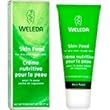
A friend of mine gave us some Weleda Skin Food – For Dry and Rough Skin, a heavy-duty lotion that does a great job overnight when I rub it into specific spots of eczema as well as over her whole body.

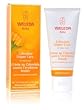
We’ve also had good results with Weleda Calendula Diaper Care. This was one of my favorite baby care products: you slather it on a red baby bottom and it works like magic! When we use it on her knuckles, however, it’s a bit too oily to be exposed during sleeping so we pull on cotton gloves while it absorbs. It still works like magic, though sometimes it takes repeated applications.

My friend’s husband saw great results battling his eczema using Tea Tree 100% Pure Essential Oil. Tea Tree oil has wonderful anti-bacterial properties as well as healing components, and should be the first line of care for eczema patches that have been rubbed raw and/or have open wounds.

Many people use pure coconut oil to moisturize their skin with great results. While not a sunscreen, coconut oil is a great after-sun skin saver, too.

When I lived in Italy, I noticed that the Italians used olive oil to moisturize everything from lips to skin and hair. I did a few hot olive oil hair treatments while I was there, though my roommates complained about the oily residue I left in the shower. The price of beauty!
The most amazing eczema cure I’ve witnessed came from homeopathy. My poor friend suffered terrible eczema for years all over her face and body. She would be so miserable that all she could do was take oatmeal baths to get some relief. Finally, she spent some time working with a knowledgeable homeopath and they were able to find the right remedy to bring her body back in balance. You’ll need to work directly with a homeopath and/or naturopath to get these kinds of results as homeopathy takes many factors into account and each person is different. She has had clear skin now for about a decade.

Natural Remedies for Itchy Scalp, Dandruff

Every year around tax time my head starts itching. Coincidence?

Maybe. I would imagine the stress can’t help, though I suspect it has more to do with the quick changes in barometric pressure that accompany the march of the seasons around here.

Whatever. All I know is that my scalp itches and I seem to have a bunch of dry skin flakes that rain down when I relent and scratch to my heart’s content. Yeah, I know: very sexy. A bit distracting, too, I must admit. It reminds me that its time to do a scalp treatment and clear this up.

A scalp treatment is something that I love to get done at an Aveda salon in flush times, but I always keep a bottle of Aveda Active around for a do-it-yourself quickie whether I have the time and money for a salon visit or not. Here’s what I do:

I pour some Aveda Active serum into a small applicator bottle with a pointed tip and drizzle it onto each part in my hair, and then use my fingertips to massage it into the line of exposed scalp. Using my fingers or a tail comb, I separate my hair into thin sections, working from the front crown areas and moving toward each ear, then across the back of my head. This is much easier (and more relaxing!) to have done by someone else at an Aveda salon, particularly if you have a dense thicket of hair as I do, but I usually end up doing it myself at home, which works, too.

Once it’s applied over my entire head, I do an all over scalp massage to spread it around and use a wide-bristle, forgiving hairbrush with knobby-ended bristles to further stimulate the scalp, loosen dead skin cells, and spread the oils.

Aveda Active contains Jojoba oil, Menthol, and Wintergreen oil. It’s invigorating, refreshing, cleansing, and awakening. I’ve been told it encourages hair growth. It might, but more importantly it clears away all the dead skin and buildup that accumulate over the year and makes the itching go away. You’ll feel the tingling. I love it!

I usually follow up a scalp treatment with a cleansing shampoo to remove all the debris I’ve loosened and finish with a deep conditioning product that sometimes recommends heating the conditioner for a more effective treatment.

Once I do this, voila! No more itching, flakes, or dull hair.

Natural Remedies for Hay fever

It’s spring and that means hay fever season.

I used to only suffer from pollen-related allergies in the fall, when the weeds and grasses are at their peak. But, in my early twenties I lived in Santa Fe, New Mexico for a time, and when the yellow chamisa bloomed in the spring, my nose would turn into a faucett.

Runny nose, frequent and unstoppable sneezing fits, red and itchy eyes… those are just the most obvious symptoms that I’m suffering. The most annoying ones include the irritating itching on the roof of my mouth, right on the palate, and how the skin on my face constantly tickles, begging to be scratched at a deeper level at risk of permanent scarring or at least visible damage. With my body in histamine overdrive it’s no wonder hay fever makes me feel like I’m interacting with the world through a thick pillow and leaves me wiped out by mid-afternoon.

For years I seasonally took prescription anti-histamines like Zyrtec and Claritin. They took away the itching, sure, but left me dehydrated, wired, and chemically-dependent. Now, I try to manage the hayfever with natural remedies instead of drugs.

Locally-collected bee pollen

My first line of offense is the locally collected bee pollen I find in the refrigerated section of my local Vitamin Cottage. (Check with your local health food store, or look for bee pollen collected in your area online.) An 8-oz. baggie runs me about $3.20 and may last me almost the entire season. I start each season slowly, with just about 1/8 teaspoon of pollen dissolved into a few ounces of juice or lemonade. Since bee pollen is like concentrated honey, it makes a sweet drink and I start to breathe easier quickly.

Once I’m sure I tolerate the pollen again this year, I gradually increase the dosage up to an entire teaspoon, if needed, as frequently as required. True confession: I don’t always wait for the pollen beads to fully dissolve before drinking them down. What can I say, allergies make me desperate!

This year, my homeopath also recommended a homeopathic remedy for hay fever that seems to be effective as well: Sabadilla. With homeopathy, you take a dose in an empty mouth and see what happens. If it works and the symptos abate for a while then return, take another dose. Discontinue when symptoms disappear or are not affected at all (which indicates you’re using the wrong remedy). While you can get a good selection of homeopathic remedies at a good health store, this one is hard to find and may be best ordered online.

Another homeopathic remedy for histamine reactions that may not necessarily be from hay fever is Histaminum. This was the only thing that worked to end my two-year old’s lifelong runny nose problem.