Elizabeth Yarnell Amazon icon Audible icon Autographed icon Bluesky icon Book Bub icon Buffer icon Booksprout icon Buy Me a Coffee icon URL Copied! Copy URL Email icon Facebook icon Goodreads icon Headphones icon Home icon Instagram icon LinkedIn icon Linktree icon Mastodon icon Patreon icon Periscope icon Pinterest icon Reddit icon RSS icon Search icon Share icon Snapchat icon Threads icon TikTok icon Tumblr icon Twitter icon Vine icon Youtube icon Join a free Q/A Call!

Are Low-Fat Diets the Healthiest Way To Go?

Are low-fat diets the healthiest way to go and does following a low-fat eating plan offer the best chance for weight loss?

Research says a resounding “No!”

Do I hear a collective gasp? I know, I know: it is heresy to assert that “low-fat” is not the baseline of healthy eating!

The low-fat mantra emerged in the 1980s with the publication of a series of reports on diet and cancer by the National Academy of Sciences. Thirty years later it is accepted as gospel.

Only it has been proven wrong, as explained by one of the original co-authors of those reports, T. Colin Campbell, PhD, and the real answer to achieving health is found not in low-fat dietary regimens but in a diet rich in plant-based foods and low in animal products and processed foods. In the Huffington Post he writes:

“During the next 10 years when this low fat myth was growing, average percent dietary fat barely changed — maybe decreasing a couple percentage points to about 33 percent, at best. In reality, the amount of fat consumed INCREASED because total calorie consumption also increased. Furthermore, during this same period of low fat mythology (1980s-1990s), obesity incidence increased.

Now, enter Robert Atkins and other writers who argued that obesity was increasing because of our switch to low fat diets. By going low fat — so the mythical story went — we were consuming more carbohydrate, an energy source from plant-based foods. This was a serious misrepresentation of the facts.

By falsely blaming low fat, ‘high carb’ diets for the obesity crisis, these writers were then free to promote the opposite: high fat, low ‘carb’, high cholesterol and high protein diets rich in animal-based foods, a so-called low ‘carb’ diet. During the initial discussions of this ‘low carb’ diet, no distinction was made between the refined carbohydrates (sugar and white flour as commonly present in processed foods) and the natural carbohydrates almost exclusively present in plant-based foods.”

Fascinating stuff. I’ve always been against the health implications of the Atkin’s diet and other low-carb weight-loss approaches.

But, to be honest, I bought into the low-fat concept early. In the 80s we thought an optimum meal was a bagel with no butter or cream cheese – a fat-free, guilt free snack, I thought, though not as good for my body or my figure as I had hoped, as it turns out.

And even though I now shy away from anything labeled “low-fat” or “fat-free” due to suspicions about what is added in place of fat to maintain flavor and creaminess (remember those fat-free potato chips that had a side effect of anal leakage?), I still believed that a diet low in overall fat was better.

But now let’s refine this to say: a diet low in saturated fat is better.  I now know better and advocate that our diet be high in unsaturated fats as they help rebuild and repair your nervous system, keep your hair and skin shiny and elastic, and help keep everything lubed and in working order.

Mostly, I love it that mainstream science is embracing what Michael Pollan summed up so elequently in his revolutionary manifesto:

“Eat food. Not too much. Mostly plants.”

Harvest Fest in Cañon City, Colorado

This past weekend I was honored to be the “guest author” at the Winery at Holy Cross Abbey‘s Harvest Fest in Cañon City, Colorado.

A working Benedictine monastery and school since 1924, Holy Cross Abbey has a viniculture and winemaking history. Father Kenneth, a monk at the Abbey since the 1950s or 60s, spearheaded the revival of winemaking there a decade ago and returns every year to bless the winery. Though the Abbey no longer houses monks, it still hosts the winery which this year brings an impressive number of award-winning Colorado wines to market.

Father Kenneth blesses the wines at Harvest Fest.

Every autumn the winery hosts a Harvest Fest, a delightful weekend in the park on the Abbey grounds near the tasting room. With good music, mouth-watering food vendors, and of course, all of the winery’s wines available for tasting pleasures, it was a perfect spot to spread a blanket on the grass and enjoy the last days of summer, sipping wine, munching treats, and listening to an eclectic mix of live bands.

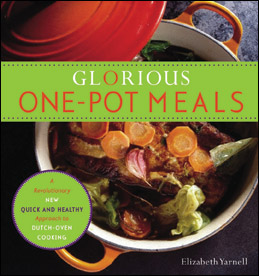
I had a perfect spot to enjoy all the action from under a tent near the bandstand and as always enjoyed chatting about the wonders of Glorious One-Pot Meals. Many thanks to The Winery at Holy Cross Abbey for inviting me to participate in the 9th annual event!

At the Winemaker’s Dinner preceding the festival, I got to sample the Abbey’s wines paired with eight scrumptious and decadent courses! My favorites were the Platinum award-winner American Riesling and the triple gold medalist Colorado Cabernet Franc.

Keep an eye out for the special limited edition bottles labeled with this year’s Harvest Fest art by contest winner Brit Colon – aren’t they gorgeous?!

Stuffed Chicken Enchilada Shells

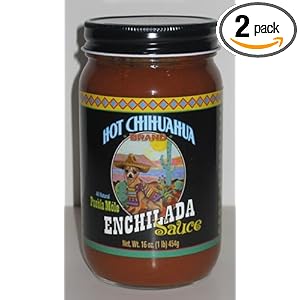
Faced with the remnants from a pair of delicious roasted chickens recently, I decided to create an Italian-Mexican fusion meal with pasta shells, goat cheese, and that secret ingredient: enchilada sauce.

We lo-o-ove enchilada sauce!

It was surprisingly, or perhaps not so surprisingly, tasty and my children have clamored for it several times since.

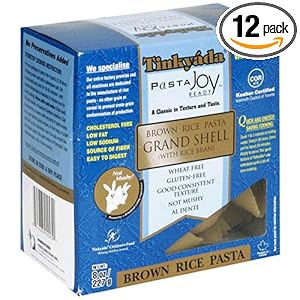
I had been so excited to find these Tinkyada Brown Rice Pasta Grand Shells recently, although you can certainly use regular wheat pasta shells. For this dish the important factor is the shape of the shells, what the Italians call conchiglioni, or large conch shells.

When I was a senior in college, one of my friends used to whip together huge Friday night pasta meals for a packed house of hungry kids. She and I actually both lived in Italy during the same time period but really became friends after we returned and would hang out speaking Italian and drinking lots of Chianti.

One Friday night I remember she mixed together a big bowl of ricotta cheese, mozzarella, garlic, oregano, and who knows what else, and proceeded to direct a team of us toward stuffing it into oversize cooked pasta shells. The stuffed shells then lined a baking pan before being drenched with marinara sauce and topped with more shredded mozzarella. It seemed like a feast.
So I had purchased these shells with something similar in mind only I didn’t know what yet. The leftover chicken meat and shreds from the carcass seemed like a good fit. From a run to the farmer’s market I added corn sliced off the cob (4 ears) and a large green chile (which I roasted over the stove burner, then peeled and seeded).

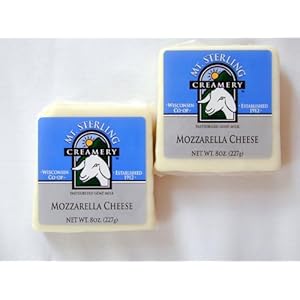
From the fridge I pulled out leftovers of 8 stalks of steamed asparagus and cut them into 1″ lengths. To finish off the stuffing I shredded two kinds of goat cheese: cheddar and mozzarella. Of course, you can easily use cheeses made from cow’s milk — we find goat’s milk cheeses easier to digest in our house and love the harder styles that taste just like recognizable flavors like cheddar, Monterey jack, and mozzarella.

I put all of this into a big bowl and mixed it together.

Meanwhile, I had been boiling the shells in salted water. When they were on the firmer side of tender, I drained and rinsed them well.

Into a glass baking dish, I poured a few tablespoons of prepared enchilada sauce and painted it across the base and up the sides. I used another tablespoon to ladle stuffing into each pasta shell before placing it snugly into the baking dish.

When the layer of shells was complete I poured enough enchilada sauce on top to cover all of the shells, and sprinkled them with more shedded goat cheese. I put the dish into the oven (I actually used a toaster oven to cook outside on the porch this hot summer night!) at 325 degrees F until the sauce was bubbling and the cheeses had melted.

You should feel free to stuff shells with whatever you have on hand and make your own Italian-fusion cuisine!

How safe is Teflon/nonstick cookware?

Teflon is not as slick as we’ve been led to believe.

The Environmental Working Group says that there is a risk of inhaling toxic particles if the pan gets a little too hot or if the nonstick coating has been compromised (scratched or overheated).

Click image to see larger graphic

Just two to five minutes of heating on a regular cooktop can release enough toxic fumes from that nonstick pan to kill a canary, and in fact, many pet birds have succumbed in kitchens from “Teflon flu” or “Teflon Toxicosis”.

What should you do?

Cook with stainless steel or cast iron to avoid the exposure to perfluorinated chemicals (PFCs) used in nonstick cooking surfaces. Fortunately, Glorious One-Pot Meals cook in cast iron Dutch ovens, so we’re safe there!

How to cook more safely with nonstick cookware

Here’s the list of what the EWG suggests to keep you safe from PFCs if you must cook with nonstick cookware:

  • Never preheat nonstick cookware at high heat — empty pans can rapidly reach high temperatures. Heat at the lowest temperature possible to cook your food safely.
  • Don’t put nonstick cookware in an oven hotter than 500 degrees.
  • Use an exhaust fan over the stove.
  • Keep pet birds out of the kitchen — the fumes from an overheated pan can kill a bird in seconds. Learn more here.
  • Skip the self-cleaning function on your oven. It cleans by heating to high temperatures, which can release toxic fumes from non-stick interior oven parts.
  • Choose a safer alternative when buying new cookware.

How to Decrease Asthma, Allergies

A reporter recently asked me for the top five foods I recommended avoiding feeding to young children to boost their chances of growing up allergy-free.

I found this to be an impossible task.

From all that I’ve learned in my studies over the last decade, I believe that each person’s hypersensitivity profile is unique to themselves. What might cause problems for Joey might be fine for Susie, and vice versa.

Although certain food groups may seem to commonly cause adverse reactions –like dairy, gluten, or soy – it’s too easy to unnecessarily restrict your child’s diet and miss basic nutrients by making random guesses at what allergens are already causing or might someday cause distressing issues in the general population.

After all, most people (70-90%)have normal tolerance thresholds and never or rarely experience abnormal reactions from foods. Only about 7% of the population actually has Celiac Disease and reacts to gluten, for example.

So you see how it might be difficult to make a blanket statement to recommend that everyone avoid all the same foods with the goal of decreasing everyone’s potential for developing allergies.

Lowering Your Overall Toxic Load Will Increase Tolerance

That said, I do believe that by eliminating as many chemical items and known poisons from your child’s overall toxic load as possible you’ll help his/her body develop higher tolerances and experience fewer allergic reactions from anything.

These are the items I would suggest eliminating (or at least minimizing) from a child’s diet in order to lower his/her potential for asthma, allergies, and other aberrant immune reactions:

1. Food Dyes. A recent compilation of studies found a correlation between ADHD and commercial food dyes used in many familiar products. These dyes are in almost every food item marketed to children, and in many other commonly eaten products.

I can see this happen in my own son as his behavior will deteriorate rapidly after eating something artificially colored. The food dyes cause hypersensitivity reactions in him that result in a mediator (i.e. histimine, et al.) release. This is often called an allergic reaction, though the correct term is a “hypersensitivity reaction.” The mediators/histamines/cytokines cause swelling in the brain that manifests in behavioral changes and mental distraction. Removing food dyes can eliminate the need for Ritalin or other behavior-modification drugs.

2. Synthetic Sugars. From Splenda to Aspartame, Sucralose, Fructose, and High Fructose Corn Syrup, these all work to confuse the pancreas and create an off-balance internal environment. They’ve also been shown to contribute to weight gain, not weight loss. Give children real raw cane sugar, pure maple syrup, or honey when possible and avoid all artificial sweeteners.

3. “Natural Flavors”. The term on a label of “natural flavors” may translate to a chemical brew of more than 40 noxious components. See here for a list of the “natural flavors” in one strawberry milkshake. The ingredients in “natural flavors” are considered top secret and not public information.

4. Artificial and “Natural” Fragrances. Again, I’m referring to the labeled term “natural aromas or fragrances” used in many cosmetics, personal care items, soda pops, markers, and other products.

Aromas are physical molecules that travel into our bodies when we inhale. Breathe in deeply to fully appreciate the fresh scent offered by that dryer sheet or air freshener spray, and you’re bringing those synthetic, laboratory-constructed molecules down deep into your lung tissues where they can get trapped and come back to haunt you later.

Many artificial scents and flavors are made from petrochemical derivatives. Artificial fragrances contribute heavily to one’s toxic load, and for asthmatics and other hypersensitive people they can trigger an immune response.

5. Petroleum Products. Our modern society is saturated with petrochemicals that are in every plastic item we touch, almost every water bottle we drink from, and every canned food we eat. Our cosmetics are full of petroleum, as are our skin care lotions, suntan lotions, and perfumes. Our skin is our largest organ, and it did not evolve to handle being smothered by a toxic sludge found far below the surface of the earth.

Everyone’s tolerance threshold for toxins and allergens is different.

Once a person breaches their tolerance threshold and enters toxin overload, you might see a cascade effect where more and more substances cause more and more reactions. These issues may manifest as asthma, IBS, migraines, exzema, fibromyalgia, hives,… and on and on. We’re now learning that many auto-immune responses, perhaps even multiple sclerosis, may be due to hypersensitivity reactions.

Alessio Fasano, professor of pediatrics, medicine and physiology and director of the Mucosal Biology Research Center and the Center for Celiac Research at the University of Maryland School of Medicine, wrote in Scientific American’s August, 2009, issue that,

“Indeed, a growing body of evidence suggests that virtually the same trio of factors underpins most, and perhaps all, autoimmune diseases: an environmental substance that is presented to the body, a genetically based tendency of the immune system to overreact to the substance, and an unusually permeable gut.”

Get rid of the chemicals as a start down the right path for avoiding allergies.

While it may be impossible to say what foods everyone should avoid to decrease their risk of developing allergies, it’s much easier for me to say which chemicals and synthetic substances we should avoid to avoid crossing all of our tolerance thresholds, not just in kids.