Elizabeth Yarnell Amazon icon Audible icon Autographed icon Bluesky icon Book Bub icon Buffer icon Booksprout icon Buy Me a Coffee icon URL Copied! Copy URL Email icon Facebook icon Goodreads icon Headphones icon Home icon Instagram icon LinkedIn icon Linktree icon Mastodon icon Patreon icon Periscope icon Pinterest icon Reddit icon RSS icon Search icon Share icon Snapchat icon Threads icon TikTok icon Tumblr icon Twitter icon Vine icon Youtube icon Join a free Q/A Call!

Pumpkin Muffins for Thanksgiving

wheat-free pumpkin squash muffin recipe
Pumpkin muffins topped with organic frosting

Ok, I lied. The muffins in the picture aren’t made out of pumpkin; they’re made with Hubbard squash. But let’s not pish-pash over such winter squash details.

I could call them “Hubbard Squash Muffins,” but then how many people would find them when doing a google search for festive baked goods for your Thanksgiving celebration?

But, let’s face it, if I were going to be completely up front about these muffins, I would have to call them something along the lines of “Hubbard Squash Spelt Muffins,” which becomes an ungainly mouthful and rather unappetizing sounding. Which is nothing like how they taste: flavorful but not too sweet; quite addictive, if the second graders who enjoyed them for a birthday treat have anything to say about it.

hubbard squash muffin recipe
hubbard squash

I made this recipe several times recently because

a) I had an enormous hubbard squash that I broke apart, baked, and pureed and was looking to use, and

b) each batch was eaten sooner than I could assemble bags to send to school for celebrations and to give family friends with a newborn.

The muffins pictured contain a mixture of spelt flour with arrowroot starch and xanthan gum, but I also successfully made the recipe substituting all-purpose wheat baking flour in place of those three.

You may have realized by now that I like to shape my breads in mini-muffin tins. Not only does it help with portion control, but there is just something about mini-muffins that makes them fun to eat. You can certainly prepare this recipe in a loaf pan or regular muffin tin, too. The choice is yours!

[print-me target=”.recipe”]

Pumpkin Muffins
Makes 1 loaf or about 36 mini muffins

2 cups all-purpose flour, or 2 cups spelt flour + 1/2 tsp. arrowroot starch + 1/2 tsp. xanthan gum
1 tsp. baking soda
1 tsp. baking powder
1 tsp. ground cinnamon
3/4 tsp. ground ginger
1/2 tsp. salt
2 eggs
3/4 cup sugar, brown sugar, agave, or pure maple syrup
3/4 cup cooked pumpkin or squash puree (canned is fine)
1/4 cup apple sauce
1/4 cup vegetable oil or softened butter
1/4 cup milk or milk alternative (coconut milk, soy milk, almond milk, etc.)
1 tsp. real vanilla

Preheat the oven to 350 F. In a medium bowl, mix the first 6 ingredients (through salt) together and set aside.

In a large bowl, beat the eggs vigorously with a whisk until frothy. Cream the rest of the ingredients together until the sugar is dissolved. Slowly add the flour mixture to the wet mixture, stirring constantly to blend all ingredients.

Pour into greased muffin tins. Bake for approximately 20 minutes, or until an inserted wooden toothpick comes out clean. Cool in the pans for 5 mins, then turn out onto cake racks. Frost, if desired, but delicious just as they are, too.

Should We Trust the USDA?

Lest we forget, the mandate of the USDA is to make US business profitable, not, as we might think, to safeguard the public health.

A recent Michael Moss article in the New York Times looked at the disconnect between government-led anti-saturated fat campaigns and Dairy Management, a marketing and public relations arm of the USDA designed to support and inflate the dairy industry.

Urged on by government warnings about saturated fat, Americans have been moving toward low-fat milk for decades, leaving a surplus of whole milk and milk fat. Yet the government, through Dairy Management, is engaged in an effort to find ways to get dairy back into Americans’ diets, primarily through cheese.

Americans now eat an average of 33 pounds of cheese a year, nearly triple the 1970 rate. Cheese has become the largest source of saturated fat; an ounce of many cheeses contains as much saturated fat as a glass of whole milk.

Dairy Management, whose annual budget approaches $140 million, is largely financed by a government-mandated fee on the dairy industry. But it also receives several million dollars a year from the Agriculture Department, which appoints some of its board members, approves its marketing campaigns and major contracts and periodically reports to Congress on its work.

It can make your head spin. As elections rise and fall on budget cuts in education and health care, we’re pouring taxpayer money into commercial campaigns designed to fill the coffers of private businesses at the expense of what we know to be good for us.

I hate it when I’m faced once again with the now-familiar realization that our collective health can be brushed aside when it comes to profits.

When Dairy Management teamed up with Domino’s to develop a new line of pizzas with 40 percent more cheese (and then paid for a $12 million marketing campaign,) Dominos sales soared by double digits.

Great for Dominos profits and shareholders, not so great for you the consumer when a single slice contains as much as two-thirds of a day’s maximum recommended amount of saturated fat.

Check out these numbers:

  • $5.3 million Amount that Dairy Management got last year from the Agriculture Department to promote dairy sales overseas
  • $6.5 million Total budget for the federal Center for Nutrition Policy and Promotion, which promotes healthy diets

Of course, no one is forcing us to down just one more slice of that double-stuffed pizza, but I’m tired of subsidizing big industries, particularly those that play fast and loose with our health. If Dominos can’t pay for its own marketing campaigns, then perhaps they should consider one fewer superbowl ad this winter.

Regardless of the ubiquitousness of the advertising, the final choice to eat or not to eat lies in each of our hands. Health is an individual choice. You are empowered.

Great Holiday Gift Finds Through Nov. 21 Blog Jog!

Have you ever seen a Blog Jog? It’s a day of pathways through the web leading to new and different thinkers and great gift ideas to kick off your holiday shopping.

Blog JogOn November 21, 2010, I will be joining Carol Denbow’s second annual Blog Jog!

I will be giving away a prize or two, and I know other blogs will be as well, but no matter what you’ll discover a new world of possibilities through this event.

And if you have a blog of your own be sure to check out my Recipes for Publicity blog to learn more about what participating in the Blog Jog can do for you!

As a visitor following the path, you’ll be able to jog from blog to blog and see all the prizes being given away. It starts at midnight and runs all day on the 21st…so stop back, get ready to jog, and have fun with it!

Mollie Katzen and the Moosewood cookbooks taught me to cook

It’s not often that you get to meet an author whose work has influenced your life in a deep way.

When I was 22, I met Judy Blume and I was tongue-tied. Star-struck at coming face to face with the woman behind the books that I read and re-read so many times… How could I possibly tell her how I grew up along with the stories she told, how much she had influenced me as a writer and as a person? It was overwhelming to consider. At the end, I could just barely stammer out something lame along the lines of “Thank you! I love your books!”

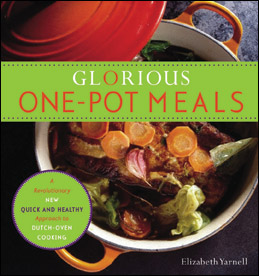
Mollie Katzen Moosewood Cookbook Elizabeth Yarnell Glorious One-Pot Meals cookbook
Elizabeth Yarnell and Mollie Katzen swap cookbooks

Last week I had the honor of meeting Mollie Katzen, author of the seminal work on creative vegetarian cuisine, The Moosewood Cookbook, and all the Moosewood cookbooks that have followed in the more than three decades since.

In the twenty years that have passed since meeting Judy Blume, I’ve realized that opportunities to meet personal idols like these don’t come around every day. So I attended the A.W.A.R.E. luncheon in Denver where Mollie was speaking about healthy eating and brought along a gift to give to a woman who has given me so much.

I had donated a Glorious One-Pot Meals party pack (an autographed cookbook, DVD, potholder, and private cooking demonstration party at the winner’s house for up to 50 friends) to the luncheon’s chance drawing in support of Alzheimer’s research, and was excited to hear Mollie speak and hopefully meet her, too.

The Moosewood was the very first cookbook I ever purchased for myself, long before I ever imagined that healthy cooking would become a centerpiece of my life, back when I moved into my very first apartment alone and wanted to throw a dinner party. With the Moosewood in hand, I learned I could cook. Later, it became my bible when I married, bought a house, and harvested an abundance of vegetables from our organic garden. My copy is tattered and worn, dog-eared and stained. I know of no better compliment and testimony to give a cookbook author.

And now, it is signed by Mollie Katzen herself. 🙂

Rules for Turning Picky Eaters into Adventurous Eaters

An overwhelmed mom posted the following plea on a mom’s group recently:

My son has a very limited list of foods that he will eat, and all 3 of my kids like very different things. I am *so* tired of making 4 slightly different variations of each meal, every day (1 set for me and my husband, and 3 others for the kids). I know everyone says to make ONE MEAL for everyone, but I’m afraid my kids would starve 🙂

I need some inspiration. Any ideas?

Of course I have ideas for you, my fellow mom! Allow me to offer some suggestions!

But first, and I hate to say this, but you are enabling the picky behavior as long as you continue to make separate meals for each child. You didn’t say how old your kids are, but it’s never too early or too late to create new habits.

11 Trials to Accept a New Food

Remember that it may take 11 or more times of trying a food to develop a liking for it, but if it never gets into your mouth then the taste will never be acquired. It is up to us as parents to insist on introducing foods again and again in many incarnations to foster accepting — and even adventurous — eaters.

In our household, we have certain rules that we stick to when it comes to mealtimes:

Respect the cook. 1. Regardless of if we like the food or not, we must appreciate that someone took the time and effort to make it. I always put this at the top of the list because once this concept is accepted, everything else comes more easily. This is just basic manners, really.

One Meal. 2. Everyone gets more or less the same meal (a.k.a., Mom is not a short-order cook to be taken for granted). We call it “family-style” dining for a reason.

Taste Everything. 3. Every child must try everything on his/her plate and eat and swallow at least 3 bites of each item before rejecting it. Just like you don’t judge a book by its cover, it is not acceptable to reject a food based on a glance.

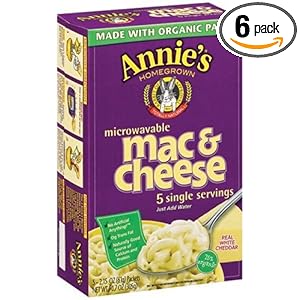
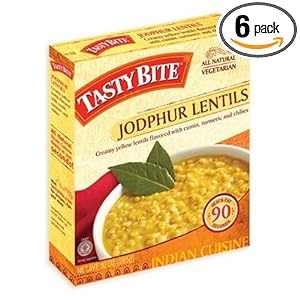
The 3-bite Rule 4. If, and only if, after eating 3 real bites of everything the child still doesn’t like anything served, then they may have a minimal separate meal that is easy for mom or dad to throw on the table (we used to keep a stash frozen burritos, Annie’s microwave mac and cheese packets, vacuum-sealed packets of lentils and spinach dal and other healthier convenience foods for just this purpose). It should not be the kid’s favorite meal, but it should be something small that you know they will eat so you can put the starving-to-death fears to rest.
This option will fade with time as the kids become better eaters but might be necessary more at the beginning when there is a lot of resistance to change. If they are still hungry at the table they are always welcome to eat the “rejected” family dinner.

#4 gives you as a parent a hard-and-fast “rule” to follow but also an incentive for the child: something else is available for those who follow this rule and at least give the new foods a good shot. Even if they remember trying asparagus before, for example, remind them that it may have been cooked differently that time and they need to try a food every time it appears on the table, weather or not they remember liking or disliking it before.

Even after all of these efforts, we shouldn’t forget that not everyone will like everything and even “good” eaters have specific dislikes (for me, a little cilantro will ruin an entire meal), so it’s good to have some room for flexibility without losing ground.

Make Deals.

If a child will not take the requisite 3 bites, consider offering bargains: 2 bites of green beans for 4 bites of squash, etc. We believe that strong negotiation skills can take you far in life because a good negotiator can find a win-win outcome in any situation so that everyone leaves happy; as such, we welcome any chance to teach and hone the art of bargaining. As parents, we’re willing to give a little to get a little, too, and model the desired behavior.

If a child still refuses to make it far enough to deserve an alternate meal, they are allowed to be finished with dinner but they do not get dessert or snack foods.

Dessert. 5. Those who do eat enough of a healthy dinner are eligible for dessert. A child may be finished with eating, but unless they eat what the parent deems to be enough of healthy foods they will not get dessert.

Which leads to a sub-rule we’ll call 5a. Two Piles. If the parent wants the child to eat more of his plate in order to qualify for dessert, you can employ the Two Piles method: one side (the parent or the child) divides the food into two piles on the plate and the other side gets to choose the one that must be eaten. The child learns to divide the food evenly or the parent might pick the pile containing all of the vegetables rather than the one with only rice. Alternatively, the parent divvies out the piles so that the child is left with two equal choices that both contain a variety of the foods served. Eating the entire chosen pile will qualify the child for dessert.

Desserts in our house might be fruit popcicles, sorbet, dairy ice cream or coconut milk ice cream in cones, small cookies, or other treats that may or may not be as healthy as dinner was. Desserts are never candy, and chocolate is reserved as a reward for other types of behavior modification efforts with our kids, but otherwise eating sweets on top of a stomach full of healthy food is a good way to mitigate or avoid a detrimental spike in blood sugar.

After a big meal is the best time for eating something sweet as the sugar will get diluted and digested along with all of the other foods; eating sweets on an empty stomach, on the other hand, sends a shot of glucose right to the blood stream to wreak pancreatic havoc with shooting glycemic levels.

Letting children select special desserts at the grocery store to earn by eating their dinner can be highly motivating for little ones. In shrink-speak, desserts offer an immediate reward and reinforcement for practicing desired behaviors. Kind of like the dog treat Fido gets if he heels during his puppy-training class. Same concept. Treats, kind words, and affectionate touches have been proven to work with kids as well as puppies.

Late-Night Munchies

While we recognize that a child’s stomach is only as big as his or her fist and she may need to eat again after an active day or during growing periods no matter how much was eaten (or not) at supper, we limit post-prandial options to either a banana or cold cereal; once dinner is done the kitchen is closed for cooking.

If you can weather the inevitable turbulence that will come from taking charge and turning the tide in your household, you will finally reap your rewards with kids who will accept and enjoy a wide range of foods and be able to find something to eat on almost any plate. Most importantly, you’ll end up with kids willing to try new foods (and, as an extension, new activities, experiences, friends, etc.) when they appear in life because they have enough experience to know they just might like something new.

Though you may want to start with mild, inoffensive foods, don’t write off strong flavors and spices, either. My kids love Indian, Mexican, Chinese and other Asian foods as well as roasted green chiles, Siracha sauce, Cajun spice mixes, and Chinese spicy mustard.

It’s hard to offer a go-to meal for your family of picky eaters simply because we don’t know where they are to start, but here is a super quick, easy, healthy, mild, and delicious recipe that you can start with by taking the technique and substituting in vegetables that you already know your kids will eat (carrots? peas? broccoli?) and including some each time that may be new to them (squash? mushrooms?).

This path of reshaping picky eaters takes patience and persistance, but you — and they — will enjoy the payoffs for the rest of their lives. The enjoyment of food is one of life’s greatest pleasures. 🙂