Elizabeth Yarnell Amazon icon Audible icon Autographed icon Bluesky icon Book Bub icon Buffer icon Booksprout icon Buy Me a Coffee icon URL Copied! Copy URL Email icon Facebook icon Goodreads icon Headphones icon Home icon Instagram icon LinkedIn icon Linktree icon Mastodon icon Patreon icon Periscope icon Pinterest icon Reddit icon RSS icon Search icon Share icon Snapchat icon Threads icon TikTok icon Tumblr icon Twitter icon Vine icon Youtube icon Join a free Q/A Call!

Treat Candida By Balancing the Gut

To have candida in the bowels is normal; the problems from too much candida arise when the environment of the gut is compromised, allowing for an overgrowth of candida or undesirable bacteria (Small Intestinal Bacterial Overgrowth “SIBO”). The worst thing we could do at this point is throw antibiotics or other toxins into the mix, further disrupting and wiping out the inhabitants of our microbiome whose job it is to keep things like candida in check.

But let’s start at the beginning.

What is candida albicans?

Candida is a fungus that lives in our bowels and, along with a trillion or so bacteria, assists in digesting what we eat. When there is a thriving, multi-strain population of bacteria in our gut, then everyone does their job of breaking down food into nutrients for delivery to our cells and all is in harmony and we feel good.

Unfortunately, common substances in our modern day world can damage and even wipe out the entire population of our personal microbiome. All those lights snuffed out in a single dose of antibiotics, for example. Puff. And there goes our digestion.

Once digestion goes downhill, you can be pretty sure that the absorption and assimilation of nutrients into our cells is compromised, too. Now deficiencies are bound to occur, forcing the body to steal minerals and nutrients from other systems in order to keep all-systems-go for as long as possible. Until there’s no more delaying the inevitable, and symptoms begin to appear.

But I digress.

Candida overgrowth does not require antibiotic treatment.

The laws of science tell us that nature abhors a void. Wipe one species out and another will move in to take their place. In a healthy gut, candida lives and works alongside bacteria to break down the food that we eat.

Since candida overgrowth and the varied symptoms that might accompany that (from vaginal discharge and itching to dysfunctional bowels, fatigue, rashes, or coating on the tongue) is an indication that our insides are out of balance, our goal for health should be to repair the environment of the gut in order to re-establish a healthy microbiome full of lots and lots of bacteria. I’ve read that we have more bacteria in our gut than cells in our body, though the National Institutes of Health now say it’s about equal. Think about that for a second: that’s still an awful lot of bacteria inside us.

Once we realize that we need more bacteria, not fewer, to heal from a candida overgrowth and regain our health, it starts to make sense that instead of reaching for antibiotics, we should focus on ingesting more probiotics to rebuild our microbiome rather than wipe it out.

I’m a fan of mixing it up and adding in as many different strains of bacteria as possible, including the Lactobacillus strain of bacteria that scientists have found keeps candida in check.

What else could cause candida overgrowth?

Anything that disrupts the gut environment. Besides antibiotics and other pharmaceuticals, processed foods, soft drinks, and other artificial ingredients in our everyday foods can disrupt the functioning of our microbiome. Check out my TED Talk, “Poisons in Our Everyday Foods,” for details.

Another cause that is often overlooked could be parasitic infection. Again: antibiotics or toxic pharmaceuticals are not the best way to evict parasites because they will wipe out the microbiome along the way. One G.I. doc told me that using a toxic antiparasitic medication like Flagyl to kill parasites was like using a shotgun to kill a mosquito: you might get the bug but you’ll have a lot of collateral damage from all the buckshot.

Could just taking probiotics take care of a candida overgrowth problem?

Maybe. It depends on how much damage there is in the gut, how cleanly we eat, and if food sensitivities are causing inflammation. It may be advisable to contact me for a free initial phone consultation to see exactly what’s going on in your case.

Regardless, taking probiotics will not cause any harm, though you may have to do some trials to discover the ones that make you feel good. Be aware that many probiotic brands include a fiber called inulin that bothers a lot of people, so if your probiotic brand isn’t making you feel good, switch to another one.

Studies are linking the health of the microbiome to everything from mental health to multiple sclerosis. We should be embracing the bacteria living inside us, not trying to kill them.

Coconut Oil: Good or Bad for Your Health?

Lately there has been some noise in the press about coconut oil being unhealthy and even poisonous due to it being a saturated fat. I am here to tell you that nothing could be further from the truth as coconut oil is good for you in so many ways.

I thought we had begun to accept that fats are necessary for health and not the demons that we had been taught from the flawed studies released in the 1980s regarding heart health and saturated fats.

Not only have traditional tropical communities have eaten coconut oil without toxic effects for millenium, but recent studies have looked at coconut oil’s benefits for diseased like Alzheimer’s, autism, and even gingevitis. Unless you are sensitive to coconut in general, it’s a safe and effective moisturizer for hair and skin, and can even help heal from a sunburn.

Coconut oil is super beneficial due to its unique make up of medium chain triglcerides (MCTs). Unlike other fats, MCTs are metabolized quickly by the liver and turned into ketones that are utilized by the body in many ways to support health.

The type of coconut oil we want to avoid is “hydrogenated” or “partially hydrogenated” coconut oil. Stay away from this stuff for sure.

But coconut oil, which is solid at room temperature and is the only plant-based saturated fat, is definitely healthy and good for you. So eat up.

Of course, some people are sensitive to coconut, and they should stay way from it to avoid sparking inflammation in their bodies. If you’re curious and want to find out if you could be sensitive to coconut, shoot me an email and I’d be happy to talk to you about it!


Food Sensitivities, Inflammation, and the Autoimmune Connection

I will be interviewed by Sharon Saylor, host of the Autoimmune Hour radio show, on Friday, August 31st, 2018, at 7pm PDT. Here are the details – I hope you tune in!

“A delightful chat with Dr. Elizabeth Yarnell about her mission and methods to improve lives simply by changing the way we think about food and anti-inflammatory diets. As a board-certified naturopath and designer of customized anti-inflammatory diets, Dr. Yarnell runs a nationwide food therapy clinic to help people discover the specific foods that not only taste good but make them feel good, too.
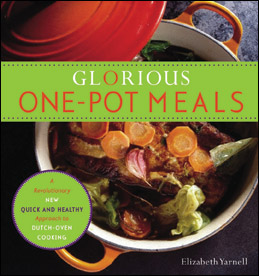
A 1999 diagnosis of multiple sclerosis forced Dr. Yarnell to re-think everything she thought she knew about health and inspired the now-patented invention of a quick and easy method for cooking whole foods that she introduced in her 2009 best-selling cookbook: “Glorious One-Pot Meals: A Revolutionary New Quick and Healthy Approach to Dutch Oven Cooking.”
In 2011, she launched the “Fight MS with Food” project to investigate the connection between diet and autoimmune symptoms. In this episode Dr. Yarnell shares some of what she discovered, for example:
  • Causes of inflammation and how to minimize it
  • What are food sensitivities and how you can become allergic to food
  • The gold-standard test for finding food allergies
  • The connection between diet and autoimmune symptoms
  • Other things that can cause inflammation besides food
  • What is ‘Dutch Oven Cooking, plus so much more….
I only wished we’d had more than an hour, as you will hear how passionate Dr. Yarnell is on her quest to improve lives simply by changing the way we think about food. Learn more about Dr. Elizabeth Yarnell and take time to explore her healthy eating and natural lifestyle blog, “Effortless Eating for Healthier Bodies” at ElizabethYarnell.com. Then join us on August 31, at 7PM ET at www.UnderstandingAutoimmune.com/Food.”

How to Eat and Be Healthy Without a Gallbladder

A friend of mine shared that her husband recently had his gallbladder removed but he still has gastric distress.

I asked if he were taking any digestive enzymes to replace those his gallbladder used to produce. She looked confused. No one had told them that he should do anything different after his surgery.

acute belly pain

I gritted my teeth as this is one of my pet peeves: when doctors remove organs, intestines, or other body parts without notifying the patient of what role that body part played to create health. Then they send the patient home without adequately informing him or her that this removal now necessitates a lifetime of proper supplementation and/or dietary changes in order to achieve complete digestion, efficient absorption and assimilation of nutrients from our food, and/or elimination of toxins.

The human body is a wondrously intricate and complex organism. Each piece has a role to play in maintaining life and health. The gallbladder’s role is to contain bile produced by the liver and then secrete it as needed to digest fats.

Yes, we need fats in our body! Fats are essential for absorbing fat-soluble vitamins like A, D, E, and K. They also provide energy and act as structural elements of cell walls.

Not trans fats, though. Stay away from those.

After losing a gallbladder, and beyond the risk of deficiencies which can affect the immune system, the eyes, the liver, and more, there is the very real and debilitating side effect of irregular bowels, cramping, and diarrhea.

For my friend’s husband, I recommended initially addressing his bowel health on two fronts: digestion and supplementation.

To improve his digestion, I suggest taking two plant-based digestive enzymes: PAN and BIL. PAN assists in all-around digesting of food, while BIL is more focused on digesting fats in particular. He should begin with one of each every time he eats, and work his way up to taking two of each every time he heats.

In terms of supplementation, we have to think about vitamins A, D3, E, and K. I always think it’s preferable to get vitamins and minerals from foods rather than processed supplements. Fish oil is a good way to get bioavailable A and D. K is found in leafy greens and cruciferous veggetables; E is in foods including whole grains, almonds, avocados, sunflower seeds and sunflower oil.

If you take these vitamins as supplements, be sure to take them when eating fats so that they can be absorbed and assimilated.

As I told my friend, there is a lot more he could do to help his body thrive in spite of the loss of the gallbladder. If you’d like to explore what else can be done to achieve health after losing a gallbladder, use my Contact form to claim your free initial phone consultation and we’ll get it scheduled!

Swollen Hands Due to Diet

Could the inflammation in your body be due to what you’re eating? Absolutely.

And, if this statement is true, then the opposite is also true: that you can reduce inflammation in your body by changing the foods that you are eating.

This is a story about a woman I met at a chance meeting who was suffering from terrible inflammation. I could see the inflammation just by looking at her, but at the time I did not know how negatively it was affecting her life. As it happened, the previous day she had photographed her hand, which was so swollen that it was painful to open for the picture.

Inflamed hand on 7/16/17.

We began working together the following week and on August 8, 2017, she began implementing a LEAP diet that was scientifically designed to be anti-inflammatory for her based on the results from her Mediator Release Test (MRT). The MRT is the gold standard in food sensitivity testing and takes all the guesswork out of figuring out what you should and shouldn’t eat in regards to inflammation. The results are as unique as your fingerprint.

Before we started working together, she had many days when she was in so much pain that she couldn’t get out of bed. In fact, she had been in bed since June when we met in mid-July. As she told me later, she realized that the reason she had dragged herself out of bed and to that meeting on July 17th, was to meet me and take control of her health.

Same hand on 2/28/18, a little over 6 months later.

On February 28th she emailed me saying, “I don’t know if you have ever seen this, but it was by fate that I had these pics. I took the first one 7/16/17 the day before I met you. It was for a hand analysis session. I was having a hard time opening my hand to get a good pic.

The second one is today, 2/28/18. A world of difference. I was floored. I accidentally discovered this by cleaning up photos on my phone. When I saw the picture, I sat up. I immediately looked at my hands and couldn’t believe it. You can see the information so clearly.

I am also sending to my mastermind group who are hand analysts. I am not, but sent the photo into a group last summer. I would like them to know that if they ever see this, to bring forth as further discovery and suspect for inflammation and forward on to an ND or such. It’s profound.
Glad that you are going to blog about this. It was fate to have this baseline picture, but this could also be a baseline activity to consider so that others can physically see their progress and keep going.”
Are you suffering from painful inflammation? Is inflammation affecting your life in a negative way, keeping you from doing the things you’d like to be doing? If so, contact me to schedule a free initial phone consultation. What have you got to lose – except