Elizabeth Yarnell Amazon icon Audible icon Autographed icon Bluesky icon Book Bub icon Buffer icon Booksprout icon Buy Me a Coffee icon URL Copied! Copy URL Email icon Facebook icon Goodreads icon Headphones icon Home icon Instagram icon LinkedIn icon Linktree icon Mastodon icon Patreon icon Periscope icon Pinterest icon Reddit icon RSS icon Search icon Share icon Snapchat icon Threads icon TikTok icon Tumblr icon Twitter icon Vine icon Youtube icon Join a free Q/A Call!

The Carb Conundrum: Using whole grains to lose weight

As Americans we have mixed feelings about carbohydrates. On the one hand, we blindly jump on the low-carb bandwagon and follow unhealthy, low-carb or no-carb diets in our pursuit to lose weight quickly. On the other, we love our white bread, enriched pasta and potatoes in any form. Our expanding waistlines witness our confusion.

While protein is the building block of muscle mass, carbohydrates are what give us the energy not only to lead active lifestyles, but also to complete autonomic functions such as breathing, blinking and heartbeats.

A body denied carbohydrates enters ketosis, an unbalanced, acidic state, and then begins to cannibalize itself in the pursuit of fuel for energy. Talk about an unhealthy state!

The key lies in knowing which kinds of carbs help us and which we’d be better off without. This strategy falls into the weight-loss category as well as the healthy eating category, because I have found that eating whole grains can help drop the pounds as they encourage the body to process all foods more efficiently.

Processed and refined carbs, like those found in white breads, white crackers, pastas, etc., and white rice, come from grains where the bran and the germ have been removed. That amounts to lost dietary fiber, protein, and a host of other nutrients. Remaining are calories that the body can’t completely access without the missing elements.

Complex carbohydrates— like those found in whole grains, legumes, nuts, seeds, seaweeds and vegetables and fruits— provide exactly what our bodies need in just the right proportions and amounts to be most fully utilized.

While the healthfulness of oats made headlines for a while, all whole grains offer similar benefits. They’re low in fat and good sources of fiber, vitamins, minerals, and protein.

A recent Tufts University study showed that consuming at least three servings of whole-grain foods daily can lower risks for abdominal obesity, high triglycerides, low HDL cholesterol, high blood pressure and poor blood sugar control. Eating any whole grains— not just oats — can put you in better shape for treating or avoiding diabetes, cholesterol issues, heart disease and even cancer.

Even though diabetics are often advised to restrict carbohydrate intake, the American Diabetes Association encourages even diabetics to include three daily servings of whole grains. Though refined carbs can cause a spike in blood sugar levels because they move through the body so quickly, whole grains are digested slowly, maintaining a glycemic balance while providing a satiated feeling.

Whole-grain diets also promote bowel health through maintaining regular movements and promoting growth of healthy bacteria in the colon. You gotta love that!

Look for labels that read “whole wheat” or “whole grain” rather than simply “wheat” or “multi-grain”. Here are some whole grains to help expand our healthy carb repertoire:

_ Whole-grain corn (grits/polenta/popcorn)
_ Whole oats/oatmeal
_ Brown rice
_ Whole rye
_ Whole-grain barley
_ Wild rice
_ Buckwheat
_ Bulgur (cracked wheat)
_ Millet
_ Quinoa (the only grain that is a complete protein)
_ Sorghum (a gluten-free grain)

Kids’ cough medicines off the market

Earlier in January, the “recommendation” to avoid using over-the-counter cold medications for children under two became an outright ban. Concerned parents are pushing even further, to extend the ban for kids under 6. It seems something like 6,000 kids visit emergency rooms every year from overdosing on cough syrup, decongestants, and other common cold medicines. 2/3 of these cases occurred without a caregiver’s knowledge even when the caregiver was present. I guess childproof caps aren’t so childproof after all.

The government’s advice: “stop telling kids that medicines taste good.” Classically ineffective, as befits this administration.

Luckily, out of the Czech Republic comes a new study validating the benefits of saline nasal rinses to keep sickness away and speed recovery if already present. In this study they used Atlantic seawater and required rinsing 6 times daily, which requires one to have extremely compliant children!

Little NosesI see the effects just by using Little Noses saline spray, as I’ve discussed previously, 1-3 times daily, or however frequently I can wheedle, cajole, bribe or threaten my kids to accept getting their noses squirted when they’re stuffy. I admit that I am not beyond holding them down when the situation requires it! As the mom, it is my duty to do what’s best for my kids’ health — whether they like it or not!

Frozen Food Co-op

We belong to a frozen food co-op and it is one of the best resources we have to practice effortless eating.

Every 6 months or so they come and load our freezer with individually-vacuum-sealed chicken breasts, hamburger patties, fish filets, pork tenderloins, turkey breasts, etc., as well as bags of organic frozen veggies and even some prepared foods of our choice. We determine the menu, everything is organic or as close to it as possible, and it’s less expensive than buying these things at the regular grocery store.

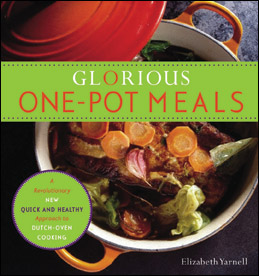
One of the best things about the Glorious One-Pot Meals cooking technique is that you can pull foods that are rock-solid frozen out of the freezer, toss them in your pot with some flavorings, and voila! You’ve got a complete and healthy meal that doesn’t take any longer to cook than if the ingredients were thawed first.

Here’s the company we use: Town & Country Foods. They are only active in some parts of the country. If you decide to join (it’s a membership), please mention that I sent you!

The Fall of Trans Fats

Today’s weight loss tip: Ditch the trans fats.

Yes, you’ve heard about how trans fats are the scourge of our food industry and likely you’ve even heard that New York City banned cooking oils with trans fat from all restaurants last year, but did you know that now the nation’s top cooking schools are getting on the anti-trans fat bandwagon?

Yesterday’s Associated Press article (1/27/08) announced that Johnson & Wales University, one of the nations largest cooking schools with several campuses around the country, will begin to train future chefs in non-trans fat cooking. It’s about time.

What are trans fats? They are forcibly created when hydrogen is added to liquid cooking oils to harden them. They hang out in your arteries and contribute to heard disease. Restaurants and packaged good makers love them because they increase shelf life and are cheap ingredients.

The great thing about deciding to avoid trans fats is that you’ll automatically knock out a lot of unhealthy and fattening foods without even trying. Twinkies, for example. And other snack cakes, many crackers and some chips. You’ll have to read the labels to know for sure, but this has recently become easier as relatively new regulations require foods to list the trans fat (also called “partially hydrogenated” or “hydrogenated” oils) on the label.

Reading labels is a good habit to get into anyway.

Monday’s Weight Loss tip: Leafy Greens

Ok, so it’s not Monday, but Monday was a holiday, kids were home from school and it threw my whole week off. So let’s just say today feels like Monday.

Today’s weight loss tip: eat leafy greens!

Am I trying to tell you that salads help you lose weight as if that were something you didn’t know? It’s true, salads do help you lose weight but not for the reasons you might think.

Yes, salads are low-cal, filling, and full of fiber, but did you know that leafy greens contain digestive enzymes to help break down the rest of your foods, too? While I DON’ T believe that you need to live on salads to lose weight, I DO believe that healthy bodies need leafy greens to fully process foods.

When I’m trying to lose weight, I find that simply replacing one meal a day with a meal based in leafy greens is enough to get the metabolism moving. I saw this in action one summer about 15 years ago when I was working as a receptionist and ate a Wendy’s salad for lunch for a month without changing the rest of my diet. At the end of the month I had lost almost 10 lbs.!

Personally, I like to add a handful of lettuce or two to leftovers, tunafish, soup, whatever I’m eating. It might be a tortilla with beans, tomatoes, salsa and a pile of lettuce. Or, like in my last Egg McMuffin post, a mess of lettuce to go with my whole grain English muffin and egg. Here’s a post on a tomato and avocado salad I like to make in the summer. I like to eat this way even when I’m not trying to lose weight, just because it makes me feel like my body is running at optimum efficiency.

Yesterday, I made a huge cauldron of chicken soup with posole and green chile. I pulled a Jessica Seinfeld and ran a sheaf of kale through my food processor before adding it to the soup at the end of cooking. My kids scarfed it down, none the wiser that they were getting leafy greens in every bite. (recipe to come shortly)

So, just adding this one element to your diet can do wonders. Try it!