Elizabeth Yarnell Amazon icon Audible icon Autographed icon Bluesky icon Book Bub icon Buffer icon Booksprout icon Buy Me a Coffee icon URL Copied! Copy URL Email icon Facebook icon Goodreads icon Headphones icon Home icon Instagram icon LinkedIn icon Linktree icon Mastodon icon Patreon icon Periscope icon Pinterest icon Reddit icon RSS icon Search icon Share icon Snapchat icon Threads icon TikTok icon Tumblr icon Twitter icon Vine icon Youtube icon Join a free Q/A Call!

Targeting “Bad Cholesterol” with Drugs Does Not Help Heart Health

Setting targets for ‘bad’ (LDL) cholesterol levels to ward off heart disease and death in those at risk might seem intuitive, but decades of research have failed to show any consistent benefit for this approach, reveals an analysis of the available data, published online in BMJ Evidence Based Medicine.

Cholesterol-lowering drugs are now prescribed to millions of people around the world in line with clinical guidelines. I have never been a fan of these drugs and have been talking about my disapproval of statins since at least 2008.

In this study, researchers looked at the data to see if cholesterol-lowering drugs do what they claim to do and reduce the risk of heart disease and death. Their conclusion:

“Considering that dozens of [randomized controlled trials] of LDL-cholesterol reduction have failed to demonstrate a consistent benefit, we should question the validity of this theory.”

While I’m not surprised, I’ll be some of you are experiencing some cognitive dissonance because for decades we have been trained to believe that we need cholesterol-lowering drugs in order to live longer. As it turns out, when it comes to statins and other cholesterol-lowering drugs helping us live longer, it’s more a myth than a reality.

So, will this information change prescribing patterns of cholesterol-lowering drugs by mainstream doctors?

Probably not. As the researchers noted: “In most fields of science the existence of contradictory evidence usually leads to a paradigm shift or modification of the theory in question, but in this case the contradictory evidence has been largely ignored, simply because it doesn’t fit the prevailing paradigm.”

Your doctor may not acknowledge that the only one benefitting from your statin prescription is the drug company, but now you know and can make this decision for yourself.

If you’re nervous to stop taking one of these drugs, check out these other articles I’ve written about cholesterol and health, and please feel free to contact me to discuss natural ways to lower cholesterol without drugs.

Katinka’s Awesome Gluten-Free Grain-Free Chickpea Bread

One of the bummers about having to avoid eating wheat due to what it does to my body is giving up bread. Fortunately, my friend Katinka has come up with a delicious solution for the rest of us!

Whoever said that bread is the staff of life certainly understood how biting off a hunk of bread from a baguette –or even a run-of-the-mill sandwich on sliced bread– can delivery a satisfying eating experience.

Since bread has historically been made from wheat, that has left those of us who are Celiac, gluten-intolerant, or even simply gluten-sensitive like myself, left without an easy solution for a tasty bread or bread-like substitute for a sandwich. Or toast. Or just eating.

Enter Katinka, a mom and culinary nutrition expert. In 2012 she began searching for baked goods that are clean, organic, and free of all the major allergens, while also providing essential nutrition. When she couldn’t find any that met all of her criteria, she went into the kitchen herself and came out with the awesome flour mixes that we all can now enjoy at Katinka’s Nourishing Kitchen.

Last night I baked up her classic Chickpea Bread (chickpea flour, tapioca flour, chia seeds, ground flax seeds, baking powder, Himalayan salt) and not only was it super easy and fast (just add eggs and oil), but it was so yummy that I have to confess that I ate almost half the loaf for dinner with tuna and tomatoes and kale pulled fresh from my garden.

Then this morning I toasted up a slice and devoured it slathered with Miyoko’s Vegan Butter (made from cashews, like their vegan cream cheese).

What a treat to look forward to more bread in my future! Thank you, Katinka!

Bacon and Eggs Glorious One-Pot Meals Brunch Recipe

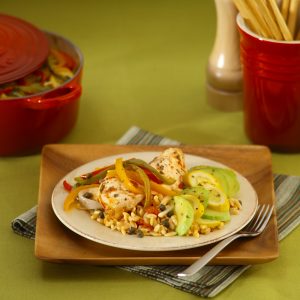
I don’t know about you, but I have been craving eggs during this quarantine! I put the craving to good use with this fun take on brunch that is awesome for dinner, too, or really any time of the day!

Vitamins to Help Avoid or Recover from a Virus

Ever since Linus Pauling first discovered how vitamin C works with the human body’s immune system over 100 years ago, we have been learning more and more about how the human body functions and the essential roles these substances play. The scientific field of orthomolecular medicine is the study of how vitamins, minerals, and other nutrients affect the human body. Orthomolecular medicine uses safe, effective nutritional therapy to fight illness.

Before we go into which vitamins and minerals could help keep you healthy or perhaps work to restore your health if you are already suffering, let’s be clear that this is not a replacement for any social distancing or personal protective equipment guidelines. As always, nutrient supplementation should be undertaken in addition to other health efforts such as eating a healthy, whole foods-based diet, getting exercise, avoiding chemicals, etc., and not instead of other efforts.

While we are calling the virus that causes this pandemic “novel”, there’s nothing unfamiliar about how to address viral infections and how to help our bodies resist and recover. In fact, there has been a lot of chatter in the world of natural health and in the world of scientific studies about the anti-viral effects of some vitamins and minerals that could prove useful. At worst, they won’t harm.

Vitamin C

Chinese officials have been successfully using IV vitamin C therapy in their battle against the virus, and there is abundant clinical evidence as to the efficacy of intravenous vitamin C in battling viral infections. While you can get i.v. therapy at a hospital if you are already admitted and insist on it, or at a stand-alone center, the rest of us should be taking it orally. There has been documented success in using vitamin C against any virus.

My preferred method of getting vitamin C is through foods such as citrus fruits, strawberries, kiwis, and acerola cherries, but supplements can be taken, too. 500-1,000 mg of vitamin C daily is a good goal for maintaining health, which I would double or even triple and take in divided doses if feeling ill. My favorite bio-available Vitamin C supplement is called OPT.

Vitamin D

Humans synthesize vitamin D from sun exposure to un-sunscreened skin, but the great majority of Americans are deficient. Studies have linked vitamin D deficiency to autoimmune issues and vitamin D works with vitamin C in helping us withstand viral assaults.

To supplement during this time where viral threats luck everywhere, 5,000 I.U. of D3 daily may help boost your immunity. Vitamin D needs to travel on fat, so be sure to take it with something that contains fat such as dairy products, avocados, etc.

Vitamin A

Most Americans are also deficient in vitamin A. Dr. Brownstein recommends 5,000 units of vitamin A (not beta carotene) daily as a preventative, and significantly increasing this amount for a limited time (4 days) if you are ill. It’s important not to take higher doses of vitamin A for a prolonged period to avoid vitamin A toxicity.

Vitamin A is found in foods from animal sources, including dairy products, fish, and meat (especially liver). If you are a vegan, now is an especially important time to supplement with vitamin A.

See a lot more tips and remedies for recovering from a viral infection in my ever-popular Kick-a-Cold series.

Stay well!

Remedies for Healing Broken Bones

My holiday weekend plans went awry when I stepped halfway off a curb while walking the dog. My toes went one way while my heel went the other, and I went down.

My kids like to say that gravity is not my friend.

And just that fast, I had an avulsion fracture of the fifth metatarsal.

As it happens, my line of work has taught me a few good remedies for pain management and bone healing.

As far as standard first aid, when I got home I propped my foot on pillows so that it was higher than my heart and I used ice packs on and off for the first few hours to combat the swelling that had started immediately.

Homeopathic Remedies for Injuries

The most important homeopathic remedy for any injury is always Arnica Montana to reduce the swelling and bruising. I started with a teaspoon of potency of 200C dissolved in water. I took a dose daily for the first three days after the break.

The best homeopathic remedy for knitting broken bones back together is Symphatum. I plan to take Symphatum 30C for the next week or two.

BEMER: The Best Pain Management Device. Ever

This European electra-ceutical device delivers rhythmic magnetic pulses that open up the capillary-level vessels to increase oxygen delivery to the cells while facilitating removal of waste products. I wrapped the pad around my foot and ran the 8-minute program at levels 8, 9, and 10 multiple times for acute therapeutic effects.

If I had needed any more convincing as to the benefits of the BEMER, relief from the pain of the break was quick and cumulative. No prescription drugs or their nasty side effects needed!

Within just a few days I’m already able to put some weight on that foot. Amazing speed healing, especially for a middle-aged person like myself!

Vitamin D

Moving forward, I’m also going to increase my Vitamin D to help the bone heal. Be sure to take vitamin D with some fat to help absorption!