Last month I was lucky enough to meet Moosewood Cookbook author Mollie Katzen when she was the keynote speaker at an Alzheimer’s Women’s Auxillary for Research and Education (AWARE) Memories “Lost and Found” luncheon.

In case you missed it, here is a snapshot of me and Mollie Katzen together – it’s always a special thrill when I get to meet someone whose work has influenced me so profoundly! That she was nice enough to chat with me about healthy food for a little while, sign my worn copy of her seminal cookbook, accept a gift of my cookbook, and even snap a picture with me, just cemented her status as one of my idols in the food world. It was a great day.
The take-home gift from the event was a small bundle of recipe cards featuring a few recipes from Mollie’s latest book: Get Cooking: 150 Simple Recipes to Get You Started in the Kitchen, and tied sweetly with an orange bow. What a nice goodie for foodies like me!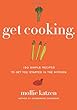 I should suggest this touch to the sponsors when I perform my keynote speeches at events.

The recipe that caught my eye first was this butternut squash and apple soup.
While I’ve loved Mollie’s recipe for Curried Squash and Mushroom Soup from the original Moosewood Cookbook, and have made it many times, my go-to recipe for butternut squash is usually my version of a Dairy-free Creamy Squash Soup, which always brings applause whenever I serve it.
To be honest, the idea of pairing apples with butternut squash didn’t sound appealing at first, particularly because my family likes vegetables more on the savory side than the sweet side. But we were delightfully impressed with this addictive soup and found it to be creamy and mouth-friendly with a hint of sassiness. Even my husband ate two bowls, and he usually shuns foods cooked with fruit.
As an added bonus, the herbs in this soup, thyme and sage, are two that winter-over in my herb garden, allowing me to step outside and pick fresh herbs on a blustery December day, which always makes me happy. They were delicious in the soup, too.
Thanks once again, Mollie, for another fabulous recipe to add to my repetoir!
[print-me target=”.recipe”]
Mollie Katzen’s Roasted Butternut Squash and Apple Soup
Yield: 4-5 servings
1 Tbsp. olive oil
2 med. (about 4 lbs.) butternut squash
2 Tbsp. butter
1 med. red or yellow onion, chopped
1 1/2 tsp. salt
2 med. Granny Smith apples, peeled and thinly sliced
1/2 tsp. crumbled dried (or rubbed) sage
1/2 tsp. dried thyme
4 cups water
Up to 1 Tbsp. fresh lemon juice, as needed
Up to 1 Tbsp. brown sugar (light or dark), as needed
Adjust the oven rack to the center position and preheat the oven to 400 degrees F. Line a baking tray with foil and drizzle it with the olive oil.
Use a sharp heavy knife to cut the squash in halve lengthwise. (Do this very carefully. Safest technique: Insert the point of the knife first, and use a gentle sawing motion to initiate the cutting.) Use scissors to cut loose the strands of pulp around the seeds, ad then scrape the seeds away with a spoon. Discard the seeds or reserve them to toast. Use a sturdy vegetable peeler to peel the squash halves. Then cut the flesh into 1-inch pieces, once again being careful with your knife because the squash can be both very hard and very slippery. (The shape and uniformity of the churnks do not matter since it will all get pureed.)
Arrange the squash chunks in a single layer on the prepared tray, and roast in the center of the oven for 20-30 minutes, or until the pieces are fork tender and turning brown around the edges. (Shake the tray a few times during the roasting to keep the pieces from sticking.) Removed from the oven and set aside.
While the squash is roasting, melt the butter in a soup pot or Dutch oven over medium heat. When the butter foams, swirl to coat the pan, and then add the onion and salt. Cook, stirring occasionally, for about 5 minutes, or until the onion begins to soften.
Add the apple slices, along with the sage and thyme, and continue to cook, stirring occasionally. For about 10 minutes, or until the apples are very tender.
Add the roasted squash and the water to the onion-apple mixture. Turn up the heat and bring the soup to a boil, then turn the heat all the way down to the lowest possible setting. Cover, and simmer gently for 10 minutes.
Remove the pot from the heat, uncover and let it sit until the soup cools down to a comfortable pureeing temperature. Use a blender or immersion blender to puree the soup until it is smooth.
Time for the taste test: if the soup tastes good, you’re there. If it seems too sweet, add some or all of the lemon juice. If it’s tarter than you like, add brown sugar to taste.
If necessary, reheat the soup gently over medium-low heat, being careful not to let it boil. Serve hot.
If you’re interested, here is where I deviated from the written recipe, mostly out of laziness:
Instead of peeling the squash before roasting, I simply halved and gutted the squash, then cut those pieces in half and rubbed them all over with olive oil before roasting them in the oven as Mollie suggests. After they were tender and had cooled a bit, it was easy to loosen the peels with the tip of a knife to where they just peeled right off.
Also, I didn’t peel my apples, nor did I use Granny Smith’s, because that would have required a trip to the store and I had a few apples in my kitchen that were maybe a little past their prime but were still good for a soup. I scrubbed them well with a veggie soap first, of course, and cut off any bad spots. I used my immersion blender to blend everything together. If I had peeled the apples, by the way, they would no longer be a “whole” food, and whole foods are more nutritionally desirable for your body.
We did not add any brown sugar, but perhaps the red apples I used were sweeter than the Granny Smiths she recommends.

 A Blog Jog is an opportunity to visit other blogs that you never would have found and discover some new information and new voices to tickle your fancy. Follow the Blog Jog path and as you hop from here to there keep an eye out for all the goodies bloggers are offering up today until midnight!