Elizabeth Yarnell Amazon icon Audible icon Autographed icon Bluesky icon Book Bub icon Buffer icon Booksprout icon Buy Me a Coffee icon URL Copied! Copy URL Email icon Facebook icon Goodreads icon Headphones icon Home icon Instagram icon LinkedIn icon Linktree icon Mastodon icon Patreon icon Periscope icon Pinterest icon Reddit icon RSS icon Search icon Share icon Snapchat icon Threads icon TikTok icon Tumblr icon Twitter icon Vine icon Youtube icon Join a free Q/A Call!

How to Find the Safest Sunscreen

The Environmental Working Group (EWG) has updated their sunscreen guide for 2012. EWG evaluates and assesses the safety and efficacy of sunscreens and even offers a free app so that you can check it out on the go.

One of the most effective public education campaigns in the history of this country has been the campaign to wear sunscreen to protect against skin cancer. Unfortunately, the success of this campaign has brought some unintended side effects.

1. Vitamin D deficiency. You need vitamin D for all sorts of things including calcium absorption and bone health as well as for a strong immune system. Our skin synthesizes vitamin D from the sun’s rays but sunscreen blocks this reaction from happening. Data collected from the National Health and Nutrition Examination Survey (NHANES), USA, shows that about 70% of US children are now either vitamin D insufficient or vitamin D deficient.

2. Carcinogens in sunscreens. It seems that many of the popular brands of sunscreen are little more than toxic stews full of chemicals with questionable ability to even block the sun’s rays. Instead of preventing skin cancer, these sunscreens may actually cause cancer.

So what is a responsible person to do?

First, be sure to get enough direct sunlight regularly on bare skin to keep your vitamin D levels up, but not so much that you get a sunburn.

Then, when it’s time to choose and use a sunscreen, EWG recommends choosing a mineral-based sunscreen containing titanium or zinc and avoiding chemical-based sunscreens, especially those containing the hormone disruptor oxybenzone.

Still confused? Download the free EWG sunscreen app and always have the safest sunscreen brands at your fingertips.

Don’t forget, though, the absolute safest option to protect from too many harmful rays of the sun is still the lowest tech one: a physical clothing barrier of a hat and a shirt.

Jamie Oliver’s Food Revolution Day 5-19-2012

Tomorrow is Jamie Oliver’s Food Revolution Day. Jamie rose to international prominence through hosting cooking shows on The Food Network. He has used his fame to spearhead a return-to-cooking and healthy eating movement aimed at the younger generations.

According to Jamie:

Food Revolution Day is an opportunity for everyone around the world to do something. The Food Revolution and Food Revolution Day is about empowering people through education or, frankly, just inspiring people to be more street-wise about food, where it comes from and how it affects their bodies. If you know how to cook you can save yourself money, feel better and live longer, and the chances are, your kids will follow suit. After all, we all kind of become our parents in the end.

On May 19, thousands of people around the world will come together — businesses, schools, sports stars and celebrities — to hold events, dinners and cooking classes, with the aim of putting good food back on the agenda. We want to change the way people eat by educating every child about food, giving families the skills to cook from scratch again, and motivating people to stand up for their right to better food.

Please go to http://foodrevolutionday.com and show your support.

What causes Irritable Bowel Syndrome (IBS)?

Irritable Bowel Syndrome (IBS) often stumps medical doctors. I see many IBS sufferers who carry thick files of medical records testifying to all the specialists they’ve seen, to all the medications they’ve tried, and to all the dietary and other advice they’ve received. IBS is a serious condition that can cause great physical distress to a sufferer.

In my experience as a naturopath, IBS can usually be traced to one or a combination of the following problems:

  • antibiotic usage.
  • bacterial infection.
  • parasitic infection.
  • enzymatic deficiency/intolerance.
  • decrease in oral tolerance thresholds, otherwise known as food sensitivities.

Let’s look at each of these a bit more closely and see where the solutions to IBS may lie.

Bacterial infection

If you have a bacterial infection, the culprit could be salmonella, e.coli, c.dif, or another pesky and sadly-too-common bacteria. Usually these will appear when a medical professional takes a culture and looks for them. Typically, these tests have already been done by the time a client comes to see me, and if they show positive results a course of antibiotics can make a big difference.

Antibiotic use

Of course, a round of antibiotics will kill off not only the bad guys, but also a lot of the good bacteria you need to assist in digesting your foods. Probiotics can help balance this, though sometimes you need to try several types to find the one you need.

Parasitic infection

International travel, camping, gardening… there are lots of ways you can get infected by parasites. Once, the entire city of Milwaukee was infected with cryptosporidium through the water supply, so don’t look at this as a stigma or judgement on your personal hygiene.

The host cycle of a parasitic infection can include acute phases and chronic phases. The life cycle of a parasite includes eggs, larvae, and adult stages, and it is important to target all three when eradicating the infection. Western anti-parasitic medication — Flagyl — will only get the adults, and it is not effective against all species, either. I advocate a gentle, herbal program for longer than 15 days to see the best effects. Then, you may still need to repeat the herbs 6 months to one year later, if the symptoms reappear.

By the way, testing for parasites is notorious for false negatives. If you suspect parasites, I always advocate doing a parasite cleanse without bothering with expensive, unreliable testing.

Enzymatic deficiency

The villi are the little hairs that line the insides of your stomach. Their job is to sense the food that you eat and call for the correct enzymatic formula to digest the food into small enough particles so that the villi in your intestines can absorb the nutrition and assimilate it into your body. When you are chronically inflamed, the villi get smashed and flattened and are unable to do their job well. The food does not get broken down enough, absorption and assimilation doesn’t happen, and deficiencies develop. Enzymatic deficiencies cover intolerance, too, such as lactose or gluten intolerance.

Supplementation with plant-based digestive enzymes can help correct this and enable nutrient absorption.

Decrease in oral tolerance, aka food sensitivities

I listed this last because I believe food sensitivities can be incited by any of the above-mentioned conditions, or perhaps you are simply a sensitive person who has unwittingly crossed their tolerance threshold through other circumstances.

Food sensitivities can manifest in a whole host of issues caused from inflammation in the body where it shouldn’t be: migraines, fibromyalgia, IBS, arthritis, MS, etc., etc., etc…. Food sensitivities likely play a role in every chronic condition that has inflammation at the root level.

The hopeful thing is that, if you can figure out the cause and address it appropriately, you can eliminate the irritable in IBS and lead a pain-free, “normal” life.

Soy lecithin: healthy or toxic?

The additive soy lecithin is everywhere in our processed food supply, but what is it really and why is it used?

When food sensitivity testing showed my son was highly sensitive to soy lecithin, I started looking for it on labels. And I found it everywhere: in creamers, infant formula, almost every chocolate candy or bar, peanut butter, margarine, spray oils… Soy lecithin is a darling of the food industry because it is an emulsifier that helps keep creamy things from separating.

Pam olive oil spray
Even organic spray oils typically contain soy lecithin.

And its cheap because it’s the byproduct of a stinky sludge left over from making soybean oil. Yep, this is a similar story to that of the corn industry who hired scientists to find more uses for products based in corn, which is how we came to have such ubiquitous — and cheap — products in our processed foods such as high fructose corn syrup.

Decades earlier, by 1939, scientists hired by the soybean refining industry had cooked up more than 1,000 new uses for soybean oil byproducts. Nowadays, soy lecithin’s slipperyness makes it a useful ingredient in compounds like rocket fuel and fracking liquid. It’s also one of the top ten commonly used additives in processed foods.

Although the soy protein should have been altered by processing so as not to be allergenic, some people with soy allergies may still react to lecithin. Others, like my son, are non-reactive to actual soy products (he can easily eat a bowl of Edamame without a problem) but react strongly to soy lecithin.

Misto oil sprayer
I usually fill my Misto oil sprayer with olive oil.

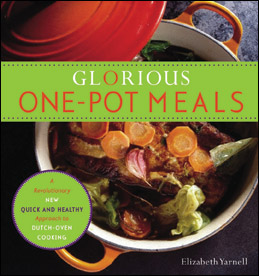
If you’ve read my cookbook, Glorious One-Pot Meals, you know that I was an avid user of spray oils to coat the inside of the pots used with my recipes. Now I can see that even the small amount of a spray oil containing soy lecithin, like PAM, used to grease a baking sheet for making cookies, is enough to trigger an inflammatory reaction for my son.

Do not fall for any bogus health claims pertaining to soy lecithin by keeping in mind that it is a chemically-manufactured substance derived from the waste from other processes. Our bodies have not evolved to be deficient in soy lecithin: you do not need to supplement with it to achieve a healthy state.

Now when I’m looking for a non-stick effect, I might use a refillable Misto spray bottle, or simply wipe an oil directly on the inside of the pot, rather than use a commercial spray oil canister containing soy lecithin.

If you are suffering from migraines, mood swings, ADHD, or even arthritis, you might be reacting to the soy lecithin in your foods. You can try simply eliminating soy lecithin from your diet to see if it helps relieve your symptoms. Of course, the only way to know for sure what foods or additives cause inflammation in your own body is to take a food sensitivity test like the MRT.

Thyme as an acne remedy

What can you use as a natural acne remedy? It appears that tincture of thyme may be the answer.

I remember when one of my girlfriends went through medical school and did a rotation in dermatology. Her goal for that session, she confessed to me, was to learn how to have a clear complexion. At the end, I asked her what the secrets were. She told me: benzoyl peroxide, salicylic acid, and topical antibacterial application.

I remember feeling disappointed. These medicines all have serious side effects when used occasionally or regularly ranging from dry, peeling skin, a burning sensation, redness and irritation, and photosensitivity to overabuse of antibiotics and disruption of the normal bacterial load on your skin. Besides: this was not new information. I wanted to know more.

We know that acne is caused when bacteria and/or dirt gets trapped inside pores by dead skin cells and dirt or makeup. My inclination is always to first to maintain a regular regimen of cleansing, exfoliating, toning, and moisturizing, and see if that helps to keep the skin clear. Personally, I know that I get wicked pimples whenever and wherever my cell phone touches my face (for this I blame the dirty little fingers that beg to play the apps on my phone).  The solution: wash the cell phone more often and wear a headset whenever possible.

But I digress from the exciting news out of Leeds Metropolitan University in the U.K: the antibacterial power of thyme works well on acne!

In fact, the thyme tincture was more powerful than standard concentrations of benzoyl peroxide, which is the active ingredient in many acne products. And it was more soothing to the skin at the same time.

You can make your own thyme tincture, or any other herbal tincture, with these herbal tincture instructions.

I planted thyme when we moved into this house almost seven years ago, and it has come back faithfully every summer. I think I’ll make a thyme tincture this summer. You know, just to have around for those times when I am forced to hold my cell phone between my shoulder and my cheek. I know this is something I should never, ever do. But sometimes, despite my best efforts, it happens anyway and I pay for it in so many ways afterward. I’ll let you know how it goes when I make it!