Elizabeth Yarnell Amazon icon Audible icon Autographed icon Bluesky icon Book Bub icon Buffer icon Booksprout icon Buy Me a Coffee icon URL Copied! Copy URL Email icon Facebook icon Goodreads icon Headphones icon Home icon Instagram icon LinkedIn icon Linktree icon Mastodon icon Patreon icon Periscope icon Pinterest icon Reddit icon RSS icon Search icon Share icon Snapchat icon Threads icon TikTok icon Tumblr icon Twitter icon Vine icon Youtube icon Join a free Q/A Call!

How Green Smoothies Can Be Bad for Your Health

More leafy greens are always good for you, the more the better, right?

As usual, when you make a general statement about everyone in the population, that statement may not be valid for everyone. When it come to leafy greens, they are high in oxalates which give some people trouble when they form oxalate crystals in the body.

Of course, if you start a new regular habit of drinking green smoothies, you’re going to initially feel better. But oxalate crystals can accumulate in various parts of the body and the irritation can cause chronic pain.

A classic case of a little bit of something being good but a lot of it being not so good.

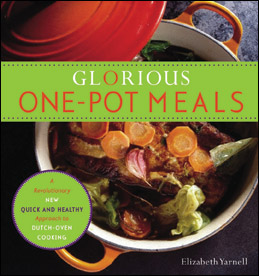
Glorious One-Pot Meals good for heart disease

Just after 9 am yesterday my phone rang. It was the city’s Water Department calling to schedule an appointment to fix my water meter. After we had settled on a date, the caller asked me another question: “Are you the lady that writes the one-pot meal cookbooks?”

“Yes, I am,” I admitted with that astonishment I always have when I am recognized in the grocery store or bank.

She proceeded to tell me about how much she loved my cookbook, especially because her husband had some heart issues and was on a sodium-restricted diet. She appreciated that my recipes include the sodium amounts per serving as it makes it easy for her to cook and calculate his daily sodium intake.

I always love hearing testimonials from people who feel Glorious One-Pot Meals has changed their lives in some way. Often I hear that knowing how to make GOPMs means the family eats at home more often, or they’ve lost weight, or they eat more vegetables now. Tales like these remind me that as challenging as this journey has been to continue over the last thirteen years, it has touched more lives than I realize.

“Thank you,” I told her. “You’ve made my day.”

And I wore a big smile all day.

Are “Cage-free eggs” the same as “”Organic eggs”?

Let’s get this straight: “cage-free” does not equal “organic” when it comes to chicken eggs. It’s good to know the difference when you’re wondering whether it’s worth the extra dollar for the word “organic” on the egg carton.

There are many types of ways you can get your eggs these days, and it’s easy to feel overwhelmed and just snag the cheapest carton available at the grocery store. Besides “organic” and “cage-free,” you might see eggs that boast “fed vegetarian feed,” “omega-3s,” “vitamin D,” and even “low cholesterol”. What’s a health-conscious shopper to choose?

Here’s the lowdown on what all these buzzwords on your eggs mean:eggs

Conventional eggs. Ok, you won’t see the word “conventional” on the egg carton, but regular eggs come out of conventional egg producing operations. As we have only recently become aware, the conditions usually include rows and rows of hens that are kept in wire mesh cages sometimes too small to stand up or move around. The crowded conditions require the frequent use of antibiotics, and growth hormones and other chemical stimulants are allowed by the FDA to increase egg production. Other conditions might include sleep deprivation, beak shearing, and cut feet from the wire base. These eggs are cheapest to produce, and hence the cheapest to purchase.

Cage-free eggs. “Cage-free” means that the hens are not confined to wire cages and are allowed to roam in a pen. This could mean that the hens get outside access, or it could mean an indoor pen that may be very crowded. The carton may include a further indicator telling you if the chickens have outdoor access or not.

Free range eggs. Free range hens have the run of an outdoor area where they can peck around and play hen games for at least a limited amount of time each day. “Free range” does not address the content of the feed nor does it cover antibiotic use.

Brown eggs. Brown eggs come from brown chickens; white eggs come from white chickens. Chicken eggs are determined by the color of the hen’s feathers and the breed of chicken.

Vegetarian diet. This indicates that their Chicken Chow does not contain any non-vegetarian ingredients. Conventional Chicken Chow may contain protein derived from animal parts to bulk up the chickens more quickly. In a natural life, chickens enjoy worms, grubs and insects as well as grains and seeds, but never protein from other animals or birds. Bovine spongiform, better known as mad cow disease, is an example of what can be spread through adding animal remnants to the feed for herbavores. “Vegetarian-fed” eggs ensure that these egg-layers were never fed carnivorous feed.

Omega-3 eggs. If eggs are labeled “omega-3”, it usually means that omega-3 fatty acids were added to the hens’ feed. These omega-3 fatty acids may be derived from flax seeds or from fish oils; you’ll have to read the package to know for sure.

Vitamin D eggs. As with the claim for fatty acids, if eggs claim they contain vitamin D or other nutrients it is because they have been added to the chicken feed.

Low cholesterol eggs. This, too, is accomplished by altering the hens’ diet, often by using canola oil for the fat in the mix. If you are a fan of canola oil (a GMO created by the Canadian Oil company), and believe the flawed theory that cholesterol is a risk factor for heart disease, you might look for this claim on the carton. Remember, however, that canola oil is not part of the natural diet of a chicken.

Fertile eggs. Most eggs you purchase are not fertilized; fertile eggs have been fertilized and often contain a bloody spot that is the precursor to an embryo. Some people think these offer hormonal or other benefits. An egg with a bloody spot is not considered kosher.

Farm-raised or Pasture-raised eggs. These come from hens who live in a classic farm-like environment where they have the run of a yard to peck around in and get a natural variety in their diet.

Organic eggs. According to the USDA, organic egg layers must have outside access and not be kept in cages. They must be fed certified organic, vegetarian feed free of GMOs. Antibiotic use is restricted and inhumane treatment such as forced molting is not allowed. Certain animal welfare guidelines must be followed.

To return to the original question posed by this post: Are “cage-free” eggs the same as “organic eggs”? The answer is no. Although it’s good to know that the producers of your breakfast eggs don’t spend their lives in cramped wire cages, “cage-free” hens may still be receiving regular antibiotics and be eating feed containing animal byproducts and GMOs. They may still be subject to forced molting to increase egg production and other inhumane conditions.

The “organic” certification on eggs insures the purest eggs produced without questionable animal byproducts in the most humane conditions. It’s up to you to decide if that extra dollar is worth it at the grocery store.

Everyday Shea lotion

Shea butter is one of my favorite moisturizers, and I like how my skin feels after applying Everyday Shea Moisturizing Body Lotion for daily moisturizing after bathing.

Everyday Shea pours a bit thinner than you might expect if you’ve played around with shea butter before, but once you get used to that you might find that you like the way it spreads. As with all shea butter products, it absorbs best when you slather it on freshly-bathed, still-moist skin.everyday shea moisturizing body lotion

The healing and moisturizing properties of shea butter have been extolled for aeons in Africa where it is used for everything from healing sprains to hair and skin care, a cooking oil, and even as a decongestant.

Everyday Shae uses pure, unrefined shea butter that has not been treated with chemical agents to be refined, bleached, and deodorized. It’s free of parabens and synthetic fragrances and is not tested on animals. Everyday Shea is also a Fair Trade company created to help support cooperatives that empower women in Togo, West Africa.

While Everyday Shea does not appear in the Environmental Working Groups’ “Skin Deep” database that rates cosmetics for safety, the primary ingredient of shea butter warrants a hazard factor of 0 (yes, that’s a zero) for toxicity and adverse effects. It looks like shea butter is in fact one of the safest moisturizers available to hydrate your skin.

Everyday Shea Moisturizing Body Lotion comes in three scents: unscented, lavender (made with pure French lavender essential oil), and vanilla (scented with pure, natural vanilla extract from Madagascar’s Malagasy vanilla beans). I’m partial to the vanilla (always!), but like to mix it with some of the lavender, too.

Note: Unless otherwise noted, my reviews are always unbiased and uncompensated.

Why you should wash your melons

As I prepared to cut into the first watermelon of the season over the holiday weekend, I remembered to wash it first. As the knife moves through the rind to the fruit it can carry along dirt and pathogens from an unwashed skin. Remember last summer’s listeria outbreak that was traced to the rinds of cantaloupe? A simple washing of melons and hands before cutting could have avoided most if not all of those cases.veggie rinse

I always use a veggie rinse like Fit Fruit and Vegetable Wash to ensure my melons, and indeed, all of my produce, is really clean. Fit claims it removes 98% more dirt, chemicals, and wax than water alone when used correctly, and I suspect that most veggie washes are similar with a basic mix of baking soda and citric acid.

Even organic produce often are coated with anti-fungal agents, albeit natural ones, but not anything you really want to eat. My advice: spray and wash everything before you eat it raw or cook it.

For melons, spray with your veggie wash and rub it around with your hands for about a minute to really clean the orb well, then rinse with water and feel safe to cut away.