My mother-in-law has complained that the avocados she buys are bruised and spotted when she cuts them open that evening. My trick is to buy avocados before they are ripe, when they are firm and more resistant to bruising, and then to let them ripen over the following few days at home where they won’t be jostled and damaged. Avocados are ready to eat when they give slightly to a gentle squeeze.
Avocados are on the Environmental Working Group’s list of the Clean Fifteen, those non-organic fruits and vegetables that are the least contaminated by pesticides, so you don’t have to feel guilty about taking advantage of those 10 for $10 specials when they come around.
Organic or not, always wash avocados and other fruit before slicing through the skin to remove grime, pesticides, bacteria, and parasites.
Last week, at our annual summer family reunion, I was asked why I was I was washing the avocados before slicing them open to make guacamole. Washing all produce before cutting into it is a basic foundation of modern kitchen hygiene, but many people operate under the false assumption that fruits and vegetables with peels and rinds are exempt. This can be a dangerous mistake.
Bacteria, pathogens, pesticides, and grime can be carried by the knife blade from the skin and onto the flesh of your produce, contaminating the food you serve. As I’ve mentioned before regarding last summer’s listeria deaths from unwashed cantaloupes, washing the rind or peel before cutting into an item is the only way to prevent contamination of the flesh from the knife blade.
Even organic fruits and veggies should be washed first, preferably using a food-safe soap like Fit Veggie Wash or one you make yourself out of baking soda and vinegar or lemon juice, and then rinsed well.
Common produce items that people might mistakenly think are ok to skip washing include:
Citrus fruits like lemons, limes, oranges, and grapefruits. Don’t overlook that lime wedge you’re squeezing and then dropping into your drink where it can transfer all of its contaminants to the liquid and into your body.
Avocados
Pineapples
Melons
Artichokes
Winter squash (pumpkins, acorn, etc.)
Bananas, when are sliced with a knife
Kiwis
Don’t forget to wash your hands, too, after handling unwashed produce and before preparing your food, to avoid spreading any undesired contaminants into the rest of your food or household.
Can you think of any other fruits and veggies that people routinely think are safe to cut into without washing first?
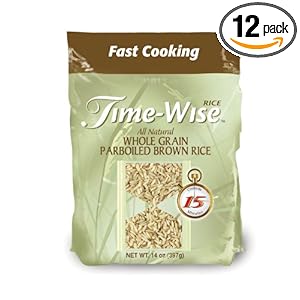
Reader question: I have not figured out how to buy parboiled brown rice. Can you please give me some examples of brands? Is this like minute rice? I’ve always thought the nutrition was not as good as whole uncooked rice. ~ Gail H., San Francisco Bay Area, California
Hi Gail. Parboiled rice is rice that has been soaked in the husk, steamed, and dried before sale. Re-cooking parboiled rice does not take as long as cooking raw rice does because it has been partially pre-cooked already. On the stovetop, parboiled rice may cook in one-third the time needed to cook raw rice.
Parboiled white rice retains 80% of the nutrients of brown rice, more than regular white rice, which loses a lot of nutrients when the bran is removed during polishing. During parboiling, the nutrients are pushed from the bran into the endosperm, or kernel, of the rice.
Parboiled rice is often sold as “instant” rice, “minute” rice, “boil-in-a-bag” rice… The sole ingredient in parboiled rice is rice. Rice that has been slightly pre-cooked and then dried out. I can find parboiled brown rice in “boil-in-a-bag”, 1-cup portions in my local Kroger’s grocery store as well as in natural health groceries.
When I want to prepare brown rice in a Glorious One-Pot Meal, I find using parboiled brown rice gives more consistent results than starting with raw brown rice.
What I have not been able to find is parboiled organic brown rice. I’m holding out hope. If anyone finds any, please let me know!
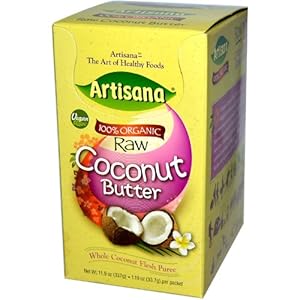
I saw these cute individual-serving size packets of Artisana Raw Coconut Butter next to the checkout line at Vitamin Cottage Natural Grocers, and decided to grab a couple and check them out. I love everything coconut for it’s amazing health attributes, and thought this might offer a nice alternative to peanut butter for my peanut-sensitive child.
I kneaded the packet to mix it up well, and spread it thickly on a piece of Rudi’s Organic Spelt Bread (the typical sandwich bread in my household). I decided to test out a few different options, so on the other side I spread 1/4 with organic seedless blackberry jam, 1/4 with almond butter, 1/4 with both almond butter and jelly, and the final quarter I left empty.
My and my daughter’s favorite combination? Artisana Raw Coconut Butter with jelly, hands down. Yum! I look forward to packing coconut butter and jelly sandwiches for school lunches this fall.
Have you heard of Yonanas? It’s a unique little kitchen appliance that transforms frozen bananas and fruits into luscious soft serve ice cream. I kid you not: what emerges after only seconds has the satisfyingly creamy texture of soft serve ice cream but the only ingredients are bananas and whatever other frozen fruits, nuts, etc. you choose to add to your ice cream treat.
I learned of Yonanas when a friend told me it was the rage of her Weight Watchers group because it allows you to create truly wholesome, guilt-free and low-point desserts. I realized that it’s also a great tool for people with food sensitivities or food allergies to make delicious desserts out of their personal safe foods, so I thought I should check it out first, you know, in the name of research.
Yonanas
I brought Yonanas to a recent family get-together in a mountain condo and whipped out fresh desserts for eleven people in about five minutes. That night I offered organic Colorado peaches and plums that I had cut up the night before and frozen in containers overnight along with the bananas. I had purchased bags of frozen organic mixed berries and blueberries as well, and made each batch to order.
Mixed berry Yonanas dessert
I’ve also pitted and frozen fresh organic Colorado cherries and cubed sweet Colorado cantaloupe from the Western slope. I’ve enjoyed them all. A blueberry-banana batch of Yonanas celebrating my son’s return from 2 weeks of overnight camp in the mountains was a universal favorite even for my husband, who is an admitted ice cream snob.
Cleaning the machine is easy, making it more likely that I’ll use it often, which is exactly what I’ve found. Now, instead of spending $4-5 on a pint of ice cream, sorbet, or non-dairy ice cream, I pick up discounted, older, spotted bananas (organic, of course) to peel and freeze. The more mature bananas make for a sweeter Yonanas product. I’m sure that we’ve already balanced out the cost of the appliance with what we’ve saved from not buying ice cream.
I have this idea of pressing Yonanas into my BPA-free popsicle molds to make Yonanas popsicles, but I’ve yet to have a surplus left over from a Yonanas session with which to try this out. I’ll let you know when I try it!