
Elizabeth Yarnell Amazon icon Audible icon Autographed icon Bluesky icon Book Bub icon Buffer icon Booksprout icon Buy Me a Coffee icon URL Copied! Copy URL Email icon Facebook icon Goodreads icon Headphones icon Home icon Instagram icon LinkedIn icon Linktree icon Mastodon icon Patreon icon Periscope icon Pinterest icon Reddit icon RSS icon Search icon Share icon Snapchat icon Threads icon TikTok icon Tumblr icon Twitter icon Vine icon Youtube icon Join a free Q/A Call!

Could Your Migraines Be From What You’re Eating?

I’m very excited to share a testimonial from my client who ended her lifelong migraines by doing the MRT food sensitivity testing together with LEAP dietary management protocols. She is a smart, successful, 29-year old attorney, but without the MRT test results it would have been almost impossible to deduce that one of her main sensitivities is the additive fructose, as in High Fructose Corn Syrup. Here’s her LEAP story:

I was diagnosed with migraines at the age of 13 and have been suffering with them for over 16 years. It has been a long a tumultuous journey in discovering the root cause of my migraines. I became fed up with the lack of answers from doctors who just wanted to prescribe medication to me rather than discover the cause of the migraines. My journey led me to eliminating many daily activities as well as food. I am a very active and healthy person by nature, but I began suffering from a migraine every other day. Work suffered, social activities suffered, everyday was an anxiety roller coaster riddled with worry of the next migraine. After continuous research, I discovered hypersensitivity testing and the options available to me to finally discover the root cause of my migraines. I found Elizabeth’s website during my research and contacted her immediately. She was extremely prompt and informative and was genuinely interested in helping me with discovering the root of my problems. Needless to say with her help and counseling I was able to discover the root cause and avoid the foods triggering the migraines all together. At the time of this writing I have been migraine free for over a month and my quality of life has drastically improved. Thank you Elizabeth!  ~Abby H., New York

It is amazing how many chronic conditions can be helped by switching to a customized anti-inflammatory diet! If there’s inflammation where it shouldn’t be at the root of your distress, then an anti-inflammatory diet will help. Let’s just rattle off a few inflammatory-based issues that are helped by simply changing your diet: irritable bowel syndrome (IBS), fibromyalgia, chronic fatigue syndrome, Multiple Sclerosis (MS), eczema, rheumatoid arthritis, Crohn’s Disease, diabetes,… and on and on. So many of our modern health issues can be traced back to unwanted inflammation. I’ve even had success working with a Parkinson’s patient who, after changing his diet, was able to regain motor skills and memory.

Wanna see a few more stories of people who’ve used this scientific protocol to personalize their diets and are now feeling better?

Contact me to schedule a free consultation to see if a customized anti-inflammatory diet would work for you.
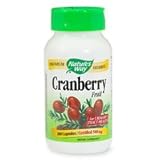
    Chronic Urinary Tract Infections (UTIs)? Cranberry May Be Your Cure.

    Some people seem to get one UTI after another. They take a round of antibiotics, then a few months later, they are on them again. Isn’t there another option rather than taking so many antibiotics over and over?

    Sure. Cranberries.avoid urinary tract infections

    Cranberries contain an ingredient, D-mannose, that makes the lining of the bladder and urethra too slippery for bacteria to latch onto and set up shop. If you’re prone to UTIs, a daily dose of 1-2 cranberry capsules will do the trick to keep the bacteria at bay and your urine flowing painlessly. I remember my grandmother constantly drinking cranberry juice in her late 80s; it must have worked because, unlike another elderly great aunt of my youth, she did not leak urine all over the house.

    Sigh. The tribulations of being a mother never end.

    D-mannose is the extract of the active ingredient in cranberry thought to provide the magic, but since I’m a believer in the power of whole-foods over isolated extracts, I’d rather take pure cranberry capsules (the whole food) rather than an extract. Drinking enough cranberry juice can be tough; the capsules make it easier to quickly get enough to make a difference. D-mannose has been studied and proven effective, however, so you can take your pick.

    Why do urinary tract infections happen?

    When contamination gets into the urinary tract and the bacteria take up residence and multiply in the hot, moist environment. Women experience more UTIs then men for the simple fact of a design flaw in the female body that places the opening of the urethra so close to the entrance to the vaginal canal and lots of opportunities for contamination

    What does it feel like to have a UTI?

    Frequent, burning urination is the hallmark of a UTI in both genders. Left untreated, it can feel like you are peeing splinters of glass, except that you can hardly squeeze out enough pee each time you feel the urge because you feel the urge constantly and relentlessly. Eventually you may start seeing dark red blood in your urine. This is a bad sign, but I’m sure that if you’re experiencing this you’re feeling that way already.

    What should you do to treat a UTI?

    Try this natural treatment first: Take 6 cranberry capsules with 12-16 oz of water. You should start feeling some relief within a few hours. 6 hours later, take another 6 capsules with water. Continue only if you are feeling somewhat better and on the road to recovery. Before bed, take 4 capsules with water. The next day, take 4 capsules with water 3 times: when you first wake, at midday, then before bed. You should be feeling almost fully recovered by now. Drop down to 2 capsules three times/day the next day. Continue with 1-2 capsules twice daily, morning and at bedtime until urination is pain-free. Continue on this schedule indefinitely for continued protection against UTIs.

    If the above regimen does not have any effect, go to a medical office to get urine and STI (sexually transmitted infections) testing. At this point, if you’ve been suffering this long, the pain is probably constant and intense. You’ll probably want to run rather than walk to get tested.

    How can you avoid getting a urinary tract infection?

    There are a number of things you can do to avoid getting UTIs, especially if you are a woman:

    1. Always empty your bladder completely at every urination. Leftover urine can be a breeding ground for bacteria.
    2. Always wipe from front to back to avoid contamination with fecal matter.
    3. Wear underwear with breathable cotton panels.
    4. Don’t sit around in wet bathing suits or sweaty leotards.
    5. Pee religiously after sex. Take this seriously.
    6. Avoid colored or fragranced toilet paper.
    7. Don’t douche or use sprays or scented sanitary napkins or tampons.
    8. Avoid using soap on your genitals, as it can irritate. Try cleansing with coconut oil instead.
    9. Pee after removing a tampon or other genital activity.

    Worldwide Demand for Quinoa Up Threefold

    Quinoa (pronounced “keen-wah”), the mother grain of the Incas, has become the darling of the foodie and health-nut world.

    quinoa farmer
    Farmer Geronimo Blanco shows his quinoa plants in Patamanta, Bolivia. (Juan Karita, The Associated Press)

    Deliciously nutty, quinoa is the only grain that is a complete protein, perhaps because it’s more of a seed than an actual grain, even though we use it like a grain. Naturally gluten-free, quinoa flour offers an alternative to wheat in baking, and quinoa products like pasta can be found on supermarket shelves.

    I love quinoa and often cook it for dinner in place of rice. You can basically add water to dry quinoa and cook it as if it were rice, or put it in a Glorious One-Pot Meal for an easy and healthy repast. Quinoa flakes can be eaten as a quick hot cereal, but I like to use them in place of bread crumbs in recipes like these gluten-free salmon burgers.

    One unfortunate side effect of quinoa’s rising popularity is the stress it is putting on traditional farmers in the highlands of Peru and Bolivia to abandon ancient land management technique in hopes of harvesting more and more quinoa for the booming market. Quinoa has become a cash crop in the fragile ecosystem of the Andean highlands.

    I hope they find a solution to meet demand without destroying part of our world and making quinoa and the Andean highlands a casualty of modern commerce.

    Salicylate Sensitivity and Psoriasis

    In my work creating customized anti-inflammatory diets, one of the trickiest sensitivities to deal with is salicylate sensitivity.

    Psoriasis before going salicylate-free. Skin is scaly and uncomfortable.
    Psoriasis 2 weeks after going salicylate-free. Itch-free and healing!


    When salicylates show high in the Mediator Release Test (MRT), it translates to an exhaustive analysis of every food before deeming it safe to it for that person.

    Salicylates sensitivity is near impossible to identify without such sophisticated testing because so many foods we think of as “healthy” are full of these naturally occurring compounds. Synthetic salicylates may be added to many medicines, perfumes, and personal care products. Those with salicylate sensitivity need to be aware of both sources when they are looking to find relief.

    Salicylate sensitivity can manifest in anything from migraines to skin issues to autoimmunity. One of my clients arrived battling severe psoriasis that had recently escalated with new patches and swelling in her face and eyelids. Testing showed she was highly reactive to salicylates.

    We started her off on a tailored anti-inflammatory diet that was low in salicylates. Immediately, the puffiness and new patches receded, but long-term spots were unresponsive. We adjusted her diet to be entirely salicylate-free and the change in her body was dramatic after only two weeks.

    She realized that the daily “green-smoothie” health kick she and her husband had been following had actually been making her skin much worse, full as it was of salicylates in the leafy greens!

    So much for blindly following generalized health advice!

    GMO A-go-go

    In case we’ve become complacent about GMOs in our food supply, here’s a cute, satirical cartoon to remind us just what GMOs are all about.