I almost titled this post: Does the FDA Test and Validate the Safety of the Additives Found in Our Foods?
To both questions, the answer is an unqualified “No”!
The truth of the matter is that no one is looking out for you, the consumer, and your health; you are responsible for your own health. Mainstream food companies are concerned with profits, or making the most desirable (and hopefully addictive) product out of the least expensive ingredients that have nothing to do with you the consumer’s health.
Respected food quality guru Marion Nestle writes in her blog, Food Politics, about a recent study concerning food additives published in JAMA Internal Medicine, a very respected medical journal. It turns out that the FDA has very little involvement as to if food additives are labeled GRAS (Generally Recognized As Safe).
So who decides if a food additive is safe to eat? The manufacturer.
• The manufacturer gets to decide if they want to tell the FDA about a food additive.
• The manufacturer gets to decide if they want to conduct studies funded and designed by their own scientists or convene a “panel” populated by their own “experts” to review the safety of a food additive.
• The manufacturer gets to decide if the food additive is safe or not.
The FDA pretty much accepts what it is told by manufacturers, because, as I’ve noted before in this blog, the FDA’s mission is not necessarily to protect the American populace from unscrupulous manufacturers peddling poisons and calling them food or medicine, but to promote and protect the American industry innovation.
The FDA does not have the scope to do its own testing of the thousands of food additives currently on the market; it must rely on the manufacturers themselves to tell it if there is a problem with a substance. As Marion Nestle says, ” As long as not too many people roll over dead after eating foods with new additives, nobody will ever have a clue whether the additive is safe.”
Top food additives to avoid from www.HungryForChange.tv.
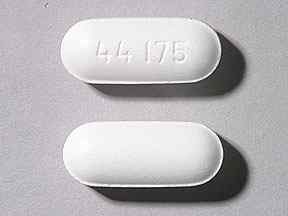
The best remedies for high elevation altitude sickness are the most natural: hydrate, breathe supplemental oxygen-enriched air, and take a pain reliever that thins the blood like salicylic acid (Bayer Asprin).
When we pulled up to Grand Lodge on Peak 7 at 10,000 feet in the Rockies this week, my brother-in-law, who had just flown in from sea level the previous day, began to feel the effects of the altitude.
Altitude sickness can ruin a mountain vacation whether it be summer, winter, or somewhere in between. It happens when the body doesn’t have enough red blood cells to transport enough oxygen through the body in the thin, oxygen-poorer air. The body eventually adjusts and produces more red blood cells, but it may take a few days to acclimate naturally.
Serious athletes often train at altitude because it means they they will have more red blood cells when they compete at lower elevations, and more oxygen equals better muscle performance. By the same logic, less oxygen can lead to the symptoms of altitude sickness: weakness, headache, confusion, malaise, moodiness, shortness of breath.
Luckily, my father is a specialist in high altitude edema and has authored a number of articles on the subject that have been published in highly respected medical journals, so we gave him a call. He recommended my brother-in-law drink lots of water, avoid alcohol, take two Bayer asprin, and rest for a day or two to get adjusted. He also recommended we ask the concierge if there might be oxygen available for adjusting visitors.
I remembered that we had a tank of oxygen available at my wedding for the same reason, and my wedding location was at only 8,000 feet. As it turned out, my great aunt in her 90s who came out from Florida was fine while one of my best friends who grew up in Colorado had to avail herself of the gas. But it worked immediately for her then.
We learned that we could purchase a small canister of 95% oxygen-enriched air for less than $20 at the shop inside the lodge. A couple of hits off of that thing and my brother-in-law felt almost normal again within minutes. A few more hits over the course of the next 24 hours combined with drinking a lot of water has worked wonders.
Salicylic acid, derived from willow bark, is one of the oldest pain relievers humans have known and used. It is usually a safe remedy for reducing pain and inflammation, except for those who might be sensitive to salicylates.
Last week the Food and Drug Administration (FDA) warned consumers about some possible side effects of taking Tylenol (acetominophen) in terms of adverse skin reactions. While it’s great that they are warning people, I find it unfortunate that they did not mention other possible unwanted side effects of taking acetominophen.
Maybe they figure their butts are covered by the small print on the insert inside the package. Those inserts translate to “Take at your own risk.”
It should be well known that taking too much acetominophen can damage your liver and even cause death, but there can be other types of negative reactions as well.
In case you’re wondering, some of the other side effects from Tylenol that I have seen in my naturopathic practice include:
Inflammation visible in the face, ankles, or fingers.
Intense irritability.
Hallucinations.
Sleepwalking.
Restlessness.
Excitability.
Paranoia.
Delayed constipation.
Diarrhea.
Mood swings.
Of course, it can be hard to separate if the symptoms were from the acetominophen or the red food dye that is omnipresent in acetominophen products (unless you search out the dye-free option – try Target), but an alarming percentage of the population is sensitive to acetominophen itself to begin with.
Do I suggest you avoid all acetominophen (Tylenol) products? Not necessarily. It’s extraordinarily difficult to identify oral sensitivities because they can be dose-dependent and delayed by up to four days after exposure.
Fortunately, the Mediator Release Test (MRT) can help identify the culprits that may be making you miserable. Often, the very substance you believe is making you feel better or reliving the pain is keeping you chained in a vicious cycle where you unwittingly keep feeding yourself the very things that are bringing you discomfort.
Naturally Savvy has an interesting article about “Genewashing,” or the deceptive practice of implying that a product is free of GMOs, when in fact, it isn’t.
The genewashing article makes some great points that conscious label-readers should remember.
1. When a product claims it contains some GMO-free or organic ingredients, it doesn’t necessarily mean that the product itself is entirely GMO-free or organic.
2. Anytime you see canola, soybean, or vinegar on a label, you must assume they are GMO versions, particularly if they follow other ingredients that are clearly indicated as organic.
3. It is still very much “buyer beware” if you wish to avoid Genetically Modified ingredients in your foods.
What we’re learning from the current outbreak of cyclospora parasites in the U.S. is that even if we live in a western, modern society, we are still susceptible to parasitic infections.
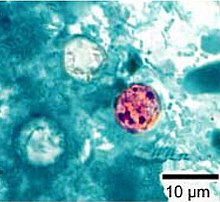
The microscopic Cyclospora parasite.
Of course, foreign travel, especially if you visit remote or under-developed areas, is a common source of parasites in Westerners, though not the only one.
This time the Centers for Disease Control (CDC) believes the parasites are coming from unwashed fruit and vegetables, but parasites can get into your body from eating sushi, pork, or other foods; swimming in lakes or rivers; cleaning a cat’s litter box; contact with pets; gardening; or even sometimes, just from drinking a glass of water from the tap (in 1993, the city of Milwaukee was infected with Cryptosporidium through the municipal water supply).
As someone who has been infested with parasites no fewer than five times (!), including positive stool samples containing both cyclospora and cryptosporidium among other parasites, I do consider myself somewhat of a parasite expert. In fact, herbal parasite cleanses comprise a large part of my naturopathic dietary clinic. I firmly believe that if you have an undiagnosed parasitic infection and it is not treated appropriately, there is only so much better your health will ever get. And, I do think that most people dealing with chronic inflammatory conditions probably have an underlying parasitic infestation.
What are the symptoms of parasites?
For the current outbreak of cyclospora, the CDC suggests that if you have stomach distress that lasts beyond 24 hours, you may be infected with cyclospora parasites. Cyclospora can cause both diarrhea and constipation, as well as bloating, gas, and discomfort.
Parasitic infection often begins with an acute phase which may include violent gastro-intestinal distress (explosive diarrhea, painful gas, cramping), vomiting, fever, dehydration, chills, sweats, shaking, and delirium. Sounds fun, huh? Some people may experience this mildly while others become terribly ill and debilitated.
Then the parasites settle into a chronic phase. This phase may last months, decades, or longer as the goal of a parasite is not to kill the host. The parasite settles in, lays eggs, and populates.
Your body, on the other hand, has difficulty forgetting that the parasite is there and really doesn’t want to be a landlord. As a result, you may experience chronic or occasional symptoms including diarrhea, constipation, bloating, swelling, vomiting, fainting, difficulty gaining or losing weight, lethargy, fatigue, or even autoimmune disorders.
How can you avoid getting parasites?
Always wash all fruits and vegetables with a veggie rinse before cutting through the skin and serving. This applies even to organic produce.
Wash your hands well with soap whenever you enter your house, and particularly after handling unwashed produce.
How can you treat and recover from cyclospora and other parasites?
Although there are western anti-parasitic medications, they are non-discriminatory and you will feel like a fragile, hollow shell after a course. As one G.I. doctor told me, treating parasites with the drug Flagyl is like killing a mosquito with a shot gun: there are unintentional casualties along the way.
Even worse, these toxic drugs will not necessarily eradicate all the stages of the parasite life-cycle (egg-larvae-adult), nor will they always kill off every kind of parasite that might be present in your body (protozoans, worms, or what have you).
In my practice, I advocate completing a three-week herbal anti-parasite regimen to eradicate any suspected parasitic infection. I do not recommend wasting money on testing as many parasites are microscopic and parasite tests are notorious for false negatives.
If you feel like you’re doing everything right –eating healthily, reducing stress, exercising regularly– yet you’re still suffering from chronic physical distress (gastro-intestinal, inflammatory, or otherwise), it would be worth your while to complete an herbal parasite cleanse under the guidance of a qualified natural health practitioner.