Elizabeth Yarnell Amazon icon Audible icon Autographed icon Bluesky icon Book Bub icon Buffer icon Booksprout icon Buy Me a Coffee icon URL Copied! Copy URL Email icon Facebook icon Goodreads icon Headphones icon Home icon Instagram icon LinkedIn icon Linktree icon Mastodon icon Patreon icon Periscope icon Pinterest icon Reddit icon RSS icon Search icon Share icon Snapchat icon Threads icon TikTok icon Tumblr icon Twitter icon Vine icon Youtube icon Join a free Q/A Call!

Would You Rather Take A Daily Pill or Change Your Diet?

To what lengths would you go to to avoid taking a daily pill that promised to increase your life span?160474902

New research out of the University of California San Francisco (UCSF) and the University of North Carolina at Chapel Hill shows that one in three people would risk having a shorter life rather than having to take a daily pill.

Almost one in five said they would pay $1,000 or more to avoid taking a pill each day for the rest of their lives, but 43 percent said they wouldn’t pay any amount.

Study participants were asked to ignore any costs or potential side effects associated with taking the hypothetical life-extending pill, and still many people would rather not take a pill for the rest of their life.

Daily pill vs. changing the foods that you eat?

What I’d personally rather know is how many of us would take even a baby step toward changing what we eat if we knew it would increase our life span and also improve our quality of life at the same time – with the side effects being easier weight loss, more brain clarity, better sleep, and less physical discomfort?

Patients arrive at my clinic suffering from a host of chronic issues that might include constipation, diarrhea, sinusitis, migraines, fibromyalgia, multiple sclerosis or other autoimmune disease, or more. We do a complete overhaul of their diet, and yes, it’s hard for the first couple of weeks. But by the end of the first month or so it seems normal to eat this way, and the difference in how their bodies feel and work is noticeable.

It’s a way to improve and extend your life without becoming a customer-for-life of a pharmaceutical company.

Interested in learning more? Contact me for a free initial consultation, or join my Concierge Health & Wellness Service for ongoing and affordable natural health advice.

Low-Sodium Recipes for Glorious One-Pot Meals

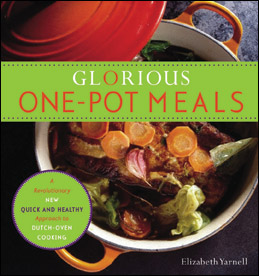
Reader question: Love the recipes! Am a former culinary instructor who just recently was put on 1500 mg of salt per day. As a result I have been concentrating on your low sodium recipes. After making the Fish with Hong Kong Sauce for the first time since my sodium restrictions, I decided to double check the sodium. This is what I came up with: 1/2 tsp salt-1180 mg,chili paste-110 mg,3tablespoons organic ketchup (Whole Foods)-320. My calculations have this at 1610 (divided by two)-805 mg of sodium. The book shows it as 211 mg. Did I do something wrong? Also, how can I get more of these especially flavorful low sodium recipes. Thank you so much–I think you are a genius!  ~Pat L., St. Louis, MOGlorious One-Pot Meals

Hi Pat! I’m thrilled to hear you are enjoying Glorious One-Pot Meals and thanks for writing!

Before I address your question directly, let me briefly remind you of my nutritional information disclaimer:

All nutritional information here is based upon amounts designated in the recipe presented. Where items such as “pieces of chicken” appear, they are calculated based upon an average 4 oz. serving. All food calculations are derived from The Complete Book of Food Counts by Corinne T. Netzer (Dell Publishing, 2000). Some figures are approximate due to variations in such things as the size of vegetables, amount of oil released when spraying the Dutch oven, etc. Additionally, the figures presented are rounded to the nearest whole numbers to facilitate comprehension.

Glorious One-Pot Meals and its author take no responsibility in insuring the validity of the nutritional breakdowns presented here and offer this information only as a service to readers. Since all Glorious One-Pot Meals can be altered at will, the food counts given may or may not reflect the actual meal created at home.

Now that this formal stuff is out of the way, I have to tell you that your calculations from the actual bottles that you are using in your meals will always be more accurate than the general ones that I came up with more than a decade ago from a book published in 2000. The easiest ways to cut down on sodium in this or most other recipes is to use sea salt instead of table salt (something I always advocate) and to simply add less salt to begin with.

In most of my recipes I list “salt and pepper to taste” for exactly this reason: so that each diner can season his or her own food to their own standards or needs. In my own house, I rarely put that much sea salt into my Glorious One-Pot Meals during cooking and instead place a container of sea salt on the table for each to use as desired. My daughter, for example, likes saltier food than my son does.

You should always take my recipes as “suggestions” rather than gospel, to begin with! I see my role as providing home cooks with the inspiration to put together their own fabulous Glorious One-Pot Meals!

The Link Between Nutrition and Mental Illness

Clinical psychologist Julia Rucklidge at the University of Canterbury insists that optimizing nutrition is a safe and effective treatment for mental illness. She argues that our reliance on pharmaceuticals has led us down the wrong path when it comes to mental illness.

While she notes that medications can be very effective in the short term, in the long term the side effects and decreasing efficacy over time show us that pharmaceuticals may not be the answer. Her research has shown that twice as many people with ADHD, bipolar disorder, or depression improved with the addition of high doses of micronutrients to their diet. Even post-traumatic stress disorder and psychosis can be impacted or avoided with the addition of micronutrients.

Dr. Rucklidge’s take-away message: A well-nourished body and brain is better equipped to manage stress and emotions.

Fascinating stuff. Watch it for yourself.

Why I’m Not A Fan of the Paleo Diet

I cheered when I read the recent Washington Post article dissin’ the Paleo Diet! Finally, a voice of reason and sanity to refute those who still believe that the Paleo Diet is the healthiest way to eat.HumanEvolution

While I totally agree that we did not evolve to eat refined, highly-processed, or chemically-laden foods, we didn’t really evolve to be “healthy,” either.

“Natural selection really only cares about one thing, and that’s reproductive success,” points out the author of The Story of the Human Body: Evolution, Health, and Disease, Harvard University professor of human evolutionary biology Daniel Lieberman.

Stone-age humans rarely lived many years beyond reproductive age, and I think we can all recognize that it is generally easier to feel healthier with less attention to nutrition in a young and forgiving body than with one in middle-age.

Additionally, since early humans lived in many ecosystems with many different foods available, there really was not one single “diet” available to everyone. We have survived because we are omnivores and could find sustenance from a wide range of sources. Lieberman notes that there is evidence to show that hunter-gatherers in the Middle East ate barley – a direct refutation of the premise of the Paleo recommendations of a grain-free diet.

My feeling is that the Paleo Diet is simply a re-hashing of the Atkin’s Diet, The South Beach Diet, and other low-carb diet fads from our recent past. Not only are these diets difficult to sustain over the long term, but they are simply not engineered to produce vibrant health.

My advice about the Paleo diet: If you are really looking to be healthier, skip this fad and focus on eating whole foods and avoiding chemicals and toxins.

Could Your Gut Bacteria Be Making You Anxious or Depressed?

New research from neurobiologists at Oxford University shows there could be a link between the health of your gut microbiome and your emotions. The study suggests that using probiotics to populate your gut with good bacteria together with eating enough prebiotics –carbs that nourish your bacterial population– can help lift your mental state.

Gut xray

Foods high in probiotics

Foods high in probiotics include yogurt, keffir, kim chee, sourkrout, and other fermented foods.

Foods high in prebiotics

Foods high in prebiotics include asparagus, onions, leeks, grains, legumes, and cruciferous vegetables such as cauliflower, broccoli, kale, kohlrabi, radish, and rutabega.

It seems the bacteria inside us might affect us more than we ever could have imagined.

Yet another checkmark against the” Paleo”-style diet as being the ultimate diet for humans.

My motto: Be wary of fad diets that advocate elimination or extreme reduction of an entire food group.