Elizabeth Yarnell Amazon icon Audible icon Autographed icon Bluesky icon Book Bub icon Buffer icon Booksprout icon Buy Me a Coffee icon URL Copied! Copy URL Email icon Facebook icon Goodreads icon Headphones icon Home icon Instagram icon LinkedIn icon Linktree icon Mastodon icon Patreon icon Periscope icon Pinterest icon Reddit icon RSS icon Search icon Share icon Snapchat icon Threads icon TikTok icon Tumblr icon Twitter icon Vine icon Youtube icon Join a free Q/A Call!

Vitamin D and Sunshine

Here’s a synopsis of an article from the Providence Journal:

Let the Sun Shine In

With constant warnings about wearing sunscreen to protect against skin cancer, Americans are being hurt in an unexpected area: nutrition.

60% of us (180 million Americans) aren’t getting enough vitamin D, say The Centers for Disesase Control and Prevention.

It’s virtually impossible to get enough vitamin D, necessary for building strong bones and maintaining a healthy immune system, from diet alone. New research indicates that the sunshine vitamin plays a vital role in the prevention of many deadly illnesses, including multiple sclerosis, tuberculosis, schizophrenia and heart disease. Health officials estimate that as many as 47,000 cancer deaths could be prevented each year in America if adequate vitamin D levels were attained.

Check out the entire article for a fascinating perspective of the pros and cons of using sunscreen as it blocks vitamin D absorption.

Turkey Burgers and Lentils

So it seems as readers of this blog would rather have recipes without photos than no recipes at all. Whew, that’s a relief. Hopefully I’ll find my camera sooner rather than later, but I will happily accommodate in the meantime.

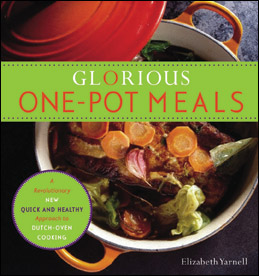
Here’s the quick and easy Glorious One-Pot Meal I threw together on Monday night this week, sans photos.

First I sprayed the inside and lid of my Dutch oven with olive oil. Then I poured in 1/2 cup of dry red lentils and 3/4 cup water and swirled it around a bit. Out of the freezer came 2 enormous frozen turkey burgers (from Costco) and 1 bag of Cascadian Farms Chinese-style mixed vegetables. (The turkey burgers were so big that I had to use my 3 1/2-quart Dutch oven to fit them.)

Back to the pot: first the lentils and the water, then the turkey burgers. I smeared a few tablespoons of Kim’s Spicy Peanut Sauce (they make great teriyaki sauce, too!) over the burgers, then dumped in the frozen vegetables and drizzled them with another Tbsp. or so. That’s it.

I smelled the telltale aroma around 35 minutes, but I was busy so I let it go until 45 minutes. Because I let it go so long, the red lentils became really mushy, with the consistency of mashed potatoes, which my husband and the kids loved. Everything else was just fine, and the vegetables were not mushy, but I added more Spicy Peanut Sauce before eating. Even though I felt like it wasn’t spicy enough, it was certainly on the spicy side for the kids, adventurous eaters though they are, and they had difficulty eating the vegetables (they did fine with the turkey burger). Can’t please everyone all the time.

Chickenpox

Both of my kids came down with chickenpox in January. Well, you might be thinking, that what you get for being a nature hippie and not getting the vaccine. But you’re wrong.

In fact, I do believe in vaccines and both my kids had received the chickenpox vaccination on schedule. It turns out that the chickenpox vaccine was 100% ineffective in our family.

Ok, that may be an overstatement. When I brought my son into the pediatrician because he had raised, pus-filled spots around his genitals (a rash? an allergy? smallpox? herpes?), I didn’t even suspect chickenpox because he had had the above-mentioned vaccination. Luckily, the doc on call that Saturday had 25 years experience and could identify chickenpox, unlike many younger docs fresh out of med school within the past 8 years. He said that if my son hadn’t been vaccinated, he would have shown a fever of 103, been sick as a dog and vomiting, and trying to scratch his skin off. As it was, you wouldn’t have known he had 50+ pox on his body without lifting his shirt. He seemed almost fine otherwise.  A little itchy and a little restless.

Still contagious, of course. And had to be quarantined until the last pox scabbed over. Then, thirteen days later, his sister got it. She was a bit itchier, though had fewer pox, and was more restless.

The restlessness is characteristic of chickenpox. I guess the virus wants the host to go out and spread it around. She was really out of sorts the night before the first pox appeared.

The homeopathic remedy for chickenpox is Rhus Tox. As soon as I gave one dose to each child, the restlessness calmed and the itchiness decreased. I also bathed them in a warm bath with Epsom salts to relieve the discomfort from the spots. Epsom salt baths are great for easing everything from sunburn to diaper rash.

My cousin’s 2-year old daughter was playing with my kids when my son showed spots, so she was definitely exposed as well. Luckily for her, the vaccination took and she has not shown any sign of pox and is now out of the danger period. A reminder to be thankful for small favors!

A confession

I feel I need to make a confession. I feel I have been lax about posting effortless recipes lately, but here is the problem: I can’t find my camera. It disappeared, likely buried somewhere in the morass of papers that is my office or perhaps somewhere else, but regardless, I can’t find it. So not only can’t I download existing photos of scrumptious easy meals to share with you, but I can’t take any new ones. How can I be a food blog without food photos? Sigh. I apologize.

While I’m at it, I should admit that I have been less-than-perfect about posting my healthy eating weight loss tips every Monday. You might have noticed that sometimes they show up on Tuesday or Wednesday, or even not at all. I had the best of intentions in January for doing this regularly, but somehow life keeps getting in the way.

So, here’s my new plan: I’m going to continue writing about living a natural lifestyle and healthy eating, and toss in healthy weight loss tips when I’m inspired to do so. I’m going to renew my search for my camera and possibly post some recipes without photos (the horror!), if necessary, because I have the feeling that no photo is better than a painful cell phone photo that could make the food look (gasp!) unappetizing.

Onward and forward!

The Carb Conundrum: Using whole grains to lose weight

As Americans we have mixed feelings about carbohydrates. On the one hand, we blindly jump on the low-carb bandwagon and follow unhealthy, low-carb or no-carb diets in our pursuit to lose weight quickly. On the other, we love our white bread, enriched pasta and potatoes in any form. Our expanding waistlines witness our confusion.

While protein is the building block of muscle mass, carbohydrates are what give us the energy not only to lead active lifestyles, but also to complete autonomic functions such as breathing, blinking and heartbeats.

A body denied carbohydrates enters ketosis, an unbalanced, acidic state, and then begins to cannibalize itself in the pursuit of fuel for energy. Talk about an unhealthy state!

The key lies in knowing which kinds of carbs help us and which we’d be better off without. This strategy falls into the weight-loss category as well as the healthy eating category, because I have found that eating whole grains can help drop the pounds as they encourage the body to process all foods more efficiently.

Processed and refined carbs, like those found in white breads, white crackers, pastas, etc., and white rice, come from grains where the bran and the germ have been removed. That amounts to lost dietary fiber, protein, and a host of other nutrients. Remaining are calories that the body can’t completely access without the missing elements.

Complex carbohydrates— like those found in whole grains, legumes, nuts, seeds, seaweeds and vegetables and fruits— provide exactly what our bodies need in just the right proportions and amounts to be most fully utilized.

While the healthfulness of oats made headlines for a while, all whole grains offer similar benefits. They’re low in fat and good sources of fiber, vitamins, minerals, and protein.

A recent Tufts University study showed that consuming at least three servings of whole-grain foods daily can lower risks for abdominal obesity, high triglycerides, low HDL cholesterol, high blood pressure and poor blood sugar control. Eating any whole grains— not just oats — can put you in better shape for treating or avoiding diabetes, cholesterol issues, heart disease and even cancer.

Even though diabetics are often advised to restrict carbohydrate intake, the American Diabetes Association encourages even diabetics to include three daily servings of whole grains. Though refined carbs can cause a spike in blood sugar levels because they move through the body so quickly, whole grains are digested slowly, maintaining a glycemic balance while providing a satiated feeling.

Whole-grain diets also promote bowel health through maintaining regular movements and promoting growth of healthy bacteria in the colon. You gotta love that!

Look for labels that read “whole wheat” or “whole grain” rather than simply “wheat” or “multi-grain”. Here are some whole grains to help expand our healthy carb repertoire:

_ Whole-grain corn (grits/polenta/popcorn)
_ Whole oats/oatmeal
_ Brown rice
_ Whole rye
_ Whole-grain barley
_ Wild rice
_ Buckwheat
_ Bulgur (cracked wheat)
_ Millet
_ Quinoa (the only grain that is a complete protein)
_ Sorghum (a gluten-free grain)