Elizabeth Yarnell Amazon icon Audible icon Autographed icon Bluesky icon Book Bub icon Buffer icon Booksprout icon Buy Me a Coffee icon URL Copied! Copy URL Email icon Facebook icon Goodreads icon Headphones icon Home icon Instagram icon LinkedIn icon Linktree icon Mastodon icon Patreon icon Periscope icon Pinterest icon Reddit icon RSS icon Search icon Share icon Snapchat icon Threads icon TikTok icon Tumblr icon Twitter icon Vine icon Youtube icon Join a free Q/A Call!

Don’t be fooled by BPA mis-information

Last weekend the Washington Post reported on a closed-door meeting where canned beverage and food industry executives brainstormed a public relations and lobbying strategy to counteract growing awareness of the dangers of bisphenol-A (BPA).

Bisphenol A (BPA) is the chemical resin used in the linings of metal cans and lids as well as plastic bottles and food containers and hundreds of other household products. Manufacturers like it because it adds strength to plastics and shelf-life to canned foods. Aware consumers hate it because it leaches into the foods we eat and drink from these containers.

According to the Post’s crack reporting, the industry reps decided that they needed to target their mis-information campaign at young mothers who make purchasing decisions. “Their ‘holy grail’ spokesperson would be a ‘pregnant young mother who would be willing to speak around the country about the benefits of BPA,'” the notes from the meeting said.

As if we needed more confirmation that many corporations are more concerned about the state of their profits than the health and safety of their customers or the earth, here it is. Safer alternatives to BPA are already being used in Japan, but that is not a focus of the manufacturing industry here in this country, funnily enough. They claim it will cost too much. A sadly familiar refrain.

The North American Metal Packaging Alliance has budgeted one-half million dollars to spend crafting a message designed to fool the public into thinking BPA is actually good for you, instead of a toxic substance that disrupts the delicate hormonal balance in our bodies. More than 100 publications in the last decade have linked low-dose BPA toxicity to breast and prostate damage, early puberty, behavioral problems, and other effects at levels up to 25 times lower than EPA’s “safe” dose.

One reason for the industry is running scared is that the chemical industry lobbyists who convinced the FDA that the BPA was safe have been discovered, along with the exclusion from policy-making of scientific findings and scientists that disagreed with this assertion. In fact, California just banned BPA from products intended for children under three years old.

The anti-BPA wave is starting. Don’t let the chemical industry lobbyists fool you when they flood the media with their pro-BPA message delivered by their young, pregnant “holy grail.”
The Perfectly Whole Foods Diet: A path to health.

The Stoll Foundation for Holistic Health offers today’s guest post by Kam Tecaya on The Perfectly Whole Foods Diet. I love sharing this with you because it explains an eating philosophy I wholeheartedly believe in and strive to follow as much as possible. Much gratitude to Dr. Walt Stoll for helping us along on to our journey toward health.

Eating fewer refined foods and more natural, whole foods greatly improves health.  It’s not a new concept, but unfortunately our fast-paced, convenience-oriented, adulterated-taste-bud society requires that we need to be taught how to eat healthful foods.  Many people, especially in the west, do not understand that the foods they eat harm them.

Nature designs foods a certain way on purpose.  Whole foods contain numerous nutrients that work synergistically with each other to create a nutritive, healing affect in our bodies.  When we consume refined foods for several years, we deplete the natural stores of micronutrients in our bodies, and eventually symptoms develop.  However, restoring health can be easy, delicious, and inexpensive.

A whole food is one that has nothing removed.  When you peel a carrot, remove a potato skin, or remove bran from wheat, these foods become refined.  A limited amount of processing can take place, like grinding, mashing, or drying — as long as nothing is removed.  Carbohydrates are the most commonly altered foods and also the most offensive to our bodies when they are so altered.

The Perfectly Whole Foods Diet (PWFD) is one where all refined carbohydrates are avoided completely.  For the quickest and greatest results for any health issue, use the PWFD.  It is not hard to follow the PWFD and the advantages are huge.

The benefits of eating a whole foods diet, especially the Perfectly Whole Foods Diet, are wide ranging and can be dramatically positive.  Everything from physical illness to mental illness can be alleviated.  Chronic pain, high cholesterol, high blood pressure, gastrointestinal disorders, acid reflux, obesity, and allergies are just a few of the many physical ailments that will likely be aided, and possibly totally eliminated, by eating a whole foods diet.  Also, it is too seldom remembered that our mental health is directly linked to our physical health.  Research has shown that changes in diet have huge impact on ADD, autism, depression, PMS, and even serious mental illnesses like schizophrenia and bi-polar disorder.

The Stoll Foundation for Holistic Health is a non-profit organization that aims to reach people seeking alternatives to drugs and surgery to improve their health.  We improve the lives of people we connect with through health education, offering inexpensive solutions for disease reversal, and providing support for a healthy lifestyle.  To learn more, and if you or someone you know could use extra support in taking charge of their own health, please see our website at www.stollfoundation.org or email  [email protected].  We have compiled a list of resources covering everything from self-help wellness programs to resources for the uninsured.  We are here to help you help yourself to feel better.

Agave: A delicious natural sweetener

Even though I avoid artificial sugar substitutes like Splenda, I still like sweet things. Lately I’ve discovered Agave nectar as a natural sweetener, and I must say that it has won me over.

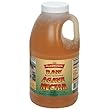
Lighter than honey, Pure Organic Raw Agave Nectar is extracted from the core of a yucca-like cactus. It isn’t heated above 118 degrees F, so the enzymatic structure is preserved making it a good choice for raw foodists and others who value live food. With a low glycemic load, it won’t send your blood sugar levels soaring and then crashing, like sugar might.

Because of its similar look and consistency to honey (it’s a little bit runnier, less viscous), I had automatically assumed I would only enjoy agave in places where I might choose honey, but that’s not the case. I’m enjoying agave in my coffee, for one thing, whereas the thought of honey in coffee turns my stomach.

Agave comes in shades from dark to light amber. The darker the color, the more intense the flavor, so stick with lighter shades in things like coffee.

Agave cooks well and we’ve been using it in place of honey or sugar in bread and other baked goods with great results in a one-to-one ratio, even though it may be a touch sweeter than honey. An almond-butter and agave sandwich is a lip-smacking treat.

It’s a good option for vegans or babies under 1-year old, since, unlike honey, it is not produced by insects.


Why Splenda (Sucralose) is Not So Splendid

This past weekend, my son set up a Cotton Candy stand during our neighborhood block party. Cotton Candy, of course, is spun sugar with food coloring. And I don’t have a problem with “sugar.”

Yeah, you heard me right: I don’t have a problem with eating sugar!

I don’t mean we should have all sugar, all the time. Certainly not! Everything in moderation, and sweets are best eaten after a healthy meal to minimize the glycemic rush. But when it comes to choices of sweeteners, I don’t have much of a problem with cane sugar. It’s the other stuff, the sugar substitutes, that will kill ya’.

I arrived late to the party to hear the report that, while the Cotton Candy machine instructions claimed you could make your own sugar base for cotton candy with sugar and some powdered drink mix for flavoring/color, the mixture did not produce the sticky webs of candy as promised. I surmised that the problem was the drink mix: the container screamed that it contained “1/2 the sugar” as the regular mix.

Aaaahhhh… the well-meaning adult who chose this type of drink mix in the mistaken belief that less-sugar must equal better-for-you. We have all been hoodwinked by the artificial sweetener industry, and we should be outraged.

The marketing promises of “Less sugar!”, “Zero calories!”, and “Sugar free!” send me running scared down supermarket aisles. Think about it: They are telling you that they removed the sugar, yet you are still expecting the product to be sweet-tasting. Translation: The product is artificially sweetened using a chemically-created sweetener such as Nutrasweet/Aspartame, Saccharine, or Splenda, for example.

In fact, our drink mix listed sucralose. And it didn’t spin like sugar.

Yep, the claim that Splenda (sucralose) is derived from sugar, and therefore is as safe for human consumption as sugar, is so off-base that the sugar industry is suing Splenda for deceptive marketing practices (I have not been able to determine the current status, but they went to court in January of this year).

Splenda’s core ingredient is a nonnutritive sweetener that does not grow in sugar fields or appear elsewhere naturally. Rather, the core ingredient, sucralose, is manufactured in laboratories as a synthetic compound. Despite its similar-sounding name, sucralose is not the same thing as sucrose, the technical name for pure table sugar.

Guess who markets Splenda? Johnson & Johnson, the subject of another recent post of mine concerning toxic chemicals in baby shampoo. Interesting how J&J want to position themselves as a family-friendly company, yet the more we learn the more they resemble the evil Monsanto in terms of spreading toxins.

Sucralose belongs to a class of compounds known as organochlorides (or chlorocarbons). Some organochlorides are toxic to plants or animals, including humans.

Rushed to market, the FDA approved Splenda for human consumption based on a number of animal studies and only a couple, very short-term (days-long) studies involving humans. There is no way yet that scientists can know what the long-term effects of Splenda are on the human body, but we should know enough by now to assume that they aren’t beneficial or life-giving. In fact, Splenda is chemically more similar to DDT than to sugar.

A Duke university study found evidence that high doses of Splenda (up to 1000 mg/kg) reduced the amount of good bacteria in the intestines of rats by up to 50%, increases the pH level in the intestines, contributes to increases in body weight and affects the P-glycoprotein (P-gp) in the body in such a way that crucial health-related drugs could be rejected. (Abou-Donia MB, El-Masry EM, Abdel-Rahman AA, McLendon RE, Schiffman SS (2008). “Splenda alters gut microflora and increases intestinal p-glycoprotein and cytochrome p-450 in male rats”. J. Toxicol. Environ. Health Part A 71 (21): 1415–29. doi:10.1080/15287390802328630. PMID 18800291.)

I bolded the line above to highlight that Splenda and other artificial sweeteners actually contribute to weight gain rather than accelerate weight loss. See the extent of our brainwashing?

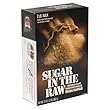
Give me real sugar over a sugar substitute any day. Even better, make it organic, raw cane sugar.

Are you Addicted to Fast Food?

David Kessler, the Harvard-trained doctor, lawyer, medical school dean and former commissioner of the Food and Drug Administration who won billions against the tobacco industry during the Clinton years, has trained his razor-sharp focus on the restaurant industry and how they are making us overeat.

Yeah, you read that right: restaurants intentionally add things to their foods to make them craveable, so that you truly can’t eat just one. I’m sure you’re not completely surprised to learn this, but you may be surprised as to the extent.

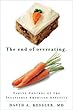
In Kessler’s new book, The End of Overeating: Taking Control of the Insatiable American Appetite, he describes dumpster-diving to rescue ingredient labels from popular chains like Chili’s, Bennigans, etc. to see just what is inside those mouthwatering dishes like Southwestern Eggrolls or Boneless Shanghai Wings. Ironically, it was Kessler when he was with the FDA who instituted the labeling of restaurant foods that travel across state lines to begin with, but as a citizen when he politely asked to see those labels he was flatly denied.

Dumpsters, though, are open to anyone who cares to take the plunge. We’re lucky Kessler decided to do just that.

The labels showed the foods were bathed in salt, fat and sugars, beyond what a diner might expect by reading the menu, Kessler said. The ingredient list for Southwestern Eggrolls mentioned salt eight different times; sugars showed up five times. The “egg rolls,” which are deep-fried in fat, contain chicken that has been chopped up like meatloaf to give it a “melt in the mouth” quality that also makes it faster to eat. By the time a diner has finished this appetizer, she has consumed 910 calories, 57 grams of fat and 1,960 milligrams of sodium. Yikes!

This is a salt-fat-sugar one-two-three-pow that make you crave more and more of it, leading to overeating.

Don’t assume that this practice is limited to Chili’s; you should assume that EVERY item on a restaurant menu contains more fat, salt, and sugar than it would if you were to re-create the dish at home. That’s how they make things so tasty, after all.

It’s a pretty good argument for cooking at home more often, where you have full control over what you and your family ingest. Not to mention the economics of eating out… Maybe this is why cookbook sales are up 9% while sales of other types of books are down?