
Elizabeth Yarnell Amazon icon Audible icon Autographed icon Bluesky icon Book Bub icon Buffer icon Booksprout icon Buy Me a Coffee icon URL Copied! Copy URL Email icon Facebook icon Goodreads icon Headphones icon Home icon Instagram icon LinkedIn icon Linktree icon Mastodon icon Patreon icon Periscope icon Pinterest icon Reddit icon RSS icon Search icon Share icon Snapchat icon Threads icon TikTok icon Tumblr icon Twitter icon Vine icon Youtube icon Join a free Q/A Call!

Natural Underarm Deoderant

One of the bloggers from 5280 Magazine recently posted about how her aluminum-based antiperspirant/deoderant is leaving ugly yellow stains in the armpits of her white shirts. While her biggest complaint was that these stains were ruining her clothes, my concern centers around the aluminum in her deoderant.

Aluminum is a heavy metal that is bioaccumulative, that means that once it enters your body most of it doesn’t leave (except through breast milk, scarily enough). Accumulation of aluminum builds up over a lifetime and can cause neuro-degeneration, along with other problems. So far, aluminum toxicity has been linked to Parkinson‘s, Alzheimer‘s, and — particularly from antiperspirant/deoderant use — breast cancer.

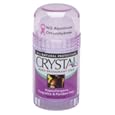
For years I have been searching for a viable alternative to aluminum-based deoderants and antiperspirants to use in our sweat-phobic culture. For a while I used the Crystal Body Deodorant, which you wet and apply to your armpits, but I was never very satisfied with how it stopped sweat or managed odors.
For a few months I tried Tom’s of Maine Natural Long-Lasting Deodorant, the Lemongrass scent, but didn’t like the way it interacted with my body’s chemistry, mostly it made my sweat acrid smelling. Yuck! (I really like Tom’s of Maine Natural Care Toothpaste, though!)

Then I stumbled across this video from down under on Youtube by HighOnHealth about using “soda bicarbonate” as a deoderant. I thought I’d give it a try and spent several hours scouring several grocery stores before realizing that we call it “baking soda” in America. Since more than one grocery worker sent me to the soda pop aisle to find “bicarbonate soda,” I don’t feel all that foolish. Well, kinda.

Anyway, I’ve been using it for a couple weeks now and have to say that I really like it. I definitely seem to sweat less, and due to the anti-bacterial properties of baking soda, I seem to be odor-free. Watch the video and she’ll give you a step-by-step demonstration of how to use baking soda as a natural underarm deoderant.

I confess, I’m hooked. Let me know if you try it, or if you have other solutions/suggestions for natural sweat control!
High Fructose Corn Syrup vs. Sugar

The Corn Refiners Association would like us to believe that ingesting high fructose corn syrup (HFCS) is as natural for the body as eating an ear of corn. They even snail-mailed me a whole package filled with convincingly-assembled literature after I wrote a post critical of HFCS, not to mention their slick television campaign showing teenagers drinking sodas and talking about how “natural” HFCS is.

Luckily, we, the purchasing public, are not so easily fooled.

High fructose corn syrup is the result of a highly complex chemical process conducted in a laboratory — this stuff does not occur naturally on our planet, it has to be synthesized. Just knowing this should be setting off warning bells.

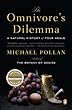
If you read Michael Pollan’s book, The Omnivore’s Dilemma: A Natural History of Four Meals, you know that we overproduce corn in this country, and in an effort to help our farmers add value to the US corn crop the University of Iowa developed a host of corn byproducts, including HFCS.
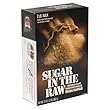
A sample of products made with high fructose corn syrup

HFCS exploded on the market in the early 1980s because it was cheaper than sugar and had a longer shelf-life. Coincidentally, the obesity epidemic in this country really began to build around this time (it really exploded in the 1990s). In the last twenty years, HFCS has captured 56% of the sweetener marketplace. Hmmmm…. Could there be a connection?

There have been enough complaints stirred up about high fructose corn syrup in products that some companies are responding to customer demand by switching to real cane or beet sugar, including Snapple, Ocean Spray, Log Cabin Syrup, and some Pepsi products.

Is it better to ingest products made with sugar than those made with HFCS? In a word: Yes.

And no.

While sugar will be metabolized much better than HFCS, it can still carry a glycemic load and can spike blood sugar levels and then send you crashing down afterward. The most preferable way to eat sugar is to have sweet things following a healthy meal, when the stomach has other foods in it to buffer the digestion. The least perferable way to eat sugar is on an empty stomach.

Most unfortunately, I did see recently that soon all of the sugar beets in this country will be genetically modified beets. Sigh.

When I purchase sugar to use at home, I choose raw, unbleached, organic cane sugar.

Gardening with Vermiculite

I was taught to mix potting soil with vermiculite when preparing pots for planting for better drainage and I’m sure I inhaled some of the vermiculite dust along the way. Once I was even enveloped in a cloud of dust when I dropped the bag accidently.

These days my husband supplies me with dust masks to wear when performing nasty airborne chores like cleaning the litter box or mixing rocks with soil, but I’ve often wondered if my early stupidity would lead to lung problems decades later, the way asbestos exposure leads to mesothelioma cancer down the road.

Laura Hasha of Mesothelioma Info sheds some light on this subject in today’s guest post on vermiculite and mesothelioma:

Vermiculite is a versatile mineral commonly used in agriculture and home gardening as a soil aeration product. It is popular among gardeners, especially those who grow their own fruit or vegetables because it has a very low density and is extremely lightweight. Those two properties make it an ideal additive for soils that are very dense or highly compacted.

The addition of vermiculite to aerate such soils increases moisture and nutrient retention. In fact the material is one of the main components of the popular square foot gardening technique.

Production

Vermiculite mines are typically large, open pit excavations from which rocks containing vermiculite are collected through the use of heavy machinery. These rocks are transported to a processing plant where they are then crushed and screened repeatedly until reaching a desired size. These flakes are then graded for size and type before being shipped to exfoliation plants where the material is heated in furnaces that reach temperatures of 1600-2,000 degrees F.

Similar materials

The most similar material to vermiculite is perlite which is produced by hydrating obsidian. When heated it expands and many companies that produce vermiculite produce perlite as well.

Vermiculite Controversy

In Libby, Montana a commercial vermiculite mine exposed people because the material was contaminated with a form of asbestos known as tremolite. The mine later sickened the town resulting in deaths from asbestos related diseases such as mesothelioma.

In 2000, the Environmental Protection Agency purchased 16 different vermiculite containing products from the Seattle area and found 5 of the products contained asbestos fibers.

Asbestos formations can occur within close proximity of vermiculite and four of the major formations in the United States have been confirmed to contain asbestos. But it is important to note that vermiculite is not a form of asbestos and exposure to vermiculite from a non-contaminated source poses no known health risks.

*** Thanks for the info, Laura! I wish it made me feel more confident that my previous vermiculite inhalation will not lead to cancer, but I guess it would depend on if that particular vermiculite product that I was using contained asbestos.

If there’s one thing I’ve learned from my journey into natural health and safe products it’s that there are so many things in our daily lives that can harm us that I should focus my attention on the things I can change in my life and not the things I can’t.

BPA-free Waterbottles

One of my Jazzercise friends approached me during class this morning wondering if her plastic Nalgene waterbottle was BPA-free and therefore safe to drink from. Nalgene makes a line of BPA-free water bottles, so as long as her water bottle came from that product line, I would consider it safe to use regularly. (More BPA-free products here and here.)

“I do put it in the dishwasher,” she confessed next.

Here’s the problem: the dishwasher can overheat plastic, causing microscopic flaws in the material. These flaws allow the plastics to microscopically disintegrate and leach chemicals into the foods or liquids placed in them. Nalgene (the company) recommends using these methods to clean water bottles:

  • Soak in warm soapy water
  • Soak in warm water with lemon
  • Soak in warm water with baking soda

In our house, we now hand-wash anything we use that is made of plastic — including travel coffee mugs, food storage containers, and water bottles. We’ve got a pile of non-BPA-free water bottles waiting for the next garage sale and have transitioned the kids completely to glassware and ceramic dishes.

While we do not have a plastic-free house by any means — yet –, we are trying to eliminate BPAs little by little in our journey toward living naturally and robust health.

Turmeric Milk: An Anti-Inflammatory Remedy

I’ve written about the anti-inflammatory properties of turmeric here before, and about how I will take a tablespoon or more of high quality turmeric when I suspect a flare up of multiple sclerosis may be coming — with good results!

The problem is that turmeric can be overpowering and hence difficult to get down in great quantities. Sometimes I put it in food, as in this recipe for Taj Mahal soup, and sometimes I’ve simply mixed it with hot water to make a pretty nasty brew.

So I was excited to come across this great recipe for preparing turmeric in milk posted by Arun Shanbhag. Adding ginger gives it an extra anti-bacterial boost, and probably better flavor, too.

Looking at it, I’m likely to use soy or almond milk rather than real milk and agave nectar for my sweetener when I next feel the need to try this recipe. But I have no doubt that this will be the tastiest way I’ve ever taken my turmeric! Thanks, Arun!


*Be sure to check out my recipe for turmeric milk, a.k.a. golden milk.*