Elizabeth Yarnell Amazon icon Audible icon Autographed icon Bluesky icon Book Bub icon Buffer icon Booksprout icon Buy Me a Coffee icon URL Copied! Copy URL Email icon Facebook icon Goodreads icon Headphones icon Home icon Instagram icon LinkedIn icon Linktree icon Mastodon icon Patreon icon Periscope icon Pinterest icon Reddit icon RSS icon Search icon Share icon Snapchat icon Threads icon TikTok icon Tumblr icon Twitter icon Vine icon Youtube icon Join a free Q/A Call!

Pesticides Linked to ADHD?

On Monday this week the American Academy of Pediatrics published a study linking high concentrations of pesticides in urine to ADHD (Attention-Deficit Hyperactivity Disorder).

The contaminated children may have eaten food treated with pesticides, breathed it in the air, or swallowed it in their drinking water. The study didn’t determine how they were exposed. While all children had some quantity of pesticides in their bodies, the ones with ADHD had the highest levels.

It is well known that many commonly used pesticides contain immuno-modulators, endocrine disruptors, and carcinogenic compounds. We live in a world full of these kinds of man-made dangers to our health. It’s good to see that science is finally examining the effects of these toxins on our bodies in a meaningful way.

It all has to do with an individual’s tolerance levels. How much pesticide can this particular child’s body tolerate before the physical effects begin to show up as ADHD? Another child may not be able to tolerate nearly as much as the norm, while still another can tolerate much more without effect. Isn’t this yet another example of how food and chemical sensitivities can manifest differently in different people?

You can lower yours and your child’s pesticide consumption by nearly four-fifths by avoiding the 12 most contaminated fruits and vegetables and instead eating the least contaminated produce, according to the Environmental Working Group’s calculations.

When you eat the 12 most contaminated fruits and vegetables, you’ll be exposed to an average of 10 pesticides a day. When you choose fresh produce from the 15 least contaminated fruits and vegetables, you’ll consume fewer than 2 pesticides per day.

The Shopper’s Guide to Pesticides ranks pesticide contamination for 50 popular fruits and vegetables based on an analysis of 96,000 tests for pesticides on these foods, conducted from 2000 to 2008 by the U.S. Department of Agriculture and the federal Food and Drug Administration.

Are Food Sensitivities the Same as Food Allergies?

The New York Times recent reporting on a medical paper claiming that most food allergies were not real has caused an uproar among those us who understand what it means to live with physical discomfort that is directly related to the foods that we eat. it makes me think that it’s time for a little clarification between food allergies, food intolerances, and food sensitivities.

While there is no doubt that people can be allergic to certain foods, with reproducible responses ranging from a rash to a severe life-threatening reaction, the true incidence of food allergies is only about 8 percent for children and less than 5 percent for adults, said Dr. Marc Riedl, an author of the new paper and an allergist and immunologist at the University of California, Los Angeles.

Yet about 30 percent of the population believe they have food allergies. And, Dr. Riedl said, about half the patients coming to his clinic because they had been told they had a food allergy did not really have one.

Dr. Riedl does not dismiss the seriousness of some people’s responses to foods. But, he says, “That accounts for a small percentage of what people term ‘food allergies.’ ”

Now, reading this you might actually believe that people don’t have unpleasant reactions to the food they eat nearly as often as they do. I’ll be you probably even know someone who runs to the bathroom all the time, or suffers from migraines, or has acid reflux. You yourself might even steer away from foods that you already know don’t agree with you.

I believe what we have here is a case of word choice. If one-third of the population believes that something that they are eating is contributing to their illness or malaise, but Dr. Riedl says that fewer than 1 in 10 people actually have “food allergies,” than what does he think is making the rest of those people sick?

While Dr. Riedl mentions food intolerance as an alternative to an actual allergy, he doesn’t even suggest that these people might be suffering from food sensitivities, the type that are implicated in Type III and Type IV non-Ige-mediated immune reactions.

Let’s put it in perspective by understanding the terminology of food reactions correctly.

Food Allergy A food allergy is a Type I Hypersensitivity reaction that causes anaphylaxis and is marked by the presence of IgE antibodies. It is immune-mediated, meaning it involves the immune system. Peanuts are a common source of food allergies. IgE antibodies can sometimes be found by doing a scratch test.

Food Intolerance Food intolerances are often due to an enzyme deficiency causing incomplete digestion of certain foods. They are commonly seen with dairy products. A food intolerance does not trigger the immune system but usually causes great discomfort soon after eating those problem foods that lasts until they are expelled.

Food Sensitivity Called Type III Immune Complex Mediated Hypersensitivity and Type IV Cell Mediated/Delayed Hypersensitivity Reactions, food sensitivities happen when our immune systems react to the foods and additives we eat by releasing cell mediators like histimines and cytokines that cause systemic inflammation around the body. Due to the inflammation, various symptoms may arise.

Since food sensitivities don’t create IgE or IgG antibodies, the only way that we can tell exactly which foods or chemical additives are causing the problems is to look at if there has been a release of mediators like histamine, cytokines, proglandins, etc. when the allergen is present.

Each of these food issues can be dose dependent, meaning that you may do fine with only a little bit but start reacting when you have a lot, and food sensitivites in particular can have reactions delayed up to 96 hours after ingestion, so I can understand the confusion in the general public and the media, and the tendency to label every food-related issue as a “food allergy.”

Learn more about what food sensitivies look like and how to accurately determine if a mediator-release occurs when determining food sensitivities here.

As Dr. Reidl noted in his paper (but wasn’t widely reported), food allergies may not be as common as people believe, but that doesn’t mean that your food may not be making you sick.

If you suspect your malaise is connected to what you’re eating, you’re likely right. Just like with food allergies, the trick to feeling better from food sensitivities is to be able to identify the culprits and remove them from your diet. The more you eliminate the guesswork, the more quickly you’ll heal and go on to lead a normal life.

Just don’t say you have “food allergies.”

Elvis Died From Constipation… but You Don’t Have To!

Elvis Presley had a long, well-documented history of chronic constipation. His personal physician, Dr. George Nicholpoulos, found the 42-year old singer dead on the toilet in 1977. Autopsy reports show the King’s colon at the time of his death was twice the diameter and twice the length of a healthy colon.

Much of this has been blamed on Elvis’ deep-fried, Southern-comfort diet and well-known penchant for opiates. Lots of fatty and highly processed foods mixed with motility-slowing drugs will surely affect a body’s ability to purge, but what if there were other factors as well?

“All the medications he was taking wouldn’t have caused the degree of constipation he had,” claims Dr. Nick, who noted that at the autopsy pathologists found barium in Presley’s stool that had been there for three or four months.

“The nerves have to stimulate the colon to propel the material out,” the Dr. notes. “Either there were no nerves or there was a viral disease that affects the nerves. I’m just using this as an example, but polio, for instance, is a virus that affects the nerves.”

Of course, I have my own theory on the matter. Did you expect anything less?

As much as Dr. Nick is being accused of presenting this theory now as a way to exonerate his role in Elvis’ death as his drug prescriber, I do think he’s spot-on about the nerves of the colon and that they were obviously not functioning in normal peristalsis, the muscular contractions that propel waste matter through the colon and out of the body through the anus.

In a healthy colon, the sensations of peristalsis signal that it is time to get thee to a toilet. In a chronically stopped-up colon, peristalsis slows or ceases completely, and the colon becomes so stretched and distorted that the sensation that you “have to go” is muted or nonexistant.

Many readers of this blog have commented that fiber and water can help clear occasional constipation, and they are correct when you are looking at a normal colon in a healthy person. Adding fiber to a diet can actually  make constipation worse if there is an underlying inflammatory condition that is not being addressed.

In untreated Celiac disease sufferers, for example, the continual and chronic irritation of the lining of the bowels and intestines can cause permanent damage to the nerves and tissues of the gastro-intestinal system, including the sensitive fingerlike villi lining the gut that are responsible for breaking down and absorbing nutrients and assisting peristalsis.

Scientific American magazine reported in the August, 2009, issue that Celiac sufferers and in fact most, if not all, autoimmune disease sufferers, have unusually permeable guts due to constant inflammatory response to environmental substances, i.e., undiagnosed food and chemical sensitivities. Because this inflammation negatively affects the assimilation of nutrients, symptoms can manifest that are as diverse as anemia, arthritis, bone loss, depression, fatigue, infertility, joint pain, seizures, and numbness in the hands and feet. Etcetera, etcetera.

As Celiac patients know, the only  way to heal the bowel and feel better is to eliminate the cause of the inflammation and irritation, in this case gluten in the diet, and allow the tissues to calm down and recover. If identified early enough, the bowel can completely heal and regain normal function. After too many years of continual inflammation, however, the damage may become permanent.

While only 1% of the global population actually suffers from gluten intolerance, the numbers unknowingly afflicted with gluten or other food or chemical additive sensitivities could be exponentially higher. These “Type IV delayed hypersensitivity reactions” spark a histamine/cytokine/chemokine mediator release that can manifest as inflammation localized in the bowels and producing constipation and/or diarreah or as a general system-wide inflammation that can look like anything from migraines to  fibromyalgia, chronic fatigue syndrome, arthritis, multiple sclerosis, ADD/ADHD… and on and on.

Perhaps Elvis suffered from undiagnosed food sensitivities that instigated a constant inflammatory response in his colon, effectively closing it to excretions and causing the stool to back-up and expand the colon exponentially in diameter to contain all that rotting fecal matter, and hence lose muscle tone and sensitivity in the villi.

In my experience, once you cross that tolerance threshold for one substance, the thresholds for others drop lower as well, causing a cascade of substances which you can no longer tolerate and so that you become constantly inflamed internally. Returning to a point below these lowered tolerance thresholds takes information, time, and dedication, but it is possible.

What can we learn from these revelations into The King’s toileting life?

First, it’s probably wise to lay off the opiates, especially if you’re already constipated. They’re not going to help.

Second, a deep fried diet laden with processed foods and famous for peanut-butter-banana-and-bacon sandwiches is not conducive to robust health.

And, third, don’t wait until it’s too late to act to save your colon — and your body — from permanent damage like the kind seen in Elvis. Dr. Nick offered Elvis a colonectomy while he was alive in a desperate attempt to find a solution to his chronic problem. Elvis demurred (it would have meant wearing an external colon bag). It’s infinitely more preferable to change your diet than lose your colon, don’t you think?

If you are suffering without finding relief, you might want to consider looking into possible food and/or chemical additive sensitivity issues (not food “allergies” that create IgE antibodies, but “sensitivities” that cause the release of mediators like histamines and cytokines and cause inflammation).

We can’t all be “The King,” but at least we can rule over our own bodies and take control over our own health!

BPA-free Canned Tomatoes

One of the biggest bummers about becoming aware of the bisphenol-A (BPA) leaching out of plastic food containers and into our foods is realizing that all of our canned goods are sold in cans lined with BPA, too.

There aren’t that many canned goods that we keep in our house anyway… various types of plain organic beans, artichoke hearts, roasted green chiles, tuna, and of course, tomatoes.

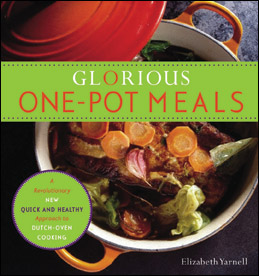
I love to use canned tomatoes in my Glorious One-Pot Meals because unlike fresh tomatoes they are delicious regardless of the season, they can add something extra to a recipe that is different from using fresh tomatoes, and they come in convenient sizes that provide the perfect amounts of tomatoes I need for my cooking technique.

So it’s a huge bummer to know that there are BPAs in my canned tomatoes ready to enter into the bodies of my family and accumulate, waiting to wreak havoc with hormones, cancers, and other horrific health problems.

In the US, industry has been fighting a ban on using BPAs like the kinds they have implemented in Europe and Japan.

That’s why it’s such good news that Muir Glen, a General Mills subsidiary, announced it will begin to use BPA-free metal cans with its next harvest. General Mills is not revealing the material it will substitute for BPA, though of course, canning and canned goods existed long before BPA was invented so it is certainly possible to do without it.

Glorious One-Pot Meal recipe: Dill Salmon

This morning I demonstrated a quick and  easy one-pot dinner recipe for Dill Salmon to help raise awareness of multiple sclerosis and the Walk MS events coming this month around the country. In Colorado, I will be hosting the “Land of Nutrition” in the Wellness Tent at the Denver, Colorado Springs, and Boulder events in May.

Salmon is a desirable food to eat for those living with multiple sclerosis because it is full of omega-3 fatty acids to help maintain and repair the nervous system.

Of course, this recipe is delicious for those not living with MS, too! Find the recipe on page 28 of the 2009 Glorious One-Pot Meals cookbook, or below.

Dill Salmon Serves 2
This is a great, light summer meal and is particularly great for filling your diet with omega 3s! Adding a thin coating of olive oil on top of the fish will result in a less-dense fillet. For an even richer flavor, place several pats of butter on the fish.

Olive oil spray
2 scallions, white and green parts, chopped
1/2 to 3/4 pound salmon fillet
1 teaspoon olive oil
Salt and freshly ground white or black pepper
3 garlic cloves, thinly sliced
1/2 lemon, thinly sliced
5 to 7 whole dill sprigs
5 or 6 red potatoes, thickly sliced
2 large carrots, cut into long strips
1/2 medium zucchini, cut into sticks
1 celery stalk, sliced
1/2 medium cucumber, cut into sticks

1.    Preheat the oven to 450F.
2.    Spray the inside and lid of a cast iron Dutch oven with olive oil.
3.    Scatter the scallions in the pot. Set the salmon on top of the scallions, skin-side down if not skinned, and drizzle with olive oil. Sprinkle with salt and pepper, followed by the garlic.
4.    Top fillets with the lemon slices and half the dill sprigs. Scatter potatoes around the fish. Add the carrots, zucchini, celery, and cucumber. Tuck more dill sprigs into crevices and lightly season again with salt and white pepper.
5.     Cover and bake for about 43 minutes, or until 3 minutes after the aroma of a fully cooked meal escapes the oven. Serve immediately.