Elizabeth Yarnell Amazon icon Audible icon Autographed icon Bluesky icon Book Bub icon Buffer icon Booksprout icon Buy Me a Coffee icon URL Copied! Copy URL Email icon Facebook icon Goodreads icon Headphones icon Home icon Instagram icon LinkedIn icon Linktree icon Mastodon icon Patreon icon Periscope icon Pinterest icon Reddit icon RSS icon Search icon Share icon Snapchat icon Threads icon TikTok icon Tumblr icon Twitter icon Vine icon Youtube icon Join a free Q/A Call!

Monsanto Voted Worst Corporation of 2010 – Again!

“Beating out a host of corporate criminals, including BP and Chevron, Monsanto garnered 38% of the vote to win the 2010 spot in the Corporate Hall of Shame. From the using aggressive legal tactics to intimidate and bankrupt local farmers to its reckless promotion of genetically modified organisms, the list of Monsanto’s abuses is long, and the negative impacts to human rights and the environment are staggering.”

“Add on a 40 year track-record of defiant production of dangerous and cancer causing chemicals – from Agent Orange and PCBs to RoundUp and rBGH – and we have ourselves a ‘winner’. Electing a winner isn’t enough. Thousands upon thousands agree – Monsanto must change its practices.”

Corporate Accountability International, January 20, 2011

Cooking pork tenderloin in a Dutch oven

Reader question: Hello.  I use your method quite often.  I have a question about pork.  When I cooked pork tenderloin in a covered Dutch over, by itself with some oil, onions, and seasoning, I cooked it at 325 degrees.  Using the Infusion Cooking method and multiple ingredients, should I use the standard 450 degrees?  Thanks.  – Elaine, Maryland

Hi Elaine,

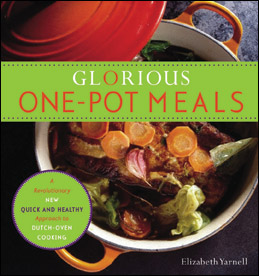
I’m thrilled to hear you’re enjoying Glorious One-Pot Meals! The answer to your question is Yes. Every recipe I do uses the same infusion cooking method at 450 degrees F. This enables everything in the pot (protein, carbs, and veggies) to cook all together in the same pot at the same time for the same amount of time. Pork tenderloin works great in this method, I promise. Try my Honey and Spice Pork recipe — to die for!

Happy cooking!
Elizabeth

Food Additives Are Everywhere

“The average American eats about 20 pounds dry weight of additives each
YEAR. This is ten times the amount used 40 years ago. Those who eat a lot of
packaged, processed, or take-out foods may eat twice the average amount or
more. Children in particular have a very high intake because many of the
manufactured foods that appeal to them are rich in additives.”

food allergies and additivesJonathan Brostoff M.D. and Linda Gamlin (Author),
Food Allergies and Food Intolerance:
The Complete Guide to Their Identification and Treatment
,” p. 414.

How Hidden Food Sensitivities May Be Affecting Your Health

Recently, I was interviewed by eHealth Radio about how food sensitivities relate to chronic health problems. I loved the opportunity to discuss the immunologic and inflammatory effects of food sensitivities, and how they can manifest in the body.eHealth Radio interviews Elizabeth Yarnell about food sensitivties

Listen to the 8-minute podcast and/or read the transcript! I’d love to hear your thoughts.

Other places where I talk about food sensitivities and how they affect your health:

– Is Your Food Making You Sick?

– Fight MS with Food project (be sure to watch the video!)

– Food Sensitivity Testing and Dietary Management

Baby Artichokes Fried in Sesame Oil

As lovely as it is to take a family vacation in a beautiful and restful spot, and as grateful as I feel for the opportunity to do just that, eating restaurant food day-in and day-out was taking its toll on all of us. Even my husband, whose iron gut is legendarily impervious to long-term assaults of the high sodium, saturated fats, and heavy breading like that served in standard and even high-end restaurant fare, remarked how good it felt to be home and eating our own food.

It’s funny to me because I forget how much lighter our household eats than many others; it just feels normal. Between Glorious One-Pot Meals, grilling, and the various whole-food based ingredients I whip together for us to enjoy nightly, we  skip a lot of that heaviness of typical American food without even missing it.

Rice pasta, Rudi’s Organic Bakery spelt bread and tortillas, cheddar cheese made from goat milk, coconut oil, rice-and-potato pizza crust, high-fructose-corn-syrup-free chocolate syrup, coconut milk (non-dairy) ice cream bars, sunflower seed butter, Good Belly… These may seem like an unusual shopping list, but it contains some items in my fridge and pantry that form the staples of our diet.

baby artichokes fried in sesame oil with thyme and sesame seeds
Baby artichokes fried in sesame oil with shallots and thyme

Not to mention the fresh produce I select, which may run the gamut from organic bananas, pears, and apples, to kiwis, Swiss chard, crimini mushrooms, and shallots.

This week a container of fresh baby artichokes caught my fancy. While I reserved some to put into a GOPM later, the rest I fried up in a mixture of sesame and safflower oils together with a chopped shallot. When the artichokes were nicely crisped, I tossed them with sea salt, freshly toasted sesame seeds, and thyme dug out from underneath the snow in my garden.

Yes, it’s a fried vegetable, but it’s light-years lighter than the corn-on-the-cob floating in 3″ of butter featured on the buffet one night, or the equally buttery French-cut green beans. Even the “grilled fish” had been painted with a buttery sauce. Did it taste good? Absolutely. The job of a good restaurant is to make food taste good, even if that involves lots of fat, salt, sugar, and who knows what else.

Did I feel good eating that way for a week? Not so much.

Yum. Baby artichokes are such a treat! In the immortal words of Judy Garland: There’s no place like home!