Elizabeth Yarnell Amazon icon Audible icon Autographed icon Bluesky icon Book Bub icon Buffer icon Booksprout icon Buy Me a Coffee icon URL Copied! Copy URL Email icon Facebook icon Goodreads icon Headphones icon Home icon Instagram icon LinkedIn icon Linktree icon Mastodon icon Patreon icon Periscope icon Pinterest icon Reddit icon RSS icon Search icon Share icon Snapchat icon Threads icon TikTok icon Tumblr icon Twitter icon Vine icon Youtube icon Join a free Q/A Call!

What Causes Headaches? It Could Be A Food Sensitivity.

Last month I noticed that I began to get headaches regularly every afternoon. I didn’t immediately suspect that it was a food sensitivity reaction, but once I realized what was causing it, I was able to make the headaches disappear.

I’m not a person prone to headaches and after the third day in a row of having dull pain above my right eye I began to suspect something was wrong. Of course, I jumped to all sorts of rational conclusions first: it was a tumor that was causing the pain, what if it were a parasite behind my eye, or maybe I had brain-eating amoebas!

Then I gave it some thought and asked myself to remember when the headaches had started and what had changed at that time. I realized that my headaches had begun after we had arrived back home from our east coast vacation. I had been suffering from a cold that week so hadn’t thought of a headache as notable since my sinus cavities were full, etc. But then the cold ran its course and I still had the headache every day more than a week later.

I wondered if the problem could be caused by the agave syrup I used to sweeten my cup of decaf coffee at home. On vacation I was using cane sugar in my coffee, but at home I usually use agave. Food sensitivities can be delayed by up to four days, so a headache beginning around 3 pm could very well result from a drink at 7 or 8 am.

I stopped using agave syrup the very next day and had only a faint headache that afternoon. Two days after ceasing using the agave I was completely headache-free. It has now been four days without a headache and I am convinced it was the agave.

I feel lucky to have been able to identify the culprit and find relief so easily! Many of my clients complete MRT food sensitivity testing and find they are sensitive to as many as thirty or forty foods. After they complete a washout and some healing time, they often find that there were one or two big offenders that were tipping the scales for everything else.

I worked with a 29-year old attorney who had suffered from migraines almost daily since she was twelve years old. With MRT testing and the LEAP Immunocalm Diet, she was able to identify her biggest sensitivity as being from the additive fructose. As in High Fructose Corn Syrup. She realized that everything she used to eat as a busy career woman contained fructose and she had been unwittingly keeping herself in pain.

The first two weeks after removing all fructose from her life she went through a washout period and experienced about a dozen migraines. Then they stopped for good. Now she lives a migraine-free life as long as she avoids her fructose trigger. She feels like a new person. She received a raise and a promotion and is happily living migraine-free.

Sometimes you just don’t know until you know.

A Banner Year for Mushrooms

Some friends of ours are mushroom foragers.

Crimini mushrooms
Porcini mushrooms

Every fall they forage for mushrooms in secret spots in the Rocky Mountains and come home with baskets of beautiful mushrooms.

Shelly holding two giant Crimini mushrooms.
Shelly holding two giant Porcini mushrooms.

This year Shelly and D have reported a bumper crop of Porcini mushrooms as a result of our wetter-than-usual summer weather, and their harvest was truly spectacular. We were lucky enough to receive a couple of massive toadstools from their haul and plan to cook them up for supper tonight.

Mushroom foraging must be undertaken with caution as eating the wrong mushroom can make you sick or even kill you. Positive identification of mushroom species involves spore prints, examination of the gills and growth patterns, and more.

I love this warning from AmericanMushrooms.com: “There ought never be such a book as “The Dummy’s Guide to Edible Wild Mushrooms,” because identifying edible wild mushrooms and eating them is sort of like packing a parachute: any one mistake can be your last.”

Drying freshly-harvested mushrooms.

Luckily, Shelly and D know what they’re doing when it comes to foraging for mushrooms. The only question left was what to do with a abundance of mushrooms? Once harvested, mushrooms won’t last too long. Keep them in paper bags in the fridge if you’re going to use them fresh, or dry them for long-term storage.

Daughter Milan showing off her mushrooms.

Shelly and D sliced the fungi and laid the slices out to dry on screens in the sun. Dried mushrooms store well and rehydrate easily with hot water. They make excellent additions to soups, stews, sauces, stir-fries, and of course, to Glorious One-Pot Meals, too!

Problems Sleeping? It Could Be What You’re Eating!

Do you have problems sleeping? If so, you’re not alone. Almost 9 million Americans take prescription sleeping pills. What’s eating everyone… literally?

Believe it or not, sometimes the foods you are eating during the day are keeping you awake at night.

It’s well-recognized that caffeine can keep us awake and that some people are more sensitive to caffeine than others. I used to be a caffeine-aholic, not able to start my day without a cup or two of coffee and often drinking coffee late into the night. Funnily enough, I had terrible insomnia many nights, not falling asleep until the wee hours of the morning.

Then I gave up both coffee and caffeine because I was trying to stop the hives (that’s another story). The funny thing was that I started sleeping better and I realized that I didn’t need the caffeine to feel awake in the morning anymore. After a couple of years, I reintroduced decaf coffee and seemed to be fine, but the moment I had a sip of a caffeinated drink, my teeth would clench, my jaw would ache, my legs would tremble, I wouldn’t sleep well and I would feel hungover the next day. All that from a sip or two of regular coffee.

I’m happier without the caffeine, and I feel lucky to have figured out a secret to sleeping better. More than ten years later, I’m still falling asleep easily and waking up without any craving for caffeine.

Food sensitivities may be delayed by as long as four days after ingestion, making it very difficult to identify the culprits that may be keeping you awake at night. In my nutritional therapy practice I hear over and over how much better people sleep once they identify their inflammatory triggers and change their diet accordingly.

Whether it’s caffeine or another food or chemical that is triggering reactions in your body, what you are eating can make a huge difference in how well you are sleeping. Food sensitivity testing can point you in the right direction.

Grain-free Recipes for Glorious One-Pot Meals

Reader question: I was looking for chicken recipes and I happened on one that used a Dutch oven, and further searching for   recipes for Dutch ovens brought me to your book. How can I adjust your recipes so they can be made without grains or pasta? ~B.

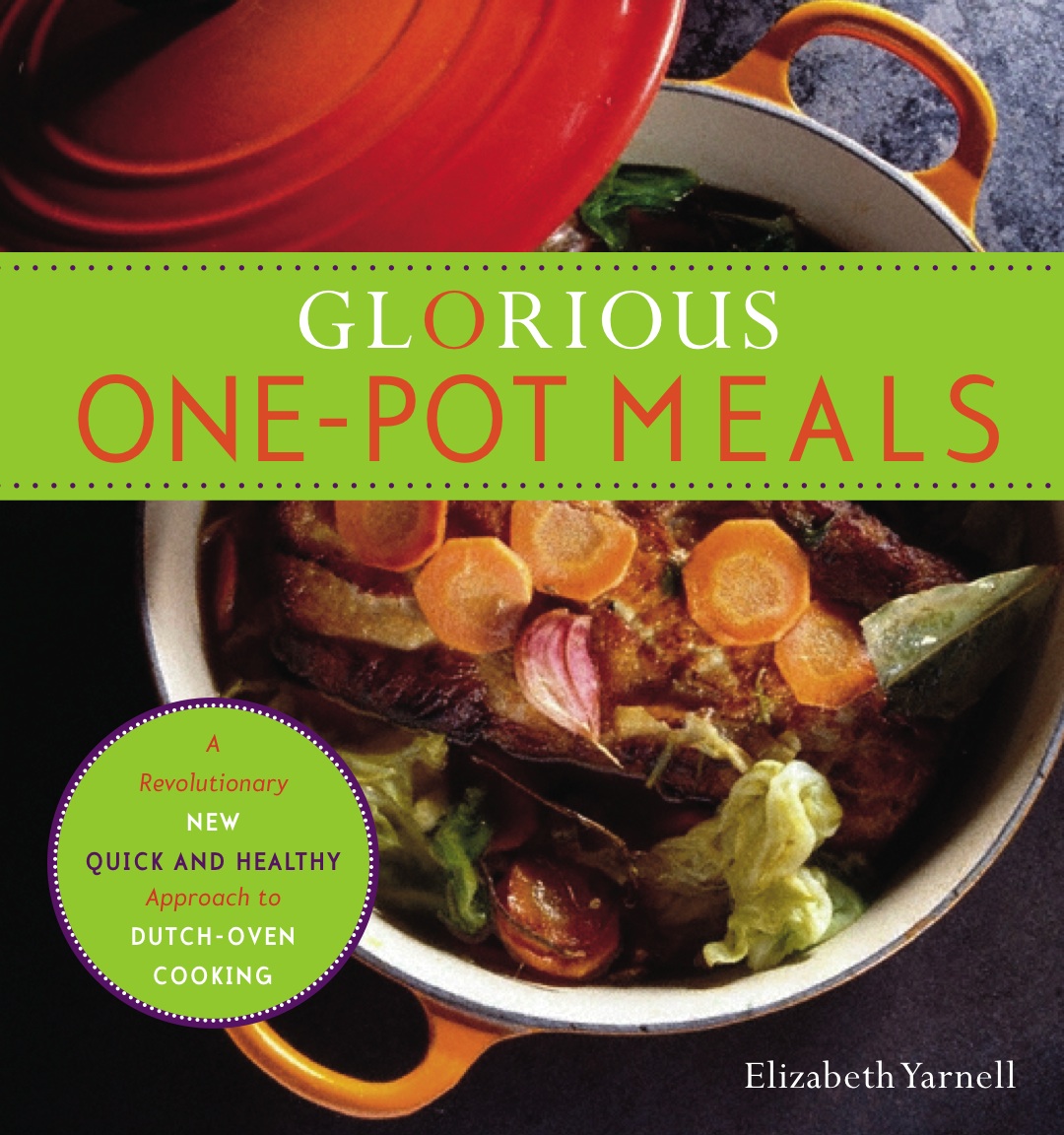
Hi B. Thanks for writing with your great question. In fact, any Glorious One-Pot Meal can be made with or without grains or pasta. The beauty of this cooking method is that your meal can be any way you want it to be because every ingredient is every Glorious One-Pot Meal is substitutable or omit-able.

What I mean is that you can substitute any protein for any protein, any veggie for any veggie, or any carb for any other carb. If you don’t want to include grains/pasta in a recipe, then by all means just leave them out.

Remember, though, if you are looking at a GOPM recipe that includes grains or pasta (what I refer to as “dry goods”), any you are going to leave them out, you will no longer need the liquid in the recipe that is just there to hydrate those dry goods, so leave that out, too.

Vitamin C Still Key for Kicking a Cold

Sometimes it’s good to be reminded about old truths that get forgotten in the rush to embrace new trends. That’s how I’m feeling about Vitamin C these days.

Acerola cherries are a great source of Vitamin C.

I remember watching my parents down large doses of Vitamin C in the 1980s to rid themselves of colds, and it worked well for them then. Why I don’t treat myself the same way remains the mystery.

I had to battle my east coast summer cold for twelve days before thinking of taking some Vitamin C. Maybe the cold was clouding my brain, or maybe I just wasn’t taking care of myself properly because I was feeling so lousy (I did manage to give my kids Vitamin C and they only suffered for a few days, go figure), or maybe I bypassed Vitamin C in favor of other remedies just because I thought of them first. Whatever. I’m glad I finally thought to take some because it did the trick.

The thing about helping your body heal and recover from illness using natural remedies is that sometimes you have to try a few approaches before finding the right one to counteract that ailment. My regular stockpile of garlic tea, Sinus Rinse, and homeopathic remedies were not effective against this particularly nasty bug, but a large dose of Vitamin C was what I needed.

Linus Pauling, the father of orthomolecular medicine, first asserted that high doses of Vitamin C could activate the immune system against viral infections and even cancer. He was attacked by a skeptical medical community schooled to believe in pharmaceuticals and to reject the notion of food as intrinsic to health. It is only now that conventional medicine is beginning to recognize the role of vitamins in health, and Linus was truly ahead of his time.

Because I prefer to get my vitamins from whole foods rather than from supplements with questionable bio-availability, when I’m looking for Vitamin C I’ll usually reach for strawberries, kiwis, oranges or grapefruits, but sometimes a higher dose is needed quickly. The two foods with the highest concentrations of Vitamin C are rosehips and ascerola cherries.

While I’m not a big fan of the flavor of rosehip tea, I have no problem munching on tart, dried Acerola cherries, but they can be hard to find. Acerola extract powder (also in capsules) offers a natural source of Vitamin C that’s easy to take mixed into juice or water. A single heaping teaspoonful of Acerola powder was all it took for me to turn the corner back to health.

The moral of this story: don’t forget about Vitamin C. It’s an oldie but goodie to keep in your arsenal against colds.