Elizabeth Yarnell Amazon icon Audible icon Autographed icon Bluesky icon Book Bub icon Buffer icon Booksprout icon Buy Me a Coffee icon URL Copied! Copy URL Email icon Facebook icon Goodreads icon Headphones icon Home icon Instagram icon LinkedIn icon Linktree icon Mastodon icon Patreon icon Periscope icon Pinterest icon Reddit icon RSS icon Search icon Share icon Snapchat icon Threads icon TikTok icon Tumblr icon Twitter icon Vine icon Youtube icon Join a free Q/A Call!

Are You Itchy Down There? Natural Remedies for Itchy Anus and Genitals

I was asked for suggestions to help someone who has continued to suffer from itchiness on her rectum even while following a customized anti-inflammatory diet based on her MRT results and after completing a candida cleanse. She wondered if perhaps the itchiness could be due to parasites.

In my opinion, it never hurts to do an herbal parasite cleanse as long as you do not have an anaphylactic allergic reaction to walnuts (a sensitivity doesn’t matter). I myself have done the herbal protocol at least 3 times, my son has done it twice, my husband at least 5 times, and my daughter did it for the first time at nine years old after the whole family became infected after eating an an upscale Mexican restaurant in Escondido, California.

Certainly there are parasites that hang out around the anus and cause itching. Pin worms are an example of these. An herbal parasite cleanse like the one I have used with hundreds of patients in my clinic is simply a protocol of taking four different herbs over the course of about a month. It comes with an included follow-up counseling session with me as well, so we can assess your progress and determine if there is more needed.

She might also benefit from a 24-hour enzyme urinalysis that would show if the candida problem is fully cleared and if specific enzymes to cut through the candida biofilm might help.

Additionally, anal itching can be due to external factors, so it’s good to check your environment and personal care products as well as potential problems like a sexually transmitted infection (STI).

To this list of potential irritants to the genital area, I would add the following suggestions:

  • Stop using dryer sheets (these things are seriously toxic!) and clean the inside of the dryer drum from dryer sheet residue.
  • Use an organic, unscented laundry detergent.
  • Re-wash all underwear that was washed and dried with a non-organic laundry detergent or dryer sheets.
  • Use only organic, natural, and unscented shampoo, conditioner, and soap/body wash.
  • If using coconut oil instead of soap down there doesn’t seem like it’s helping after a week, or if you’re sensitive to coconut, try a glycerin-based vitamin E soap instead.
  • Put Florosone, a remarkably effective homeopathic cream, on an organic cotton pad and apply liberally to the anal area. An initial stinging or mild burning may occur, but should disappear shortly. The Florosone will decrease the swelling and calm the itching like magic.
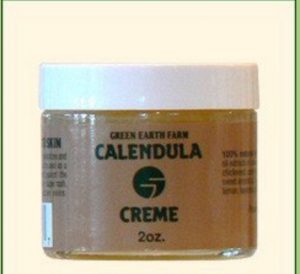
  • Apply Green Earth Farms’ Calendula Creme to offer healing and soothing to the irritated areas of the anus and rectum. I prefer the one that uses a vegetable jelly base to the lanolin base.

If she hadn’t already taken the MRT food sensitivities test and been following the customized LEAP diet from the MRT results, then I would have advised this as a next step if the itching continues.

Join Me with Novel Women on Thursday!

Novel Women, a community created by mover-and-shaker Jamie Safely to unite and inspire women, invited me to speak during a delicious lunch at noon on Thursday, April 23rd, 2017 at The Thirsty Lion in Denver.

Come join us! Visit here for more information and to register for what is sure to be a fun and lively time with other feisty women!

Hope to see you there!

Whole Grain Pasta, Alcohol in Glorious One-Pot Meals

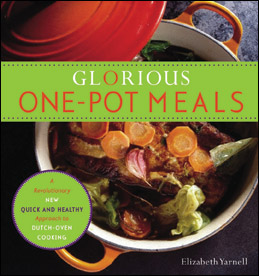
Reader question: Hi Elizabeth, I love your book! I am a teacher and I come home each day to make meals for the family and this has made my life easier, healthier, and very tasty! Thank you! I was wondering two questions: 1) When I put wine in a dish does the alcohol evaporate like it would on the stove? I ask that because I’m cooking for little kids. Also, if you are using a whole grain pasta (fusilli) would that affect the amount of water to add?  ~ David S., Brooklyn, NY

Hi David! I’m so glad that Glorious One-Pot Meals has had such a wonderful impact on your life! I think it’s a great cookbook for teachers, too, and in fact, I have personally given copies to each of my kids’ teachers every year since 2005.  🙂

As for your questions, here’s what I can tell you:

  1. While alcohol won’t evaporate during the cooking process because the food is cooking in a closed vessel, but once you remove the lid a lot of vapor is released and I believe that this is when the alcohol steams off. In my experience, no matter how much alcohol I put into my GOPM while preparing it, it never tastes alcoholic at all when I eat it. This makes me feel comfortable including alcohol at times in GOPM that I make for my family.
  2. Regarding using whole grain fusilli pasta, this can be a little tricky. Each brand of whole grain pasta seems to cook a little differently in GOPMs, which is why I did not include whole grain pasta in the cookbook to begin with. In general, I would suspect for whole grain items to need 1 Tablespoon of additional water or liquid per quart of Dutch oven (i.e., 2 Tbsp. in a 2-quart Dutch oven), but you may need to do a little experimenting with your preferred brand of pasta to get it perfect. I think fusilli is a good choice of pasta shape to try this, too!

I hope this is helpful. Thanks for writing! ~Elizabeth

Spelt Bread Recipe for a Bread Machine

Do you have a bread machine lying around but don’t make bread anymore because you’re avoiding wheat?

My husband brought his bread maker into our marriage in 1999, and in the early years we often made delicious fresh bread. But after my son’s 2009 MRT results showed that he was sensitive to wheat, I tried a number of wheat-free variations and after ending up with a number of inedible hockey pucks, gave it up and put the bread machine in the basement.

Recently we put up a new shelf in our laundry room and relocated the small appliances that had previously been relegated to random locations like the top of the basement freezer and underneath the stairs. Which reminded me that we had a bread maker. And of the amazing aroma of freshly baked bread. And of walking home through the pre-dawn cobblestone streets of Florence, Italy, in the early 1990s, and rounding a corner and catching the hot, yeasty, crusty perfume emanating from a bakery hidden behind a high wall.

But, I digress.

Spelt, as I have noted before in this blog, is NOT THE SAME AS WHEAT, but behaves a lot like wheat in recipes. Spelt is an ancient cousin of wheat and has not been hybridized and tinkered with the way we have done with wheat in the US. Though it is a gluten grain, so if you are a serious Celiac sufferer, spelt won’t work for you.

Halleluiah! Let us all, and by all I mean both the wheat-tolerants and the wheat-intolerants among us, celebrate the purity of spelt!

Here’s an easy spelt bread recipe that should work in most standard breadmakers. Use the cycle for “white bread with fresh milk or liquid.”

1 lb. loaf Spelt Bread

1 cup water
2 Tbs. vegetable oil
3 Tbs. honey, organic cane sugar, pure maple syrup, or other natural sweetener
1 tsp. salt
3 cups spelt flour
1 ½ tsp. yeast

1 ½ lb. loaf Spelt Bread

1 cup water
3 Tbs. vegetable oil
1/4 cup natural sweetener (see list above)
1 ½ tsp. salt
4 cups spelt flour
2 ½ tsp. yeast

Bake according to bread machine’s instructions.

The Wonders of Spelt

I’m in love with spelt.

In case you don’t know, spelt is an ancient cousin of wheat; that is, it’s related to wheat but its not the same as wheat. As you may have heard by now, wheat may not be right for everyone’s digestive tract, but luckily even some who can’t tolerate wheat may be able to tolerate spelt just fine.

And when that means you can enjoy things like bread, pretzels, and tortillas again, spelt is indeed a reason to celebrate.

Spelt is not like wheat in that it hasn’t been domesticated and hybridized for couple thousand years (or at least since the time of the Pharos in Egypt a lá the story of Joseph and the Coat of Many Colors).

Spelt is also not the most heavily pesticided crop in the U.S., as wheat may be. And it has a more soluable gluten molecule than wheat does; in fact, it may be more easily digested and less allergenic than wheat may be.

Spelt is like wheat in that spelt flour often works well as a replacement for wheat in recipes for baked goods like pasta, pretzels, bread, and even matzah, a fact a number of enterprising companies have figured out.

If you are sensitive to wheat, how do you know if you can tolerate spelt?

Here are the ways I know of to figure this out:

  1. Take the MRT food sensitivity test. The MRT tests both wheat and spelt but it is not a definitive celiac test. That is a different test. The MRT is 94% accurate and assesses 120 foods and 30 additives and preservatives that are rampant in our food supply.
  2. Do Muscle Response Testing with a trained practitioner. Many alternative medicine practitioners are trained in Muscle Response Testing and can make an educated assessment. It may seem unscientific, though, and if this bothers you, you should consider the state-of-the-art MRT instead.
  3. Get tested for celiac disease. If this is positive, it is you may not be able to tolerate spelt after all. But, only 7% of the population is celiac, so it may just be more likely that you may be sensitive to wheat rather than to all gluten. Which may leave spelt available to you. In which case a happy dance may be in order.

Check out my next post for a delicious recipe for baking 100% spelt bread in a bread machine.