Elizabeth Yarnell Amazon icon Audible icon Autographed icon Bluesky icon Book Bub icon Buffer icon Booksprout icon Buy Me a Coffee icon URL Copied! Copy URL Email icon Facebook icon Goodreads icon Headphones icon Home icon Instagram icon LinkedIn icon Linktree icon Mastodon icon Patreon icon Periscope icon Pinterest icon Reddit icon RSS icon Search icon Share icon Snapchat icon Threads icon TikTok icon Tumblr icon Twitter icon Vine icon Youtube icon Join a free Q/A Call!

Chocolate Syrup Perfection

Let me just start off by confessing that I never met a chocolate that didn’t call my name.

In fact, I believe chocolate should be included in the basic food groups of our illustrious food pyramid. Full of antioxidents, a little bit of chocolate can go a long way in soothing the road-weary soul at the end of a long day. And, I believe that eating pure chocolate, as opposed to chocolate in cookies or other baked goods, will not hinder any weight-loss goals. Seriously.

Banana Parfait - chocolate syrupA good chocolate syrup can provide a satisfying chocolaty experience, provided it’s not loading you up with high fructose corn syrup or trans-fats. Pouring it over small chunks of fruit is like bringing a chocolate fountain into your house — fun to eat and delightfully delicious. If I had a light dinner that night, I might even consider layering bananas and chocolate syrup with no-sugar-added almond butter. This is one of my favorite desserts!

Here’s the problem with common brands of chocolate syrup: they cheap-out and use high fructose corn syrup instead of real sugar. As I’m sure you already know, high fructose corn syrup is a highly processed, highly concentrated byproduct of our corn industry. It is incredibly cheap (mostly due to our farm subsidy policies which are causing us to have too much corn) and unbelievably widespread

Start reading labels and prepare to be shocked at how frequently you see high fructose corn syrup appear. It’s in soda pop, flavored waters, Wheat Thins (why, General Mills? why would you ruin a perfectly healthy baked whole grain cracker with high fructose corn syrup? it breaks my heart), breakfast cereals, GoGurt and other yogurts, cereal bars… the list goes on and on.

Highly processed, synthetic and artificial sweeteners fool the body into releasing hormones to process the “food” which then send out other substances that turn calories into fat for storage. Yep, that’s storage on your rear or around your middle compliments of the processed food industries.

My advice: if it has high fructose corn syrup on the label, find a different brand or skip it altogether.

The best, high-fructose-corn-syrup-free chocolate syrup I’ve found is called Ah!Alaska I find it at the natural grocery store.

Got Milk?

Earlier this week, the Breast Cancer Fund released an overview of current research on the causes of early puberty — a phenomenon affecting American girls. While the report listed a number of potential influences, including everything from obesity and inactivity to family stress, accidental exposure to toxic chemicals and t.v.-watching (?!), it barely brushed on the addition of growth hormones to our milk and meat supplies. In fact, the synopsis covered in the media doesn’t even mention the cattle and dairy industries.

Hmmm… Something doesn’t smell right.

Are you telling me that I can send my daughter into early puberty by letting her watch Desperate Housewives, but I shouldn’t be concerned about the ESTROGEN-derivatives and other hormones added willy-nilly to our industrialized beef and dairy herds? We are supposed to encourage our kids to drink several glasses of milk each day for strong bones, but is the result that girls as young as 8 are starting to sprout breasts and menstruate? Go visit a 3rd grade classroom and see what I’m talking about.

When I downloaded the full report, I was able to learn that “The European Union has forbidden the use of exogenous hormones as promoters of animal growth since 1989. By contrast, estradiol and other natural and synthetic hormones are still used as growth promoters in the U.S. beef industry. In the U.S. dairy industry, recombinant bovine growth hormone (rBGH) has been used to increase milk production since 1993.”

Yes, I knew that. It’s criminal.

“Suggesting reasons for concern, some researchers point out that federal risk assessments that have set safe threshold levels for estrogens in meat are based on overestimates of children’s own endogenous production of hormones, which are now known to be many times lower.”

You mean, the standards used for this critical food safety issue are known to be based upon false information? It’s getting fishier.

But here’s my favorite line from this section: “Their impact on pubertal timing of girls who are the consumers of its products remains an unanswered question.”

Of course that’s what the beef and dairy lobbies would have you believe. “The jury’s still out on this one.” Where have we heard lines like this before?

We’ll talk more about this…

Italian Tuna (Tonno)

One summer we stripped and painted the outside of our 100+-year old Victorian brick cottage. We hired a college student helper and he and my schoolteacher husband spent every day for a month or more wrapping and then peeling the house (we didn’t want lead paint specks all over our yard for future babies to eat) to get rid of the paint. Then we rounded up as many family and friends as we could coerce for the actual painting. My days were spent high up on the scaffold with an itty-bitty paintbrush doing the detailed dentils around the roofline. What a project!

Many of my favorite memories of those days are around feeding everyone lunches as a thank you for coming to help us out. I had fun with it, offering everything from make-your-own-burrito bars and salted cucumber sticks fresh from our garden to zucchini-filled tamales and cold watermelon soup. One of the crew’s favorites was Italian-style tunafish, or tonno.

tonno sandwichEven my little sister, a picky high-schooler at the time who initially claimed she hated tunafish, discovered she loved it when made this way instead of with mayonaise.

Start with drained fancy white albacore tunafish packed in water. Mix it with a few Tbsp. of drained capers and chopped fresh basil. Drizzle with good quality olive oil while stirring to moisten the tuna. Add fresh cracked pepper, if desired.

Here I made a sandwich of Tonno on toasted halves of roasted garlic artesian bread with a roma tomato and baked kale chips (recipe to come soon!). I ended up loading the kale onto the sandwich along with some tomato — mmmmm…. heavenly.

Tonno wrapHere is how I ate the leftovers the next day for lunch: wrapped in a toasted whole wheat tortilla along with stemmed, seeded, and peeled roasted green chiles, butter lettuce and chopped tomatoes. On the side I munched on fresh sweet peas — newly in from the end-of-summer crop.

By the way, I toasted my tortilla by laying it directly on the gas burner over low, low heat. I flipped it after a few seconds. If you do this, keep a close eye on your wrap or you will get burnt spots!

The Self-Hypnosis Diet

Self-hypnosis diet book
Steven and Joy Gurgevitch have developed this fabulous technique for approaching weight loss by “changing unhealthy eating patterns and creating new and lasting behaviors while still having an enjoyable, fulfilling love affair with food.” It’s called: The Self-Hypnosis Diet: Use The Power Of Your Mind to Reach Your Perfect Weight.

Finally. A diet that makes some sense.

Joy, a behavioral nutritionist, explains her work in this radio interview:

“Behavioral Nutrition is a newly emerging area in the field of Nutrition. It uses simple and motivating activities which help people make wholesome food choices. I do “Food Tasting” in my office (yes, just like a “wine tasting”) of nutrient dense foods, (people can experiment with whole grains, such as kamut, brown rice, quinoa… more healthful sweeteners such as brown rice syrup, stevia…plant protein…. walnuts and pinons, tempeh,). In my work I teach my clients how to read Nutrition Facts labels and ingredient labels. I do “home visits” where together we do pantry purging, go shopping, and learn simple cooking techniques. It’s one thing to have all the good foods in the kitchen; it’s another thing to know how to put them together to make an easy, quick, delicious meal. Fast-to-Fix meals are a great alternative to fast food. All of these activities take the client from point A (which is wanting and/or needing to make changes in food choices) to point B (which is actually having these wholesome foods in their homes and on their plates). The concepts of eating well are very simple, but it is often not easy to incorporate those concepts into lifelong behaviors. And that is what Behavioral Nutrition does: It helps people create healthy lifelong food choices and turn those choices into delicious meals that they and their families and friends love.”

To which I say: Tell it like it is, sister! You are preaching to the choir.

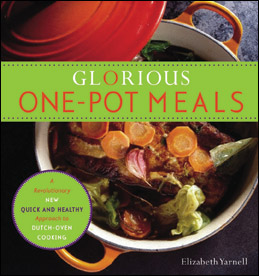
To which Joy responded: “Notice the “fast-to-fix” portion….perfect for your Glorious One-Pot Meals!!”

And all I can say is: Amen.

May this next year be one of health and wisdom for us all. Happy cooking!

Zucchini & Carrot Latkes

If it seems I am obsessed with zucchini lately, rest assured I will move onto other things once the frost comes. In the meantime, however, I’ve got some zucchini to prepare.

I pulled out this great zucchini and carrot latke recipe (see below) I cut out from the newspaper years ago and decided to make it for dinner along with some steamed kasha as a whole grain side. Latke means pancake, traditionally made of potatoes, but this recipe offers more vegetable goodness than plain potatoes. 3 zucchini

The first thing I noticed in the recipe is that it called for “4 large zucchini.” I had to literally laugh out loud and ask the anonymous recipe writer, “Just what do you mean by large, girlfriend?” Here are the three zucchini I had recently harvested. The smallest could be rightfully considered “medium,” or even “large,” at least by supermarket standards. And the largest shown is actually half of what it once was (notice the plastic wrap on the tail end). If one half is that huge, just imagine what the whole thing looked like.

The really scary part is that this was the smaller zucchini of the two I harvested after vacation. The larger one I actually cradled in my arms like a newborn as I delivered it to a neighbor’s house. I had warned her that it was enormous, to which she had cockily replied, “Bring it on! I’m not scared!” Her eyes were pretty wide when she answered the door to a squash the size of a cricket bat! I trust she was up to the task.

shredded zucchiniI decided that the remaining half of the large zucchini would suffice for the “4 large zucchini”. I shredded it in the food processor, and then did a few handfuls of baby carrots. I dumped them in a large bowl, added 2 chopped scallions and eggs and mixed. The dry goods came next, but I didn’t have any cardamom and couldn’t think of a good substitute, so I just skipped it. No one commented on its absence!

The recipe recommended frying them on the stovetop with oil spray and some peanut oil. Out of peanut oil, but I found some macadamian nut oil that added a different sort of nutty flavor — very enjoyable. I greased up the non-stick griddle I rescued from a garage sale and started to fry tablespoonfuls of batter until they were golden brown.

I wanted to make them small, appetizer-size rounds so they would be fun for the kids to eat, but it took way longer than I had anticipated to fry all those little pancakes: more than 2 hours of constant activity. The kasha idea went the way of the protein, leaving the latkes as the only element of our evening meal. Sigh. The best laid plans… Yes, it’s always good to be reminded as to why I love one-pot meals! Zucchini & Carrot latkes

Luckily, the kids scarfed them down almost as quickly as I could make them. They dipped them in organic, unsweetened ketchup, while my husband and I topped them with a dollop of sour cream and a smidgen of seaweed-based faux-caviar called Caviart that I found at a food show and we love. Yum. We ate every single one, and there were many.

I realized about half-way through the frying that it would have been better to use our little fry-baby and deep fry these latkes at high heat in a mix of canola and nut oils. They would have been crispier. I love doing this with potato latkes.

There was one Thanksgiving where I had purchased 10 lbs of potatoes to make mashed potatoes for 40 and learned that morning that someone else had already done it. That was pre-children, when we used to host an annual “Day after Thanksgiving/Home for the Holidays” party for everyone we knew who was in town (often more than 75 people came!). The next day I turned those potatoes into piles of deep-fried mini-latkes, helped immeasurably by the early arrival of my sister- and brother-in-law who took over the frying and allowed me to dress for the party. The latkes were a huge hit with the party guests.

The other thing I wished I had done would have been to set the shredded zucchini into a colander to drain for about 15 minutes before using. The zucchini released so much liquid that by the time I reached the end of the veggie shreds in the batter there was about a cup or more of watery liquid left in the bowl. I would have prefered to have had a drier batter.

Regardless, these Zucchini and Carrot Latkes were a huge hit at our house for dinner, and I was happy to see both kids ingest a good amount of vegetables without a sqabble!

Zucchini and Carrot Latkes
6 servings

4 large zucchini
4 large carrots
1/2 cup chopped green onions
4 eggs, beaten
1/2 cup flour (try using whole wheat flour for a healthier version)
1 heaping teaspoon baking powder
1/2 tsp. nutmeg
1/8 tsp. cardamom
1/2 tsp. salt
1/8 tsp. ground pepper (I used white ground pepper — my current fave)
vegetable cooking oil spray
peanut oil for frying

Using the shredding blade in a processor, shred the carrots and zucchini. Transfer to a large bowl and add the green onions and beaten eggs. Blend well. Add the flour, baking powder, nutmeg, cardamom, salt and pepper.

Spray a large frying pan with a vegetable spray. Add a little peanut oil and with a large oval mixing spoon, drop by spoonfuls into the hot oil. Allow the pancakes to set before turning. When crisp, remove and place on paper toweling to remove any excess oil.

These can be made in advance. Place on a cookie sheet and heat in a 400-degree oven when ready to serve.