Elizabeth Yarnell Amazon icon Audible icon Autographed icon Bluesky icon Book Bub icon Buffer icon Booksprout icon Buy Me a Coffee icon URL Copied! Copy URL Email icon Facebook icon Goodreads icon Headphones icon Home icon Instagram icon LinkedIn icon Linktree icon Mastodon icon Patreon icon Periscope icon Pinterest icon Reddit icon RSS icon Search icon Share icon Snapchat icon Threads icon TikTok icon Tumblr icon Twitter icon Vine icon Youtube icon Join a free Q/A Call!

Honeycrisp apples

As a child I preferred just about any other fruit to the old standby of the apple. It wasn’t until recently, with the emergence of new apple varietals on the market, that I realized that it wasn’t that I didn’t like apples, it’s that I didn’t like Red Delicious apples. And besides Granny Smiths, those were the choices in apples.

Honeycrisp apples and honey

The availability of new apple varieties in the past few years have turned me into the apple devotee that I never was before. Fiji, Gala, Pink Lady… I’m fans of them all. But nothing has won me over like the honeycrisp apple.

Each fall I eagerly await their appearance on the market. Colorado apple growers are now bringing in their harvests to the farmers markets and the regular grocery stores, and I’m in heaven.

Exceptionally sweet and crisp, the honeycrisp is hands-down my favorite variety of apple. It’s only available for a short window of time, so get your eatin’ while the eatin’ is good!

Today, the traditional way to eat apples is in slices dipped in honey. Delicious. (Look for local honey to get all the benefits of local pollens or single-source flavors!) Happy new year to all of my Jewish friends! May your year be as sweet as a honeycrisp apple!  🙂

Jazzercise

One of the things I love about Jazzercise is that it lifts and tightens my butt.

After two 50-lb pregnancies and two c-sections, I just entered my third year of post-partum Jazzercise. I can only squeeze in three sessions each week, but I go religiously and build my schedule around class times.

Let’s face it, I’m supposed to be saggy at (almost) 40. Jazzercise gives me the body of a 20-year old — almost.

Come to think of it, I was at a heavy point when I was 20 and weighed almost 30 lbs more than I do now. I got there honestly by living in Italy and reveling in the food (an addiction to Baci, little chocolate balls with a hazelnut in the center, and nutella, chocolate/hazelnut spread didn’t help!). My butt may not have sagged, but it was a wide load. So, to tell the truth, Jazzercise has given me the body I wanted when I was twenty!

The goal, I think, is to find the “right” exercise for you, and then just go and do it regularly.

Get a Double Scoop of Taste and Health

Today we have a guest blogger, Kelly Kilpatrick, who writes about food and health primarily for nurses. I’m glad to be able to share other voices in this space and hope you enjoy the change.

* Note: the views expressed in the following article may not necessarily reflect the views of the author of this blog.

Get a Double Scoop of Taste and Health

We’re a race that lives to eat as opposed to eating because we need sustenance to live, which is why we’re beset by lifestyle diseases like cancer, diabetes and cardiac ailments. Unlike our ancestors who had limited food options, we’re spoiled for choice today – from the different kinds of cuisines to the various ways to cook the same kind of food, we have a staggering array to choose from. And more often that not, we choose the wrong kinds of food, because they’re the ones that taste better – or so we think!

Most people avoid going on a diet because of the love affair they have with their taste buds – these small sensors take priority over all health issues and must be satiated at all costs. To eat healthy in their book is to eat bland, tasteless food. But that’s not the truth; here are a few tricks and tips that show you how to eat healthy and have a great-tasting meal. So now you can have your cake and eat it too!

•    Cook your own food: The reason why most healthy or diet foods taste bland is that they’re frozen or readymade. Buy natural, healthy and fresh ingredients and use herbs and spices to make your food tastier. When you cook your own food, you retain control over how much fat or oil you add to the finished product.

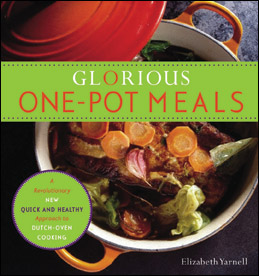
(EY: This is a great point! And don’t forget that Glorious One-Pot Meals: A Revolutionary New Quick and Healthy Approach to Dutch-Oven Cooking offers you a new tool in your pantry for cooking healthy meals! The cookbook comes out January 6th, 2009, but save $5 by pre-ordering yours today!)

•    Use unsaturated oils: Saturated fats like those in coconut oil, palm oil, butter and margarine up your cholesterol levels and are bad for your heart. You’re better off using unsaturated fats (monounsaturated or polyunsaturated) like those in olive oil, sunflower oil, groundnut oil, corn oil, soy oil and cottonseed oil.

•    Substitute two egg whites instead of one whole egg: Eggs are a rich source of protein, but their yolks are also packed with cholesterol. If you must have your eggs, both at the breakfast table and in your cakes, substitute two egg whites in place of one whole egg. By eliminating the cholesterol and keeping the protein, you’re making a healthy choice. And for those who swear that the yolk is the tasty part of the egg, try an omelet made with chopped vegetables, onions and two egg whites beaten well – you’ll change your mind.

•    Low fat substitutes: Ice creams and butter tickle the taste buds and leave them wanting more. But your insides scream with the fat content that’s being poured in; so the best healthy alternative is to look for low-fat substitutes that are free of trans fats. Read the labels carefully before you pick up these items at your supermarket.

•    Fruits for desserts: If you crave something sweet after meals, dip your hands into the fruit basket rather than reach for the cake platter or ice cream carton. Besides not adding on the pounds, fruits contain a ton of vitamins and nutrients that are beneficial to overall health

This post was contributed by Kelly Kilpatrick. She invites your feedback at kellykilpatrick24 at gmail dot com. Please leave comments here, too.

Natural first aid for bee stings

Last weekend, my 36-year old sister got stung by a bee. It was in my house, of all places, where a bee had landed on the back of a chair as we were going in and out to a block party all afternoon.

Honey Bee
Honey Bee

My sister has been stung twice before, and each time had a reaction of increasing severity so she was terrified to have been stung. The danger with bee stings, of course, are that they can trigger anaphalactic shock quickly, and each incident can be worse than the previous.

After removing the bee from the house, I moved quickly and gave her 3 pellets of homeopathic Apis underneath her tongue. We coated the sting area with calamine lotion, though mud works just as well, if not better, and let it dry to leach the toxin out. About 15 minutes later I gave her 3 pellets of homeopathic Ledum as a follow up. (I also keep Benedryl and an EpiPen in the house, just in case, but they weren’t needed.)

The result of our homeopathic first aid? No breathing difficulties, no swelling in the throat, not even any swelling at the sting site. She was amazed.

Basic 36 Homeopathic Remedy Kit

I was up on my bee sting procedure as the week before my 3-year old daughter had been stung while on the slide in a playground. We were lucky because it had rained the night before and we found some great mud in the baseball diamond in the park. We packed it onto the sting sites and it gave her some immediate relief. We were not home until an hour later, at which point I gave her an Apis pellet shortly followed by a Ledum. She was able to sleep comfortably that night, and by the next day had no swelling at all.

I find this Basic 36 Homeopathy Kit at HomeopathyWorld.com handy to have around for times like these.

High Fructose Corn Syrup

I’ve been appalled recently to see some tv ads touting the nutritional benefits of high fructose corn syrup (HFCS). The ads claim that there is no difference between HFCS and sugar and are blatant attempts to change the public’s perception of what we know to be true.

These ads are put out by Sweet Surprise, a billion-dollar lobbying campaign run by the Corn Refiners Association. The corn industry is, should we say, freaking out over the fact that consumption of high fructose corn syrup dropped by almost 3 pounds/person/year from 1995-2005. Great news for the health of America, not so good news for people who make billions from the sale of corn byproducts.

Don’t be fooled: high fructose corn syrup does NOT metabolize the same way that sugar does. Found in most sodas, the effects of drinking HFCS are more like freebasing sugar than eating a comparable amount.
According to Dr. Mercola: “Part of what makes HFCS such an unhealthy product is that it is metabolized to fat in your body far more rapidly than any other sugar, and, because most fructose is consumed in liquid form, its negative metabolic effects are significantly magnified.”

Medical research has long confirmed the detrimental effects that high fructose corn syrup has on the body. Knowledge is power. Don’t let the slick advertisements fool you into undermining your health. You know better. Read the labels and try to steer clear of high fructose corn syrup wherever it sneaks into your diet.