Elizabeth Yarnell Amazon icon Audible icon Autographed icon Bluesky icon Book Bub icon Buffer icon Booksprout icon Buy Me a Coffee icon URL Copied! Copy URL Email icon Facebook icon Goodreads icon Headphones icon Home icon Instagram icon LinkedIn icon Linktree icon Mastodon icon Patreon icon Periscope icon Pinterest icon Reddit icon RSS icon Search icon Share icon Snapchat icon Threads icon TikTok icon Tumblr icon Twitter icon Vine icon Youtube icon Join a free Q/A Call!

Next Generation GMO Influenza Vaccine Coming Soon

It might seem as if I’ve been on an anti-flu-shot rant for the past few posts. There’s a lot to learn about this government-led public-health push to give everyone flu shots, and I’m not even going to go into who profits from it. I’m more concerned with our health: yours, mine, and our collective wellbeing. Knowledge is power.

A few more unpleasant tidbits to share with you about the influenza vaccine before I leave you to make your own decisions.

Would you like a worm virus and some caterpillar DNA with that flu shot?caterpillar dna in influenza vaccine

According to the Alliance for Natural Health: “The government is also eyeing cutting-edge vaccine research. A new generation of vaccines will be using viral DNA to quickly churn out key proteins to elicit a protective immune response. Protein Sciences of Meriden, CT, has already applied to the FDA for approval to sell a vaccine made by genetically engineering flu genes into a worm virus, which then infects cells from caterpillar ovaries to produce the necessary proteins to make vaccine.”

If I learned anything from hearing Jeffrey Smith of the Institute for Reliable Technology speak at the seminal Seeds of Doubt Conference in Boulder last summer and watching his terrifying documentary, Genetic Roulette (free through October 17th!), about the Genetically Modified foods at every level of our food supply chain, it’s that DNA does not cross species in nature. Humans do not mate with insects and combine DNA in the natural world. Only in the GMO laboratories of companies like Monsanto does it sound like a good idea to extract active DNA from a bug and insert it into something humans or other mammals will eat, or in the case of the flu shot, inject at the behest of their government.

Smith points out that while scientists know how to extract a strand of DNA, insert it into something else to manifest the desired trait, they don’t know how to turn it off afterward. When this alien DNA is ingested, it can merge with the bacteria in your stomach and digestive tract and continue to replicate. In rats, we’re seeing scary tumors from GMO feed. In mice fed GMO feed we see increasing rates of infertility with each successive generation, until the final generation is completely infertile and becomes truly the final generation.

The flu shot is causing more adverse effects each year.

The Center for Disease Control’s Seasonal Flu Summary for the 2012-2013 flu season warns that last year there was an increase in febrile seizures in children under two after being given the influenza vaccination. Still, the document continues to say there will be no change in vaccine recommendations.

You can’t sue a vaccine manufacturer.

The U.S. government created the National Vaccine Injury Compensation Program, a “vaccine court,” to field complaints against vaccine manufacturers due to adverse effects. This court shields vaccine manufacturers from having to make big, public payouts to people harmed by vaccines by collecting a surcharge from every vaccine sold and using this fund to make payouts .


Safer than the flu shot: the pneumonia vaccine?

Cynthia Dalton, a Master Nutrition Therapist in Denver who specializes in using BioNutritional Care models to help children with Autism Spectrum Disorders, offers some interesting advice for health practitioners when it comes to recommending the flu shot:pneumonia vaccine safer than influenza vaccine

To be on the safe side, you can go to the CDC site to find the ingredients in vaccines, including the flu vaccine. If you go to my website under the resources tab you will find a link to the CDC vaccine ingredients site. Most flu vaccines have aluminum, formaldehyde and thimerosol, as well as other preservatives. Vaccine ingredients vary slightly depending on the brand. I just checked the site, and it has been updated as of Feb 2012. There are at least two brands that contain Polysorbate 80! I have had numerous LEAP patients reactive to this preservative. The flu mist contains the least ingredients, but you need to be certain that your patient can handle the live virus.

I typically do not recommend the flu shot for patients – instead I prefer to build their natural immunity with diet and supplements. However, there are those immune-suppressed patients who may require immunization. For my mother, who lives in a Memory Care Facility, rather than give her the flu shot, I supplement her well and two yrs ago gave her the pneumonia shot – which has fewer ingredients and no thimerosal. The pneumonia vaccine does not require annual dosing – so once you have it, it doesn’t need to be repeated for years. Also, often pneumonia is what is feared as a byproduct of the flu, so by dosing the pneumonia vaccine in lieu of the flu shot, I feel that I have protected my mother without compromising her health.

These are private decisions that our patients must make with their doctors.

Thank you, Cynthia, for giving me permission to share your interesting solution to avoiding the undesirable ingredients in the influenza vaccine!

Mercury in the Flu Shot

While concerned parents have lobbied successfully to remove mercury (thimerosal) from routine childhood vaccinations, no one is mentioning that the widely-advised flu shot still contains thimerosal.flu shot

Mercury poisoning has been linked to harm in the nervous system, heart, lungs, kidneys, and immune system. It can cause mental dysfunction in growing children and dementia and malaise in adults. Some believe thimerosal in vaccines is linked to autism. No amount of mercury is considered safe.

According to the Centers for Disease Control (CDC), thimerosal is not the only non-medicinal additive in our vaccines. Vaccines may contain any or all of the following:

Type of Ingredient Examples Purpose
Preservatives Thimerosal (only in multi-dose vials of flu vaccine) To prevent contamination
Adjuvants Aluminum salts To help stimulate the body’s response to the antigens
Stabilizers Sugars, gelatin To keep the vaccine potent during transportation and storage
Residual cell culture materials Egg protein To grow enough of the virus or bacteria to make the vaccine
Residual inactivating ingredients Formaldehyde To kill viruses or inactivate toxins during the manufacturing process
Residual antibiotics Penicillin, sulfa drugs To prevent contamination by bacteria during the vaccine manufacturing process

You can request a thimerosal-free version of the flu vaccine; it will come in a single-use rather than a multi-use vial.

Here is the CDC’s table of what exactly is in each version of the influenza vaccine, so that you can check to see if there are any ingredients you might already know you’re sensitive to, like polysorbate 80, a chemical surfectant an emulsifier that we test for with the MRT because it can trigger reactions in many people, before agreeing to be injected.

Arsenic Levels In Rice: Should You Worry?

Last month brought two reports showing alarming levels of arsenic in rice and rice products, one from the U.S. FDA, and the other from the well-respected independent research lab of Consumer Reports. Is this something to worry about?

Yes… and No.

Arsenic in rice can come from two sources: naturally occurring arsenic from the mineral uptake in the soil and water of the rice paddies; and inorganic arsenic, a carcinogen left over from arsenic-based chemical pesticides applied during the growing season or lingering in the soil from use on crops in the last century. The first is of less concern; the second is a toxic legacy.

Rice is particularly vulnerable to arsenic contamination because arsenic is water soluble, and rice paddies are flooded with water. Concentrations of inorganic arsenic are highest in the south-central area of the U.S., where cotton crops were doused with pesticides to combat the boll weevil beetle, and the arsenic still lingers in the soil of cotton-fields-turned-rice-paddies.

In a twist, brown rice contains more inorganic arsenic because it concentrates in the germ of the rice. Who would have thought we would discover white rice to be less harmful for the body than brown rice?

What can you do to try to minimize exposure to the inorganic arsenic in rice?

  • Rinse rice before cooking. Funnily enough, this is what I’ve been recommending for more than a decade when including rice in a Glorious One-Pot Meal recipe. I’m a believer in rinsing rice.
  • Increase the ratio of water to rice to the tune of 6 cups of water to 1 cup of rice. This controversial theory says that more arsenic (up to 30%) will leach out of the rice and into the water during cooking. The extra water can then can be drained off – along with the arsenic –  before serving the rice. I think the jury is still out on if this method is effective or not, but it couldn’t hurt to try.
  • Choose organic rice. Even though organic rice was also found to contain arsenic, probably due to previous non-organic farming practices in the same fields, at least you can be sure that no new arsenic-based chemical pesticides were added during the growing process.
  • Choose white rice, specifically, jasmine or basmati rice, preferably grown in Thailand or India. Rice from these locations contained significantly less inorganic arsenic when tested.
  • Avoid brown rice syrup.
  • Vary your diet. Don’t eat all rice products, for example, if you are going gluten-free. Don’t only drink rice milk if you are dairy-free. Shake it up with other grains such as millet, amaranth, and quinoa. Try coconut milk or almond milk for a change.

Why You Should Always Buy Organic Apples

When deciding what to buy organic in the produce section, I try to keep in mind both the EWG’s Dirty Dozen and the list of Genetically Modified vegetables and grains. Apples are one fruit that I always buy organic because of their high load of toxic pesticides.organic honeycrisp apples on tree

Today’s apples are vulnerable to pests because of the lack of bio-diversity in our apple orchards. The reason for this has to do with the way apple trees are grown and cultivated.

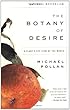
Michael Pollan The Botany of DesireApple trees are grown from clones where cut branches that are grafted onto a living tree to take root. This is why the apple industry can offer us the same varieties year after year. See, when you grow an apple tree from seeds, it is unlikely the resulting tree would produce anything like the apple that supplied the seeds. Cloning produces the same apples over and over. In one of my favorite tales, Michael Pollan explains the history of the apple in fascinating detail in The Botony of Desire: A Plant’s Eye View of the World.

Farmers repeatedly spray apples during the growing season to keep the pests away and produce blemish-free apples. These pesticides are designed to be sticky and not rinse off in water. A 2004 study by the CDC found that 100% of the subjects tested had pesticide residue in their blood and urine that were 4.6 times higher than the FDA approved. Pesticides have been linked in humans to poisoning, infertility, birth defects, nervous system problems, and cancer.

No matter how well you wash it, every time you eat a conventionally-grown apple, you also ingest some of that pesticide residue. And that’s only from one source. Many other processed foods and produce we eat also carry pesticides into our bodies.

The good news is that organic apples are not usually hard to find, and the organic Honeycrisp apple season is in full swing! I look forward to the Honeycrisps every year – my favorite kind of apple!