Elizabeth Yarnell Amazon icon Audible icon Autographed icon Bluesky icon Book Bub icon Buffer icon Booksprout icon Buy Me a Coffee icon URL Copied! Copy URL Email icon Facebook icon Goodreads icon Headphones icon Home icon Instagram icon LinkedIn icon Linktree icon Mastodon icon Patreon icon Periscope icon Pinterest icon Reddit icon RSS icon Search icon Share icon Snapchat icon Threads icon TikTok icon Tumblr icon Twitter icon Vine icon Youtube icon Join a free Q/A Call!

The MRT vs the ALCAT: Is Food Sensitivity Testing Reliable?

People ask me all the time if food sensitivity testing is reliable. My answer is always: “Depends on which test you use.”

Food sensitivity/food allergy testing that looks for IgE or IgG antibodies can show us whether or not someone has been exposed to a food and created an antibody to it, but not necessarily if the person becomes symptomatic when exposed.

In other words, antibodies can tell us there is a gun in the room, but not whether it has been fired. The existence of these antibodies are not reliable indicators of symptoms.

The ALCAT test, invented in the early 1980s by a team led by Dr. Mark Pasula, was the first test to look at the release of inflammatory markers known as mediators rather than the slippery antibodies. Over time, Dr. Pasula wasn’t satisfied with the way the ALCAT measured the mediator release from the blood. This led to a bitter difference of opinion within ALCAT and Dr. Pasoula split to apply what he had figured out to making a more accurate and reliable test.

The state-of-the-art Mediator Release Test, or MRT, is like ALCAT 2.0.

Dr. Allen Bonilla, D.C., in Los Angeles, recently decided to see once and for all which test, the ALCAT or the MRT, would provide more accurate results with which to treat his suffering patients. In this video, he takes blood samples for three ALCAT tests and three MRT tests on the same afternoon and submitted them to the labs.

Holding the results side-by-side, it’s plain to see that the ALCAT results changed radically from sample to sample, while the MRT results were practically identical for the three submissions.

Thank you, Dr. Bonilla, for this enlightening experiment, and for sharing it on video. (Be sure to continue reading below the video for more…)

http://www.youtube.com/watch?v=WXJpGmyrxTU

I’ve always found it hard to trust ALCAT results when working with clients, and now I can see exactly how unreliable this test is. It’s unfortunate, because ALCAT employs a sales force that convinces allergists and other doctors to order this test for their patients. When following the ALCAT results does not eliminate their symptoms, they dismiss the idea the dietary therapy could help relieve their condition.

Oxford Laboratories, on the other hand, the company Dr. Pasula founded to build the MRT, realizes that doctors do not have the time or expertise in nutrition to correctly interpret the test results and implement a therapeutic diet, so they focused their efforts on training Registered Dieticians (RDs) and other practitioners knowledgeable in nutrition and food.

Which makes the MRT a choice to go with a professional who can take the time to work with you to regain your health.

My food sensitivities clinic is open to clients nationwide. My clients receive not only the reliable results from the MRT, but also extensive analysis and customized anti-inflammatory diet plans complete with breakfast, lunch, dinner, and snack ideas, recipes, and safe brands and shopping advice.

Bike-or-Walk-To-School Day

Today was bike-or-walk-to-school day at my 3rd grade daughter’s school.

Our bike brigade met up with other students and parents as we neared the school.
Our bike brigade met up with other students and parents as we neared the school. We appreciated the gorgeous fall colors spotlit by the rising sun as we made our journey.

Our bike brigade, led by another mom, met at our regular bus stop just after dawn this morning for the 3-mile ride to school. Once we arrived, the kids were greeted with bagels and cream cheese, granola bars, stickers, and yellow tickets redeemable at the school store.

Coordinated by our fantastic Physical Education and Healthy Living teacher, Robin Riley, and parent volunteers, the students were excited for the excuse to ride bicycles or simply walk to school, even if they were driven to within a few blocks before they left the car. As a language immersion charter school, students live all over the metro area and most live too far to ride or walk to school regularly.

It was a glorious ride on a brisk autumn morning. I’m ready to do it again before the snow falls! DLSwalkToSchoolSticker

What’s So Bad About Vasoline?

One of my girlfriends recommended a lotion to me recently, but as soon as I read the ingredients, I knew I would never use it because the first thing listed was mineral oil.

What’s so bad about mineral oil, the friend asked?

Save this product for automotive or household repairs.

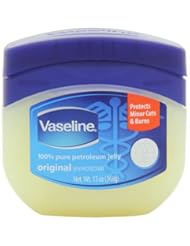
Well, for starters, mineral oil and Vasoline Petroleum Jelly are byproducts from refining oil. Yep, they are pulled out of the sludge found at the bottom of the barrels at oil refineries. They are literally “toxic waste.”

My friend persisted: Why shouldn’t you put petroleum products on your skin?  She believed her skin felt softer after using petroleum products, particularly on rough patches of eczema.

Let’s start with the fact that our skin is our largest organ. Skin cells breathe and metabolize just as all of our body cells do, and they absorb chemicals through contact. Adding chemicals to your skin will increase your overall toxic load in your body which could hasten the onset of a health crisis.

Slathering mineral oil or petroleum jelly on skin smothers skin cells and prevents efficient cellular respiration. While you might feel an immediate softening effect, or even feel as if the product is moisturizing, you are in fact simply putting a layer of inorganic oil over your cells and trapping moisture underneath the skin while not allowing any more moisture to enter.

Our bodies were designed to efficiently rid the system of toxins through discharges from the bowels and urinary tract, mucous from the nose or throat, and perspiration and cellular respiration through the skin. Sealing off the skin thwarts this process and traps toxins inside the body.

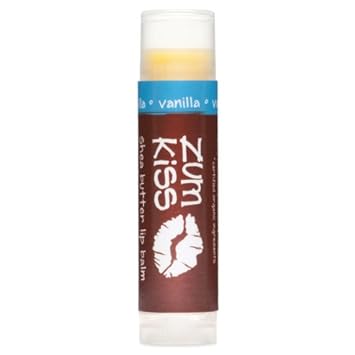
Zum Kiss Shea Butter Lip Balm is petroleum free and feels great on lips!

Petroleum is found deep underground, often a mile or more below the surface where life exists. For the course of human history, petroleum has been inaccessible and unused until very recently. Mammals did not evolve to need or use petroleum or its byproducts as part of achieving health. Just because Vasoline is a familiar brand doesn’t mean it is safe to use. Marlboro is a familiar brand, too, but that doesn’t mean its products are any safer for having been around for a century.

I cringe every time I hear of another pediatrician recommending feeding a child spoonfuls of mineral oil as a misguided constipation remedy. Mineral oil does not rinse off cleanly; it leave a residual layer of petroleum, which is what makes things slippery. I can’t imagine smothering the cells of the digestive tract with a clinging film in any way helps to improve digestion. It might ease constipation by greasing the chute, but it inhibits nutrient absorption through the intestines in the process. A destructive trade-off, if you ask me.

A recent Huffington Post article by Rebecca Adams brought a comment from a reader addicted to using Vasoline on her lips. She felt disgusted at the thought of how much petroleum she must have directly ingested over the years, but couldn’t think of a safer replacement for her dry lips. I’m a fan of Zum Kiss Shea Butter Lip Balm for safely moisturized lips.

Try almond oil for moisturizing skin for a safe, natural skin softener that heals while it softens and  does not inhibit cellular respiration.

Trouble Sleeping? Try Lavender.

My 9-year old daughter has a history of being scared at night. We’ve tried leaving the door to her room open, night lights, sound machines playing soothing ocean waves. The best thing we’ve found to work is the scent of lavender.

The Healing Garden Lavender Body Mist

I love this little lavender spray from Healing Gardens. I just give her pillow a spritz and she sinks off to dreamland.

A lavender sachet underneath her pillow would work, too.

Be sure to only use real lavender or lavender essential oil, and steer away from commercial perfumes that are made from chemicals instead of plants.

Is Oven Temperature Important to Glorious One-Pot Meals?

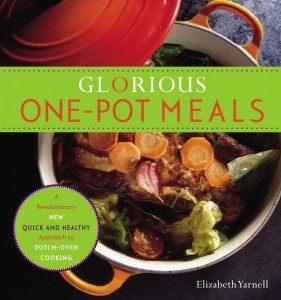
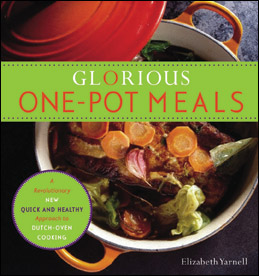
Reader question: We tried our first one pot meal and it didn’t turn out so well.  I bought a 6.5 qt cast iron pot because we often cook for 6.  We made our first meal for four (chicken Cacciatore) and used the recipe adjustment chart to determine cook time (53 minutes).  The orzo was stuck together like glue and the chicken was overcooked as well as the vegies.  What did we do wrong? ~Gail W., Sedona, AZGlorious One-Pot Meals cover

Gail, it sounds like your oven temp is off. Please read this post for more about using an oven thermometer to verify the temperature in your oven is at 450 degrees F before putting your Glorious One-Pot Meal inside.

Also, 53 minutes works perfectly for a 3.5-quart Dutch oven when the recipe is doubled; when you use a 6.5-quart Dutch oven that is not completely full of food  you really need to rely on your nose to tell you when your Glorious One-Pot Meal is ready. Wait for the aroma of a fully-cooked meal to waft from your oven three minutes before you should pull your pot out.

Happy cooking!