For too long we have treated wayward youth as pariahs, handicapping their chances for becoming contributing members of society ever afterward. My husband, Dr. Edward Cope, works with an amazing program called Rite of Passage that is doing brilliant work with adjudicated youth and offering us all hope for the future. Check out his recent TED talk on Positive Youth Development and be prepared to have your mind changed about how we should deal with juvenile delinquents in order to create a better society.
My TED talk: We Are What We Eat: Poisons in Our Everyday Foods
At long last, the talk I delivered at the TEDx Colorado Springs event has been posted! Please watch, enjoy, and pass around the link to this talk on how to choose to be healthier every time you eat.
Interested in watching another TED talk? Check out my husband on stage discussing positive youth development: a new model in youth corrections.
Natural Anti-inflammatory Remedies
Patient question: Is there an anti-inflammatory you recommend for skiers knees? I have osteoarthritis. I have only been taking Target Tylenol and Imitrex for pain. ~Lorie A., Denver, CO
Have you tried turmeric milk? It is an amazingly potent anti-inflammatory. Start with high quality turmeric (I buy it and black peppercorns at the Savory Spice Shop), and use your safe milk substitute. Here is the recipe for turmeric milk.
Don’t use this as a prophylactic or an everyday supplement, but definitely use it when the knee is acting up and painful. You can do it several days in a row if needed.
Homeopathic arnica, taken internally as pellets dissolved in clean water, can help reduce inflammation as well as heal from bruises, sprains, or overuse after activity.
Natural Topical Remedies for Inflammation

In terms of topical remedies, I like the Weleda Arnica massage oil as a great topical pain reliever. Shake the bottle a few times to activate the remedy with kinetic (movement) energy before rubbing it on the affected area. You can alternate it with a magnesium gel or oil applied topically. Most people are magnesium-deficient and will find some relief by absorbing magnesium directly through the skin.
I also like Hot Spice and Ice, which is like an Icy-Hot-type product, but without petrochemicals. It contains capsicum (to generate warmth and increase circulation) in combination with Arnica and Cajeput (to reduce inflammation). Wintergreen, peppermint and eucalyptus are added to reduce pain.
Glorious One-Pot Meals Free Cooking Demonstration Sunday

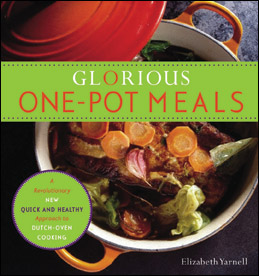
My free Glorious One-Pot Meals cooking demonstrations are not available as frequently these days as they once were, but here’s a chance to stop in and learn this quick, easy, and healthy cooking technique. I’ll show you how to build a nutritious and delicious dinner in minutes that you can take and run with in your own kitchen to feed your family.
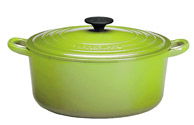
I’ll have cookbooks for sale AND you can take advantage of steep “friends and family” discounts on all Le Creuset cookware in the store. It’s a great opportunity to grab gifts for the holiday season while learning a time-saving cooking technique that you can put to use in your own kitchen to improve your sanity along with your health!
Come by the Le Creuset outlet store at Colorado Mills in Lakewood, CO, this Sunday, December 7th, at 12 pm to join the fun!
Glorious One-Pot Meals cooking demo
Sunday, December 7, 12 pm
Le Creuset outlet store, Colorado Mills, Lakewood, CO
Nutrition and Autoimmunity: The Diet Connection
Have you or someone you know been diagnosed with an autoimmune disease?
Have you been told that no one knows why people develop autoimmune issues and that the only treatments are with heavy-duty toxic drugs or, as with Crohn’s Disease, extractive surgeries to remove the offending body parts?
Have you been following your doctor’s orders yet still feeling worse and worse?

Then this new approach to dealing with autoimmunity is something you need to hear.
I will be giving a talk about Nutrition and Autoimmunity this Saturday for the Weston A. Price Foundation, Boulder chapter. New research is showing how simple dietary changes can reduce the rogue T-cell activity that leads to autoimmune disorders. Multiple Sclerosis, Rheumatoid Arthritis, Lupus, and other inflammatory conditions can improve from eating the right foods and avoiding the wrong ones.
If you want to take back control over your health, you should plan to attend this transformative talk.
Of course, all are always welcome to contact me directly for a free phone consultation to learn all I know about how to manage autoimmune diseases through dietary changes.
Here is the information for the event on Saturday: Hope to see you there!
Nutrition and Autoimmunity: The Diet Connection
Weston A. Price Foundation: Boulder Chapter Meeting
Saturday, December 6 10am – 1pm
St. Ambrose Episcopal Church
7520 S. Boulder Rd, Boulder, CO 80303
Entrance on Barcelona Drive
SCHEDULE:
9:45am Volunteers needed to set up
10-10:45am WAPF friendly vendors
10:45am Announcements, Green Pasture product raffle, and giveaways! Must be present to win.
Potluck & social time to follow.
11:45am-1:00pm Elizabeth Yarnell’s Presentation
1:00pm Please stay to help clean up if you can!
Potluck info:
Please bring a dish to share with everyone made from whole, natural foods. This is a great place to showcase your favorite organ meat dish, fermented veggies/beverages, and soaked grain dishes. Please, no unfermented soy (when in doubt, leave it out), and no artificial flavorings, colorings, or preservatives. Avoid modern oils. Traditional oils including animal fats, butter/ghee, extra virgin olive oil, expeller expressed sesame and flax oil, and coconut and palm oil are all ok. See Nourishing Traditions by Sally Fallon for recipe ideas. If you are new, bring a salad of organic fruits or veggies (with olive oil as a dressing). Please label your dish to indicate ingredients, allergens, grains, dairy, organic, etc.
Vendors:
- High Altitude Organics – organic pork, chicken, turkey, goat, lamb – please visit the web site for product list. Pre-orders with Pat are preferred.
Children are welcome! There is a playground just outside our meeting for them.
Please forward this information to anyone you know who might be interested!